
new gadget design
19 stories filed under new gadget design on Spoot: Spotted Early. The newest of them: “The Google Home Speaker finally got a price that matches its clean design”, “Infinix Opens Bali Flagship Where You Can Sip Coffee and Test Phones”, and “Akai teased a keyboard that wants you to break it open”. The Google Home Speaker finally got a price that matches its clean design. Beachwalk Shopping Center now holds Infinix's first global flagship store, and it comes with coffee. Spoot: Spotted Early New things, caught while they're still new and a little weird. Spoot finds fresh gadgets, clever inventions, crowdfunding campaigns,… The list below is every new gadget design story on Spoot: Spotted Early, newest first.

The Google Home Speaker finally got a price that matches its clean design
The Google Home Speaker finally got a price that matches its clean design. At $79, it's $20 off and the best deal we've seen since it launched in June. That matters because this is Google's first smart speaker in years, and it's smaller than the old Nest Audio but somehow louder and sharper, David Pierce said it even beats the Echo Dot Max for clarity. It also packs a Thread border router, supports Matter, and can double as an audio output for the Google TV Streamer. Gemini handles multiple smart home commands at once, which is honestly the kind of conversational glue a living room needs. Just note some features want a $10 monthly subscription. If you're curious about weird AI companions, our piece on the conceptual Glyph cube is worth a detour.

Infinix Opens Bali Flagship Where You Can Sip Coffee and Test Phones
Beachwalk Shopping Center now holds Infinix's first global flagship store, and it comes with coffee. That's the pitch: sip something, test phones, maybe let a little creativity happen between the two. Bali's a dream destination for travelers, and now it's a stop for people who want to handle a handset before buying it. I like the move. A flagship store should feel like somewhere you'd actually linger, and a coffee bar is a smarter hook than another wall of glowing screens. It's a retail experiment worth watching, though the coffee won't tell you whether the phones are any good. For a different kind of curious launch, Voxel's mustard-yellow chassis wants your mess, not your compliments. Two strange debuts, one island. Stay spooty.

Akai teased a keyboard that wants you to break it open
Akai teased a keyboard on Instagram this week, and then immediately said, basically: please break this thing open. The new MPC Sample Key shares most of the same controls as the MPC Sample, three context-sensitive encoders, a big main encoder, but it's built for pitched sample playback, not drum chopping. That chop button from the MPC Sample is gone. What remains is a device that wants the modding community to crawl inside its software and make it weirder, better, theirs. The Verge has exclusive images, but no price or launch date yet. So this is a promise on a render. Still, a keyboard that *wants* you to hack it? That's the kind of detail you scroll past. Don't.

This Nest Thermostat drop is $60 off and ready to learn your drafty rooms
The Nest Learning Thermostat is $60 off right now, which means it's matching its best price of the year and creeping within $10 of its all-time low. That matters because this fourth-gen model is the one that finally includes a remote temperature sensor in the box, so it can actually learn which rooms are drafty and which ones turn into saunas by 3 PM. It adjusts when you're away, suggests schedule changes, and shows you the outdoor air quality when you walk close enough. It also works with more HVAC systems than before and doesn't demand a C-wire in most homes. If you've been meaning to stop heating the whole neighborhood, this is the nudge.
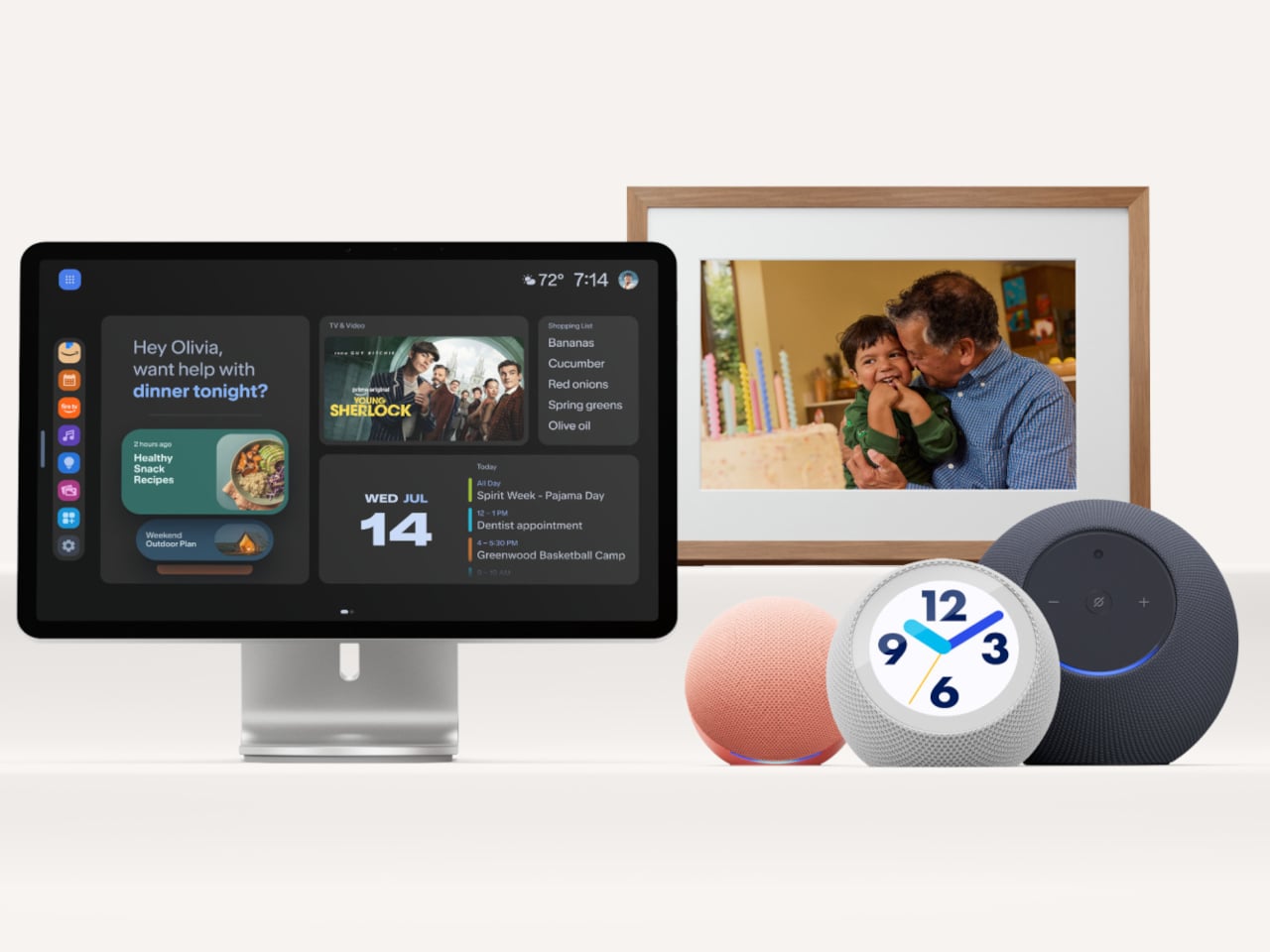
Amazon hid a camera in your speaker and stuffed Alexa in a frame
Amazon hid a camera in your speaker and stuffed Alexa in a photo frame. The new Echo Show finally admits what we all knew: smart speakers are surveillance devices with good PR. This one puts a camera right there, in the room, watching. Meanwhile, Alexa gets a frame, a digital picture frame that listens. It's a curious pair. One wants to see you, the other wants to be seen. Amazon is betting you'll trade privacy for convenience, and honestly, they're probably right. But the frame is the more interesting play here. It hides the tech in something familiar, something you'd hang on a wall anyway. If you're into gadgets that disappear into your life, we also looked at a disposable camera made from mycelium, it decomposes before your photos ever do.

Even Realities snuck the smart glasses into the tortoiseshell
Even Realities' Tortoise Shell frame is so gorgeous, I'd buy the smart glasses just for the design. That's not a throwaway compliment. Meta needed Ray-Ban. Google needed Warby Parker and Gentle Monster. This Shenzhen startup, barely three years old, apparently just needed a great frame. The tortoiseshell pattern does what smart glasses have been trying to do for years: make you forget there's a computer on your face. It's warm, familiar, and looks like something you'd pick out at an optician, not a CES booth. The tech inside still matters, but Even Realities understood that nobody wants to wear a gadget they'd be embarrassed to be seen in. For another take on how glasses handle their brains, check out our coverage of that titanium concept that refuses to hide its tech.

Brick Night costs more than double because it knows where you sleep
Brick, the company that made a $59 brick you tap your phone against to stop using apps, just released a bigger, pricier version that knows where you sleep. The Brick Night costs $129, more than double, and uses Bluetooth to automatically block your selected apps when you walk into your bedroom. No tapping required. It sets a location zone up to 25 feet by 25 feet, runs on two CR2477 batteries, and targets the specific doomscrolling that happens after you've already crawled under the covers. That's a clever pivot from the original's tap-to-block mechanic, and honestly, the price bump makes sense if it actually keeps you off Twitter at 2 a.m. The catch? You still have to set it up and admit you need it.

Coolpad steals the foldable's screen without the folding trick
The Coolpad Cool X Wide has a screen that's basically the same size as a closed Galaxy Z Fold 8 or an iPhone Duo, but it doesn't fold. It just sits there, being wide, and that's the whole point. The folding-phone aesthetic, that tall, tablet-like aspect ratio, is bleeding into regular slab phones, and Coolpad is the first to catch it without the hinge tax. No crease anxiety, no $2,000 price tag, no repair bills that make your eye twitch. It's available for preorder in China for 999 yuan, which is roughly $140. That's absurd. It makes you wonder why everyone else is still building folding phones for people who just want a big screen that fits in a pocket.

A single wire and 40 grams: Final's Porta makes headphones nearly vanish
Forty grams. That's barely a handful of grapes, and it's the entire weight of a pair of headphones. Final's new Porta model is basically a single piece of wire bent into an on-ear frame, which sounds like a magic trick until you remember that Japanese audio companies have been doing more with less for decades. The Verge notes that Marshall's comparable Milton A.N.C. weighs 200 grams, so this is a fivefold difference you can feel before you even press play. It's also a gentle rebuttal to the earbud-or-bust crowd: some heads just don't hold silicone wings. At around $80 on preorder, it's priced like a curiosity, but the razor clam here is that Final shipped a real product, not a render.

Arc's bracelet whispers a tug-of-war with your thumb
Your thumb knows something your brain won't admit: it keeps tugging back toward the screen. Arc's bracelet concept turns that reflex into a quiet conversation. No screen, no notifications, just a gentle nudge when you've been scrolling too long. There's something almost feral about a wearable that whispers instead of shouts, that doesn't track your data or demand your attention. It just reminds you your thumb has a choice. Belgian studio Arc is betting we're ready for a connected object that disappears when it's not needed. We've been circling this idea for a while, especially with our look at how the bracelet ghosts your notifications without a single screen. This one feels like the natural next step, and honestly, we're a little smitten.

Denim plates and paper chairs: five ways scrap gets weirdly good
A paper chair that holds 300 pounds. Denim plates fired in a kiln. A lamp shade grown from mycelium. This is not a fever dream from a design school final show, it's a real, growing movement where waste stops being a dead end and starts being the whole point. Architects, artists, and product designers are looking at scrap material and asking, "What if we just… didn't throw that away?" The answers are weird, specific, and genuinely good. No hype here, just a clever hinge, a bizarre material choice, and the quiet thrill of watching someone solve a problem nobody else thought to touch. If you liked how those retro sneakers borrowed hiking tech to become better city commuters, you'll love what happens when designers borrow from the dumpster.

Apple finally built a smart home hub, and it brought some friends
Apple finally built a smart home hub, and it brought some friends. The HomeView is Apple's first smart display, and it arrives with a 7-inch squircle design that looks like a gargantuan smart speaker grew a face. It costs $299 and preorders are open, which is nice because Apple has been threatening to make a smart display for years and years without ever actually doing it. The HomePod Mini 2 also finally exists after nearly six years, coming in at $149 with preorders open and a Friday launch date. Spoot already has a tab open on that one. The whole "Welcome Home" event dropped a slate of new smart home and security accessories too, built with trusted third-party manufacturers. It is the most serious hardware push Apple Home has seen in a long time.

Apple finally has a smart display you can actually preorder for $299
Apple's HomeView is a 7-inch squircle that looks like a gargantuan Apple Watch bolted to a speaker base, and it costs $299. You can preorder it now. It ships November 13th. That is a real date from a real company, which already makes this more concrete than most smart-display launches. The HomeView controls smart home tech, shows recipes, runs music playback, makes FaceTime calls, and hosts widgets. It is clearly the centerpiece of Apple's big push into the home. The question Spoot always asks: Who is this for? If you are already in Apple's garden, this is the front door you have been waiting for. If you are not, $299 is a lot to pay for a lock you did not ask for.
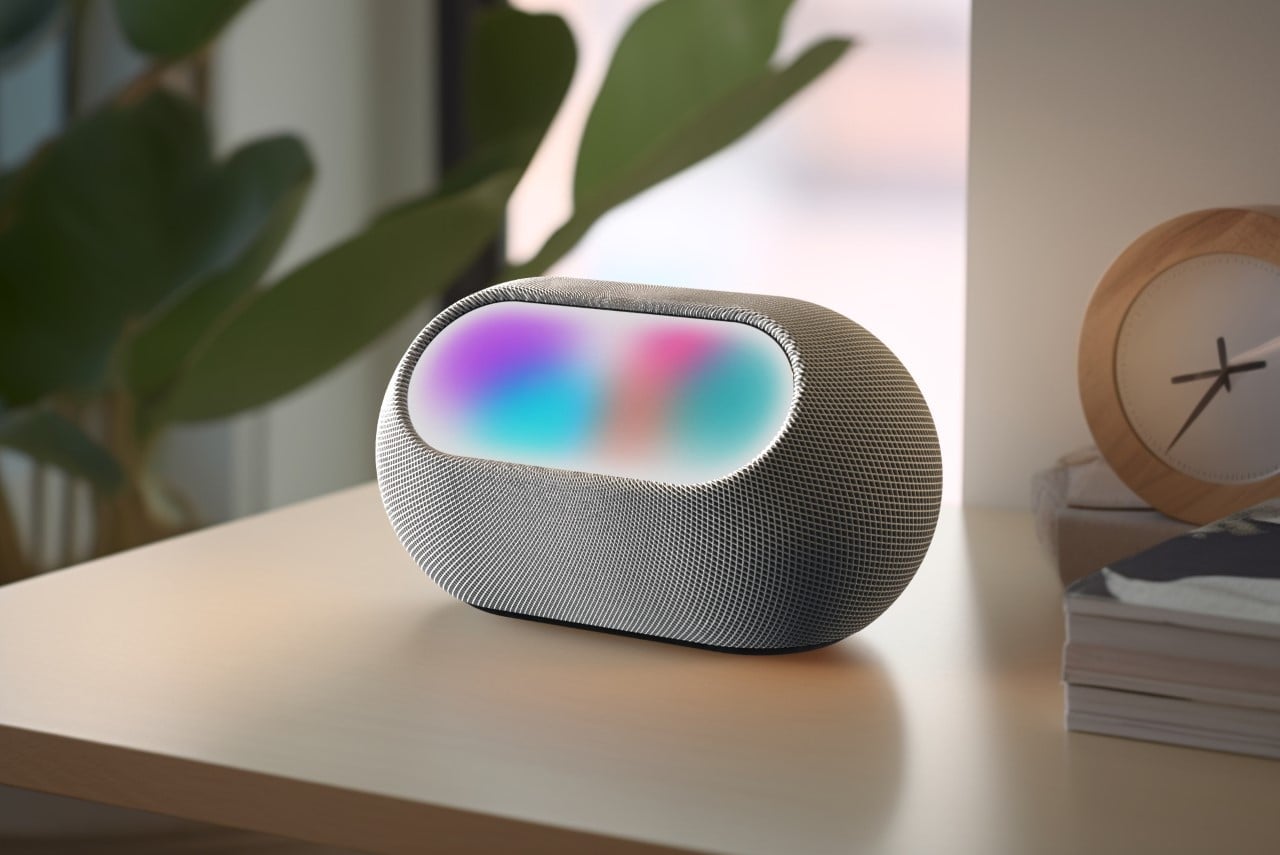
Apple's robot arm finally gives the HomePod something to reach for
Apple event names usually read like perfume ads. Wonderlust. Scary Fast. It's Glowtime. This one, though, landed with a thunk: October 13th, and the HomePod is finally getting something to reach for. A screen. A robotic arm. A speaker that turns toward you like a sunflower with better taste. The invite alone is doing more heavy lifting than a spec sheet, because the question was never whether the HomePod sounded good. It always did. The question was whether it would ever do anything worth watching. Now it moves. That's the razor clam: not the display, not the motor, but the implication that Apple finally believes a speaker should follow you around the room. If you've ever yelled at a stationary device from the couch, you already know why this matters.

Nothing Ear 1 dips to a whisper while October deals circle the drain
October deals are circling the drain, and Nothing's first over-ear headphones are whispering from the discount bin. The Nothing Ear 1, sorry, *Headphone 1*, drops to $189 at Amazon, which is $110 off a $299 launch price that always felt a little ambitious for a first-gen product. But that retro transparent design? Still gets me. Active noise cancellation, spatial audio with head tracking, plush pads, and a paddle button that lets you flick through tracks without fishing for your phone. It's a lot of personality for under two bills. The question, as always with Nothing: does the polish match the panache? At this price, the answer gets easier. Also worth a peek at our "Prime Day's cheap seat" roundup if you're hunting for deals that don't demand a Prime subscription.

Amazon's October sale nibbles Apple prices without asking if you really need a new iPad
Amazon's October Big Deal Days are nibbling Apple prices, and the M5 MacBook Air at $1,099 is the thing I keep tab open on. Double the base storage, Wi-Fi 7, Bluetooth 6, it's the spec-sheet razor clam that makes the $200 discount feel like a win instead of a trap. But the 15-inch version also lands at $1,299, and that's where my focus drifts. If your sights are set beyond Cupertino, the main roundup has 100+ deals and we're chasing price matches as they appear. Some of this is Prime-only, but other retailers are biting back. Meanwhile, over at our AirPods Pro 3 coverage, I dug into why $179 is the number that actually matters this week. Stay spooty.

Mesh-89 talks to checkpoints so West Bank drivers don't have to guess
A clever little box that whispers checkpoint status to Palestinian bus drivers, and it looks like nothing at all. That's the point. Joud Abuhomos, fresh out of Central Saint Martins, built Mesh-89 to sidestep the guessing game around the West Bank's 89 permanent Israeli-run checkpoints. Deliberately unassuming, it's off-grid and simple because it has to be. The razor clam here is the restraint: no flashy screen, no hype, just a quiet signal that tells a driver when to reroute. I love that it solves a daily, grinding problem without demanding attention. It's the kind of tool that disappears into the job. For more on clever, unassuming tech, our piece on zuckoff sniffing out smart glasses is worth a look. Stay spooty.

Honor's new flagship packs a camera Arri helped shape and a battery that refuses to quit
Honor's Magic 9 Pro Max has a camera island that looks like it was machined from a 1937 Arriflex 35 turret, complete with knurled grip texture, and that alone made me sit up straighter. The battery is colossal, the mossy green finish is genuinely handsome, and Arri's influence runs deeper than aesthetics: you get LogC3 capture and 14 preset Look LUTs baked in. That's a serious tool for anyone who wants cinema color without the rig. It's also Honor's first flagship since the Arri deal went public, so the pressure was on. I'm gently skeptical about whether the software holds up, but the hardware is talking loud. For more gadget weirdness, our piece on Philips' new toothbrush tracking your brushing is a fun contrast. Stay spooty.

zuckoff sniffs out smart glasses with bluetooth so you can spot them first
There's a particular thrill in being the first to clock the glasses on someone's face, and Zuckoff wants to hand you that moment on a Bluetooth platter. The app sniffs out nearby smart glasses, recognizing Ray-Ban Meta, Oakley Meta, and Snap Spectacles before you've even squinted their way. It's a razor clam of a detail: the idea that your phone can whisper, *hey, there's a camera two tables over*, without anyone pulling out a scanner. I love the blunt utility of it. No AR map, no flashy UI promise, just proximity detection doing one job well. It's gently skeptical, though, because recognizing a frame isn't the same as knowing what it's recording. Still, for the perpetually curious, this is the footnote that beats the marketing copy.