
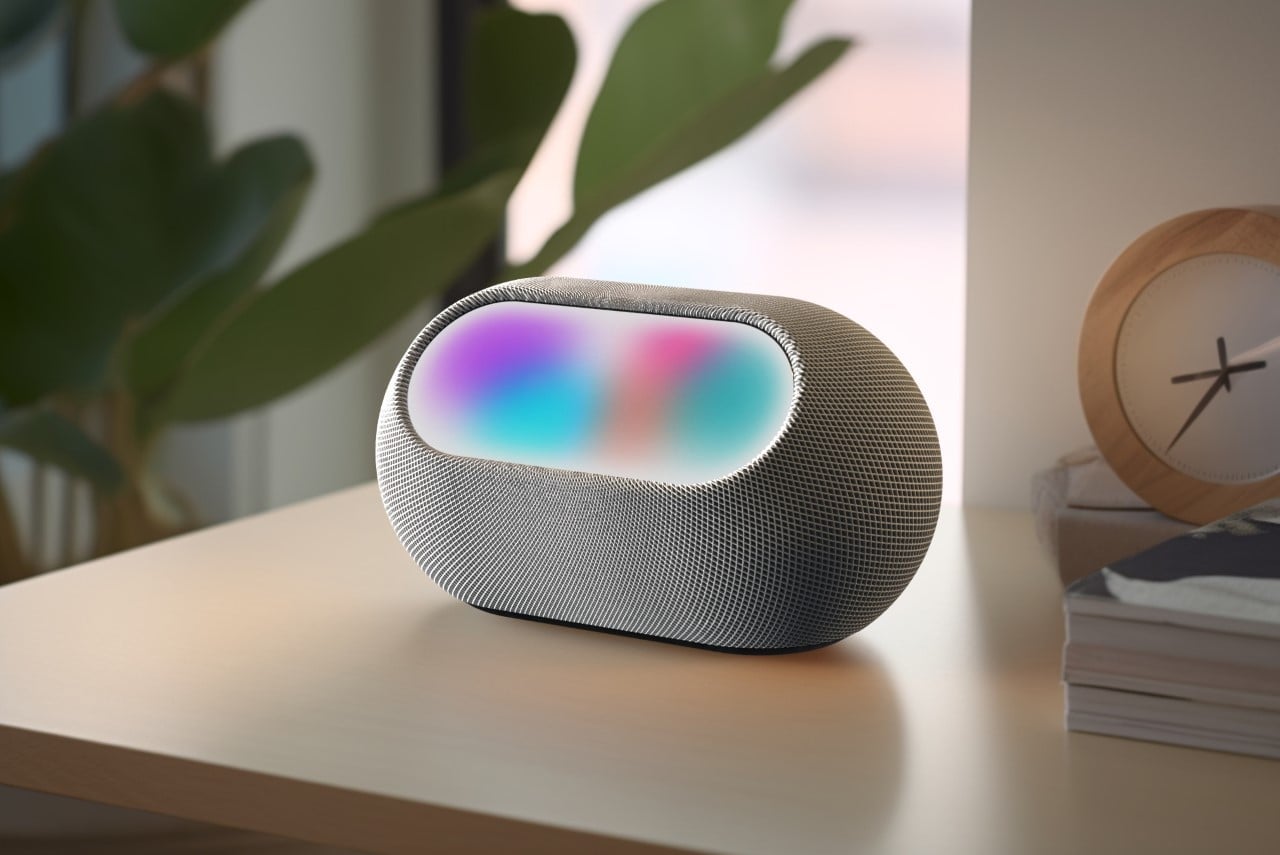
Apple just sent out an invitation that reads "Welcome home," and for once the company isn't being cryptic. It's being literal. On October 13, the HomePod reportedly gets a 6-inch screen bolted to a polished metal arm, a design that looks like the 2002 iMac G4 finally came back from a long walk to clear its head. We've been waiting for this since October 2023, when we daydreamed about a HomePod Max with a 7-inch display, and now Bloomberg's Mark Gurman says the thing is real, codenamed J490, with a wall-mounted sibling J491 and a third model on a robotic arm that swivels 360 degrees like Pixar's Luxo Jr. lamp. That's the headline. But the detail that actually matters is hiding in the bezels: they're thick, deliberately so, and on a screen you glance at from across the kitchen, they read as a picture frame, not a flaw. Apple spent a decade shaving bezels off phones, and here it is adding them back on purpose because the job changed. That's the razor clam.
The HomePod has spent nine years as the best-sounding speaker you never ask anything. Siri has been the polite roommate who forgets your name. So the real question isn't whether the screen looks nice, it's whether Apple finally fixed the brain inside. The HomePod mini 2 reportedly moves to an S9 chip with the N1 wireless chip and a new Ultra Wideband radio, and the headline feature is Siri AI. The Apple TV 4K is rumored to jump to an A19 or A19 Pro with up to 12GB of RAM, and code in tvOS 27.2 hints that four HomePods can pair with it for surround sound while Siri answers show up on your TV. That's the ecosystem pitch, and it's a good one: your speaker stops being a one-way pipe and becomes a node in a room that actually listens. But here's the thing nobody at the keynote will say plainly: Siri AI is reportedly exclusive to the new box. Your four-year-old Apple TV gets to watch from the sidelines. If you want the smart home to get smart, you're buying new hardware, not getting an update. That's a deliberate choice, and it's worth naming before you get excited.
We've covered smart locks that open when their batteries die and luggage colors that solve baggage claim anxiety, so we know a home gadget only earns its spot if it removes a specific irritation. The HomePad's visitor mode, which hides private info when someone else walks up, is exactly that kind of detail. The single front camera for FaceTime, the Apple Watch-style interface, the recognition of who's talking so your calendar doesn't flash at a guest: these are the small, sharp decisions that make a device feel less like a toy and more like a fixture. The price is still unconfirmed, but earlier reports floated $350, which sits right next to the $349 the original HomePod cost in 2017, when we called it Apple's tune-busting Fabergé egg. That's a lot for a lamp that talks. But the robotic arm version, the one that turns toward you like it's paying attention, that's the one that makes the iMac G4 homage feel less like nostalgia and more like a second chance.
The smart home has spent years being a collection of plastic pucks that argue over protocols. Apple's answer is a device that physically turns to face you, and that's a genuinely weird, genuinely compelling move. The LG-branded cameras, doorbells, and locks are reportedly coming later, and code in iOS 27.2 lists a Schneider thermostat with a "second-party" tag, a rare admission that HomeKit needs friends. Watch the October 13 event for one specific thing: whether Apple shows the robotic arm moving live, or just renders it. A render is a promise. A live demo of a motor that quietly rotates a screen toward your face is the moment we'll know whether this is a product or a concept. The HomePod finally gets a face, and it's wearing a 2002 outfit. The question is whether it can walk.