
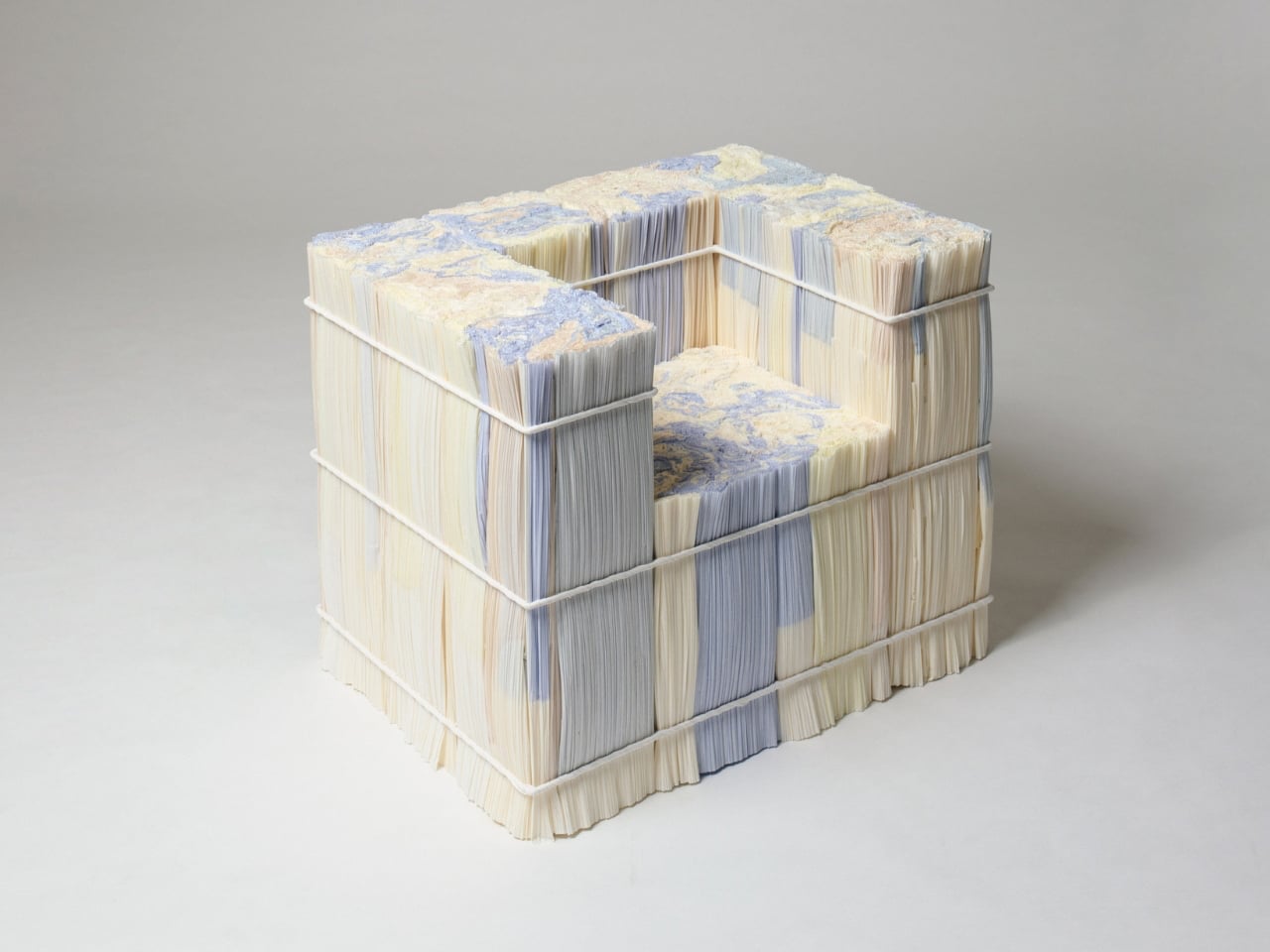
Circular design keeps getting called the future, but the real story is that it's finally getting weird enough to be worth your attention. The five projects here, Issey Miyake's compressed paper logs, Yuma Kano's ForestBank wood substitute, Junghyun Kim's denim plates, Joe Doucet's e-waste table, aren't just recycling gestures. They're evidence that scrap has stopped being a compromise and started being a material with its own texture, history, and personality. That's the shift that matters, and it's the same impulse that makes a retro sneaker borrow hiking tech or a 150W laser try to justify its Kickstarter: the good stuff happens when someone refuses to accept the obvious use for a thing.
The most compelling piece here is the Issey Miyake installation, and not because it's the flashiest. Satoshi Kondo looked at the compressed rolls of protective paper used during the brand's iconic pleating process, the stuff that gets tossed or recycled without a second thought, and saw tree trunks. The resulting Shell and Core exhibition, built with Ensamble Studio, turned those discarded cylinders into stools, tables, and folded sculptural forms that literally show the rings of production time. It's a clever hinge moment: the waste product becomes the record of the process that created it. That's the razor clam in the spec sheet, the detail everyone else scrolls past. ForestBank does something similar by binding bark, leaves, and pruning waste into a terrazzo-like surface that can be cut with standard woodworking tools, and the denim project grinds old jeans into plates that quietly echo Japanese wave patterns. None of these need to be perfect. They need to be honest about where they came from.
Here's the practical takeaway: the value isn't in the novelty, it's in the trace. A mass-produced object hides its origins; these pieces wear them openly. That's why the OLO Table, made from recycled refrigerators, keyboards, and computer mice, works as a luxury object, not because it's sustainable, but because the visible fragments of old electronics give it a specificity no new material can fake. If you're shopping for a tiny home, backing a crowdfunding campaign, or just upgrading your workspace, the question to ask isn't "is this green?" It's "can I see where this came from?" The projects that answer that question honestly are the ones worth your money. The ones that just slap a recycled label on a generic form are still landfill, just with better marketing.
The open question is scale. Kondo's paper logs are an exhibition piece; Kim's denim plates are decorative objects. Can any of this survive contact with mass production, or does the charm depend on staying small and slightly precious? Watch what happens when ForestBank tries to move beyond prototypes, or when someone attempts to commercialize the denim compression process. That's the moment we'll learn whether scrap is genuinely the new gold or just a very pretty costume for the same old waste problem. Spoot's betting on the former, but it's keeping the skepticism close, and it'll be the first to squirt water at anyone who pretends the answer is already settled.