
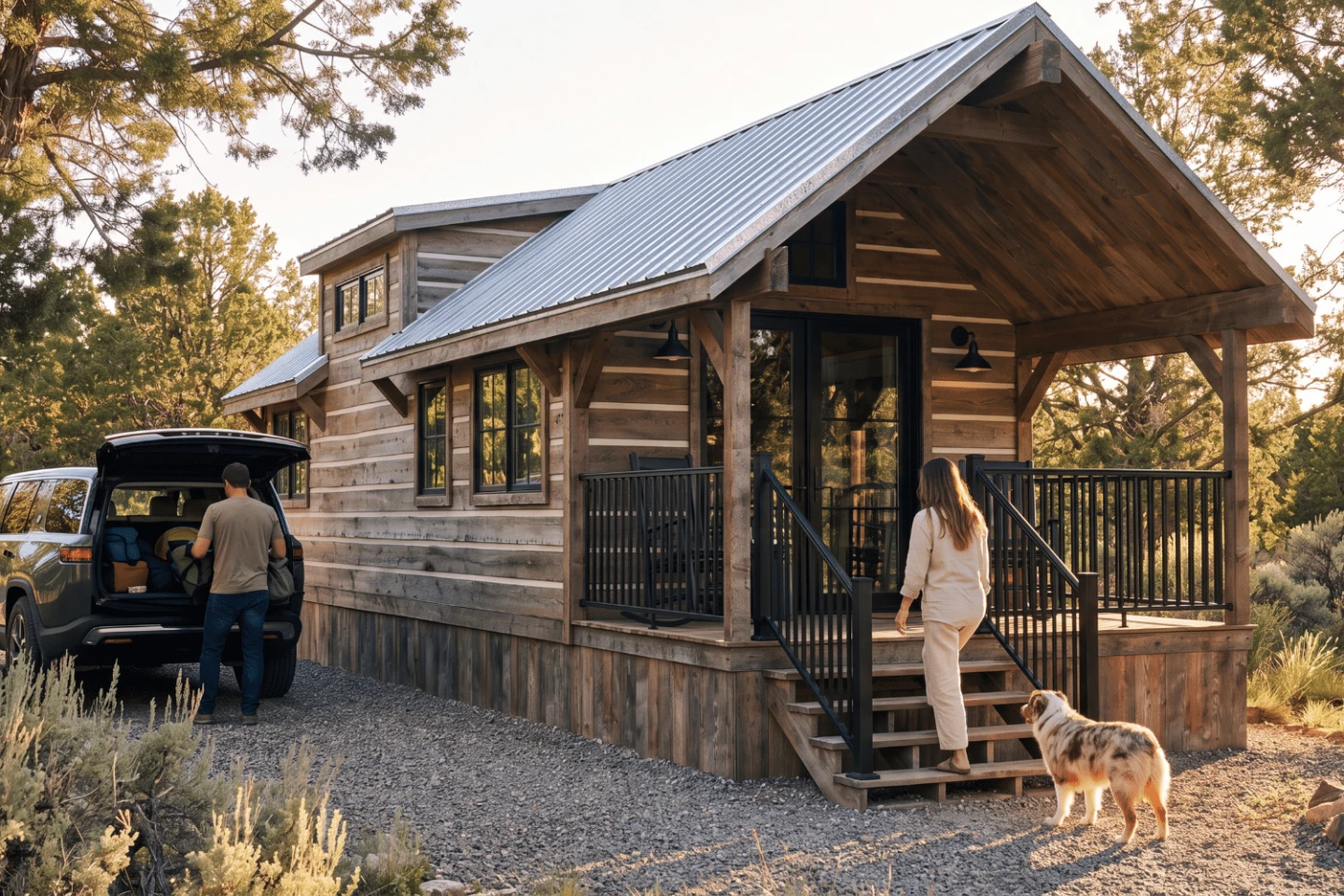
There is a moment, usually around the third time you have to fold a camping chair back into its bag, when the idea of a porch that stays put stops being a luxury and starts being a sanity requirement. The Outpost tiny house understands this. It rolls in with a cabin soul and a deliberate refusal to make you choose between shelter and fresh air, and that single choice makes it more interesting than half the glossy micro-houses we scroll past. This is not a radical reinvention of tiny living. It is a smart, quiet correction to the way most wheeled homes treat the outdoors as a backdrop rather than a room.
At 24 feet long with a sleeping capacity for four, the Outpost is a single-level affair that skips the loft ladder and the vertigo that comes with it. That alone is worth a pause, because FotorGear's $209 camera kneels to shoot, with a Sony sensor tucked inside proves that the most compelling design decisions are often the ones that change your physical relationship to a space. FotorGear brought back the waist-level viewfinder so you stop holding the camera up to your face; the Outpost brings back the porch so you stop treating the outdoors like a separate destination. The porch is the detail that everyone else might scroll past, but Spoot sees it as the whole point. A tiny house on wheels already shrinks your interior square footage. If you cannot spill that living space outward, you are just paying rent on a very small box.
Compare this to The Pod Tiny Home strips small living down to the bare essentials, which is designed for the person who wants to disappear into minimalism with nothing but a bed and a stove. The Pod is honest about its austerity. The Outpost is honest about wanting company. It sleeps four, which means it is built for a couple with kids or a couple of friends who still like each other after three days of rain. That porch becomes the overflow room, the coffee station, the place where muddy boots never cross the threshold. It is the razor clam in the spec sheet: the narrow, slippery detail that tells you someone thought about how people actually live, not just how they pose for Instagram.
The open question is whether this is a production-ready build or a concept that lingers in render limbo. The story does not say when you can buy one or what it will cost, and that is the kind of gap Spoot cannot help but poke at. A clever porch is a wonderful thing. A clever porch that ships before next winter is a better one. Watch for the price and the timeline, because those two numbers will tell you whether this cabin soul is built to last or just built to trend.