
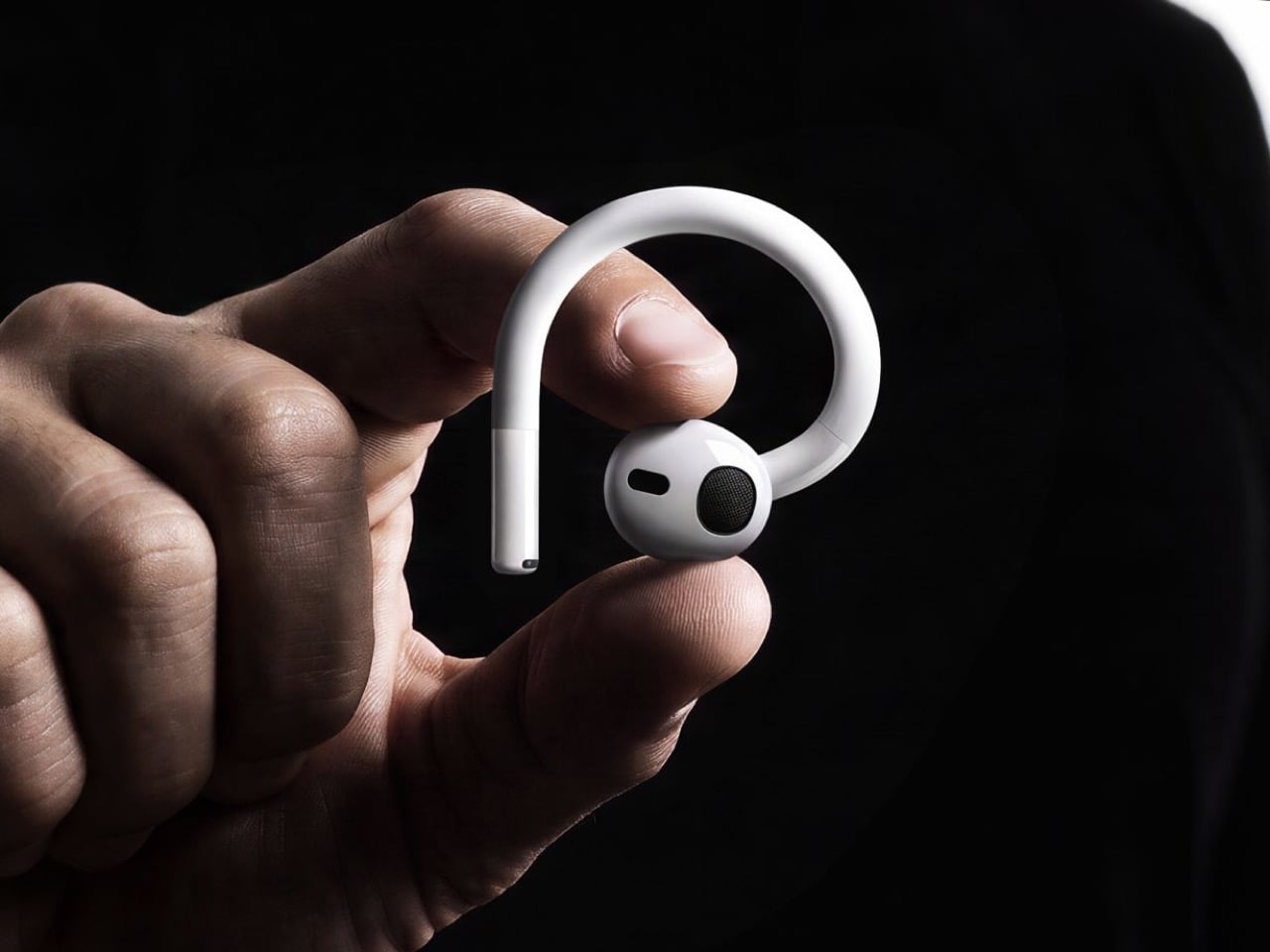
Apple is fashionably late again, and someone has already drawn them a map to the party. Designer Anurag Sarda's AirPods Open concept doesn't just imagine what Apple's open-ear buds could look like, it solves the riddle Apple keeps ignoring. The stem, that iconic little stalk everyone recognizes from across a coffee shop, gets relocated behind your ear, turning the classic silhouette into a functional counterweight. It's the kind of detail that makes you wonder why you never thought of it yourself, which is exactly the feeling This mushroom camera asks what we should really be throwing away leaves you with when you realize a compostable camera shell makes more sense than the plastic one in your drawer. Sarda's concept takes the AirPods 4 bud, already an open-ear design by Apple's own naming, and staples it to a Powerbeats-style hook, dropping the silicone tips that turn gym earbuds into all-day wear. The result is something Apple's supply chain could probably build before lunch, and it arrives at a moment when the company finally seems willing to try new shapes.
John Ternus took over as CEO in September and immediately started flipping tables. A foldable iPhone, a touchscreen MacBook Pro, a smart home hub, a co-designed line of smart locks with LG, the man is on a launch tear that would have sounded like fan fiction two years ago. That appetite for new shapes is exactly what makes AirPods Open feel plausible instead of wishful. The open-ear category is growing fast, Omdia expects 90.5 million units a year by 2030, and competitors like Nothing, Bose, and Shokz are already eating lunch there. Nothing's Ear (open) uses a nickel-titanium hook that flexes and springs back, and Bose's Ultra Open Earbuds clip on like jewelry. Sarda, who already designed the This glowing polycarbonate cube talks to you without a single screen concept for Nothing, clearly understands the landscape. He picked the hook side over the clip side, and the logic is hard to argue with: a hook feels locked in, and Apple's stem already packs microphones and battery cells, so the engineering carries over without reinventing anything.
The practical question is what this means for the AirPods line as it exists today. Apple already calls its tipless AirPods "open-ear," and the new AirPods 5 claim the industry's best ANC in that form factor. Sarda's concept takes the word literally, and that's the version that makes sense for people who want to hear their music and their surroundings at the same time, runners, commuters, anyone who has ever nearly stepped into traffic while wearing noise-canceling buds. Powerbeats Pro 2 already use a nickel-titanium hook tested for over 1,500 hours with nearly 1,000 athletes, but they seal your ear canal with silicone tips, making them gym gear rather than all-day companions. Staple those two products together, drop the tips, and you have something that could slot neatly between the standard AirPods and the Pro line, at a price that probably lands somewhere around the $249 Powerbeats mark. The case in Sarda's renders nests both hooks in mirrored loops, with the stems meeting at the hinge like two commas holding hands, which is the kind of detail that makes you want to hold it.
The real tell is that Apple already owns half of this idea through Beats. The hook technology exists, the bud exists, the engineering logic is sound, and the CEO appears to enjoy launching new categories. Sarda's renders even come with taglines like "Always on, never in," which reads better than half of Apple's real ones. If Apple does show up late to this party, the smart money says it walks in wearing something very close to this. The detail to watch is whether the company treats it as a Beats product or an AirPods product, because that choice will tell you exactly which audience Apple thinks is ready to stop stuffing things in their ears.