
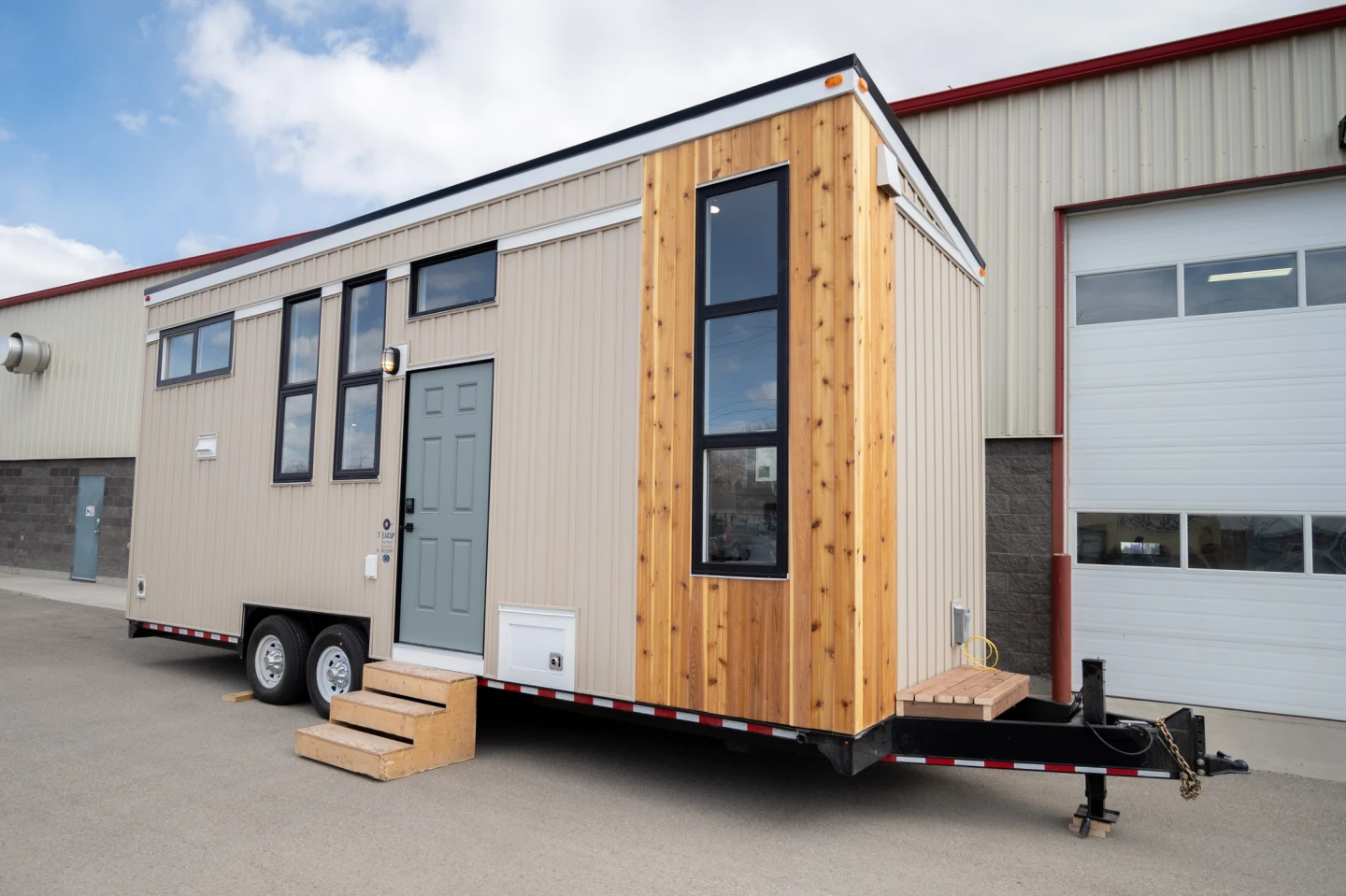
The Summer's Night Dream is a tiny house that actually remembers what the word "tiny" means, and that makes it more radical than anything else in the category right now. In a market where every new build seems to be a competition to see how many square feet you can cram onto a trailer, where houses like the Cali 9.6 tiny house trades vertical gymnastics for a single floor that actually breathes and the Skye Park Model got so wide it forgot it was portable, this one dares to stay small. It sleeps four, maybe more if you're friendly about it, and it does so in a compact space-saving frame that doesn't pretend to be a suburban ranch house on wheels. That's the whole point, and it's also the whole relief.
The thing about tiny houses is that they started as a counter-movement. They were supposed to be an antidote to the McMansion, a way to live with less and move when you wanted to. Somewhere along the way, the industry forgot that. Now you see builds that stretch eighteen feet wide, require a special permit to haul, and cost more than a studio apartment in a mid-sized city. The Summer's Night Dream doesn't do that. It doesn't need to. It trusts that clever design, a loft here, a convertible bench there, can do more than raw square footage. And it's right. The L-shaped Antonia turned its corner into a courtyard by rethinking geometry rather than just inflating dimensions, and this house follows the same instinct: work smarter, not bigger.
Here's the practical takeaway for anyone actually shopping for a tiny house right now: you should probably want this one more than the giants. If you're buying a tiny house to actually move it, to park it on a friend's land or rotate it with the seasons, you need something that fits within standard towing limits and doesn't require a CDL to pull. The Summer's Night Dream fits that brief. If you're buying one because you genuinely want to live with less, not just live with a smaller version of a normal house, then the restraint here is the feature, not the compromise. A house that refuses to be a big deal is a house that lets you get on with your life instead of spending it managing your shelter.
The open question is whether it ships. This is a concept, a design, a promise, and in the tiny house world, promises have a way of stretching out. But the idea itself is worth holding onto. A tiny house that stays tiny doesn't just save on materials and weight. It saves you from the creeping pressure to fill every square foot with stuff you don't need. That's the razor clam in this spec sheet, the detail everyone scrolling past the big houses might miss: sometimes the most ambitious thing you can build is the one that doesn't try to be more.