
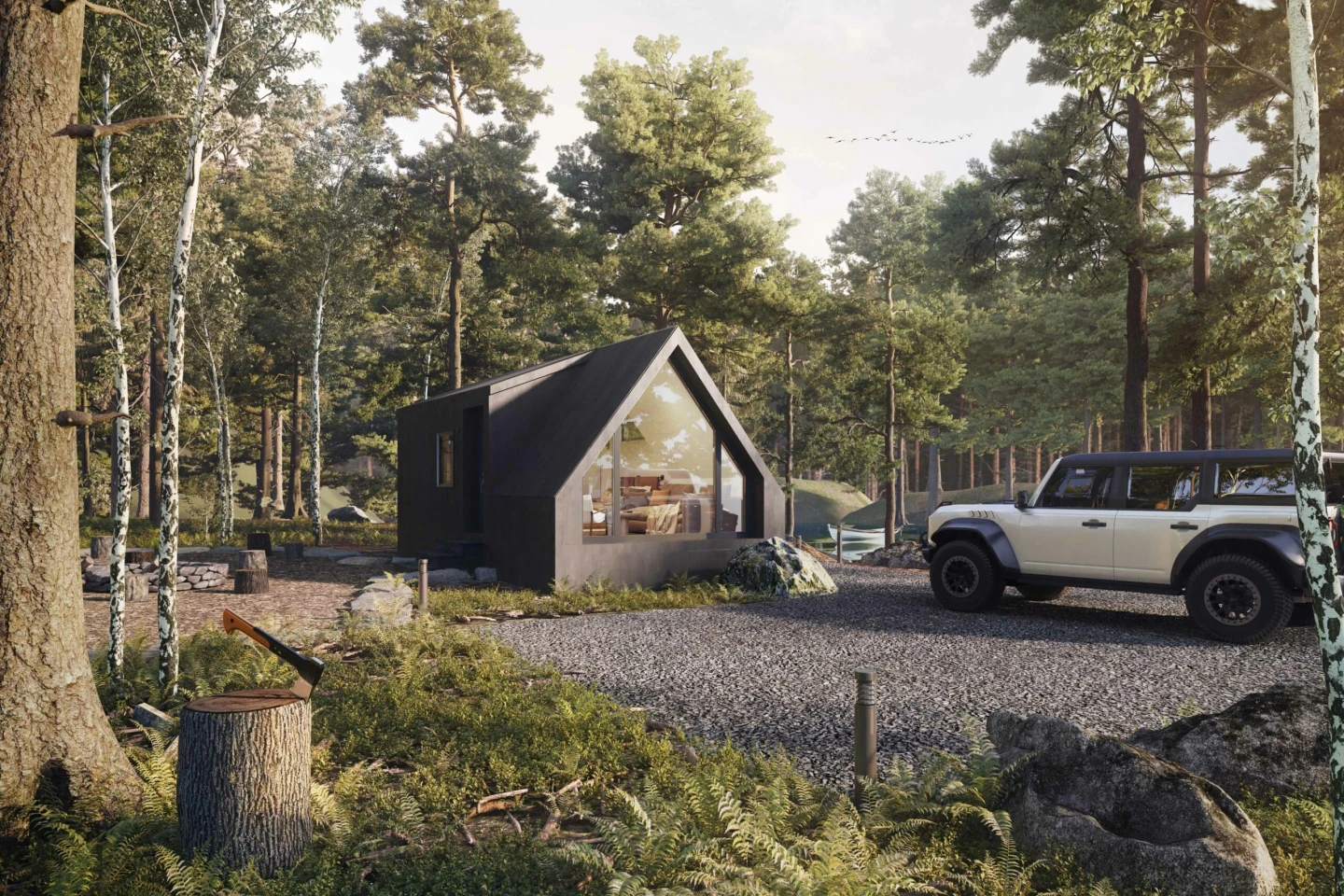
There is a quiet rebellion in this A-frame, and it has nothing to do with its triangular silhouette. While most tiny houses in this category lean so hard into reclaimed wood and cast-iron nostalgia that you half expect a flannel shirt to be included in the price, this one has the audacity to go modern. It pairs the classic steep roofline with an interior that feels less like a hunting cabin and more like a weekend design studio for two people who respect each other's space and want a bathroom that doesn't feel like a penalty. That matters, because the tiny house world has a bad habit of romanticizing discomfort. You are supposed to love the loft ladder and the composting toilet and the "cozy" six-foot ceiling, and if you don't, maybe you just aren't rustic enough. This model says something different: you can have the shape everyone recognizes and the layout nobody expects. It is, in the oldest and best sense, a little bit spooty.
The timing is interesting. Right now, The Onyx 2630 unrolls a porch from its 30-foot tiny house is proving that small living can be surprisingly comfortable when you prioritize outdoor connection over square footage. And Amazon's Echo duo gets a smarter home and a bigger ear is pushing the idea that a home should listen and respond, not just shelter. This A-frame sits somewhere in that overlap: a space designed not for survival but for actual living, where the bathroom is luxurious and the open living area is genuinely open. It is not trying to cram four people into a weekend getaway. It is built for two, and it commits to that number without apology. No lofted beds that require a climbing harness. No fold-down everything. Just a clean, modern interior that lets the roof do the dramatic work.
Here is the razor clam: most A-frames are structurally wasteful. That steep pitch creates a ton of empty volume at the peak, and most builders fill it with a loft that is either too hot, too cold, or too short to stand in. This model appears to have solved that by keeping the living space on one level and treating the vertical space as atmosphere rather than storage. That is a genuinely clever trade. You lose the sleeping loft, but you gain a room that breathes. You gain a bathroom that does not make you question your life choices. And you gain a layout that two adults can actually share without negotiating who gets the ladder at 3 AM. The question nobody is asking yet is whether the modern interior holds up to the elements as well as the rustic ones do. A cedar plank can take a beating. A flat white wall in a tiny house with a steep roof? That is a maintenance conversation the launch video probably skipped.
The specific takeaway is this: if you have been waiting for a tiny house that does not demand you cosplay as a 19th-century trapper, this is the one to watch. Not because it is perfect, but because it asks the right question. It asks whether the A-frame form can survive without the rustic crutch, and whether a modern interior can coexist with a shape that was born in the woods. The answer is not guaranteed, but it is worth the wait. Stay spooty, and keep an eye on that bathroom tile. That is where the real engineering lives.