
The problem with most "home office gear" roundups is that they're really just cubicle shopping lists with better lighting. They'll sell you a monitor arm that looks like a robot elbow and call it design. This collection from October's best office gear is different because it starts from a smarter question: what happens to this object when you're not working? The answer dictates everything, whether it folds into a fabric book, hangs on the wall as moss, or poses as a framed photograph. It's the difference between equipment that colonizes your dining table and equipment that negotiates with it. We've been tracking this tension for a while now. The TypAir straps a keyboard to your wrist so you can type without talking prototype asks a similar question about where input devices belong when your hands aren't at a desk, while the ePaper frame feeds on sunlight, not hype solves the same visual intrusion problem with a different material strategy.
The Logitech Casa Pop-Up Desk is the clearest example of the thinking here. It's not a desk. It's a book that becomes a desk. That elastic band and fabric cover aren't cosmetic, they're the functional argument that peripherals don't need to live in the open. Open it, and the case becomes your laptop stand; close it, and the table belongs to dinner. That's a genuinely different approach to the laptop stand problem than the usual slab of aluminum that sits there all night reminding you about the spreadsheet you didn't finish. Similarly, the Samsung Music Frame hides a six-driver speaker inside a physical photograph. No screen competing with your laptop, no glowing logo. Your choice of print determines whether it belongs in the room, which is more than you can say for most smart speakers that insist on announcing their presence with a light ring or a fabric grille that matches nothing.
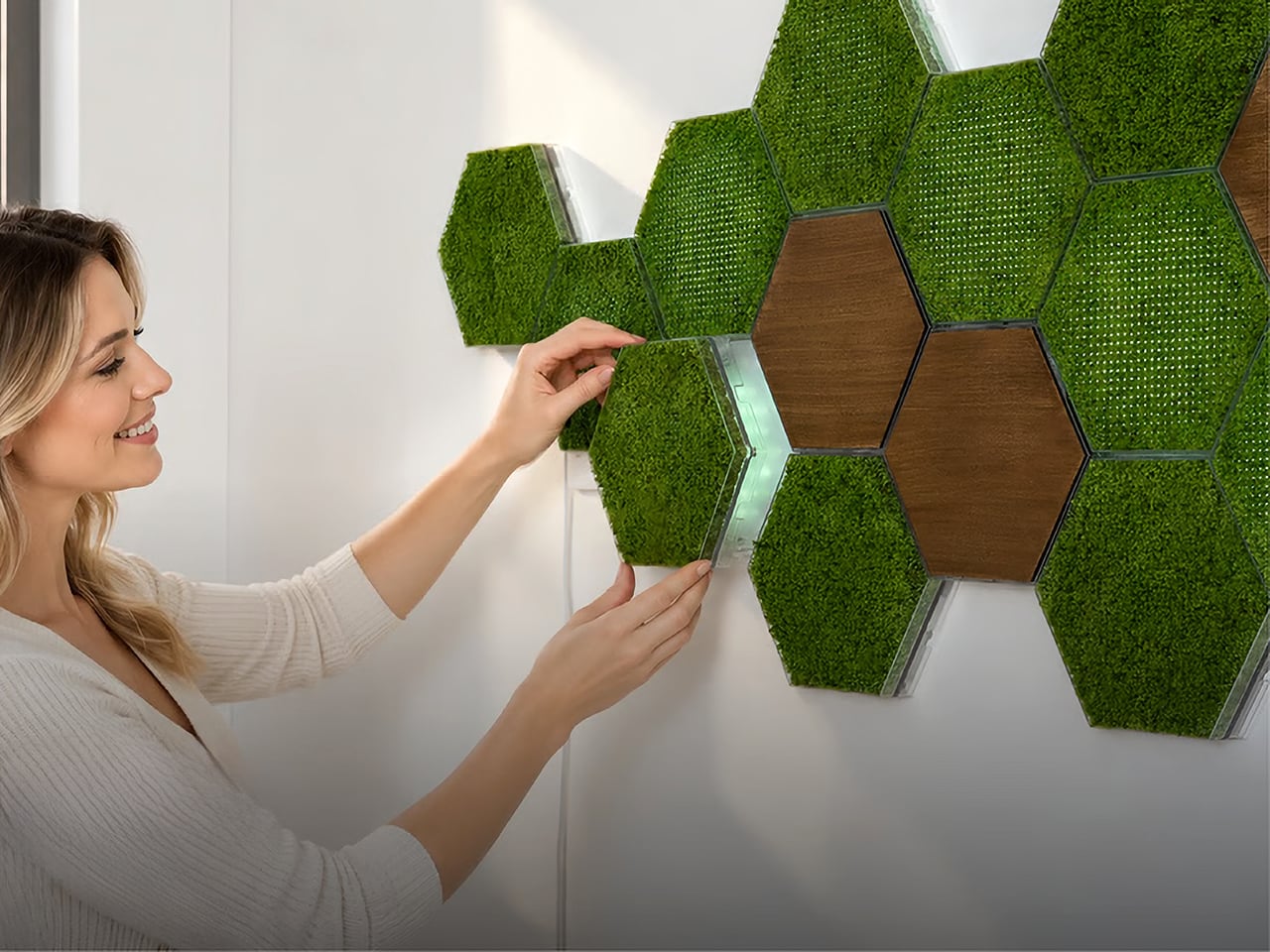
But here's where the collection earns its keep: not everything needs to disappear. The MOSSLAB Moss Hexa stays visible because living moss on the wall is better than another pot on your desk. The IKEA VARMBLIXT lamp stays visible because its matte glass donut has enough sculptural weight to sit beside actual books. The Courant MAG:3 tray stays visible because leather and linen make a charger look like a valet tray, and a valet tray has a reason to exist on a surface that also holds your laptop. The distinction matters. Objects that hide well are a solution to one problem, clutter. Objects that earn their place while visible solve a different one: the feeling that your workspace is always at war with your living space. The moss needs weekly misting, the lamp needs a Thread hub for phone control, and the Music Frame still needs a power cable. None of these are set-and-forget purchases. They ask for something in return for the visual peace they offer.
The practical takeaway is this: measure your surface before you buy anything, and decide whether your friction point is clearing the table or crowding it. If you're constantly packing up, the Casa or something that packs away completely is your answer. If your desk just feels dead, the Moss Hexa or the Music Frame brings life without adding a footprint. Don't buy the lamp because it's pretty and then discover 180 lumens won't light your paperwork. Don't buy the tray and realize you gave up 88 square inches for a place to put your keys. The best upgrade here isn't any single object, it's the permission to stop treating your home office like a cubicle annex and start treating it like a room that also has a laptop in it.