
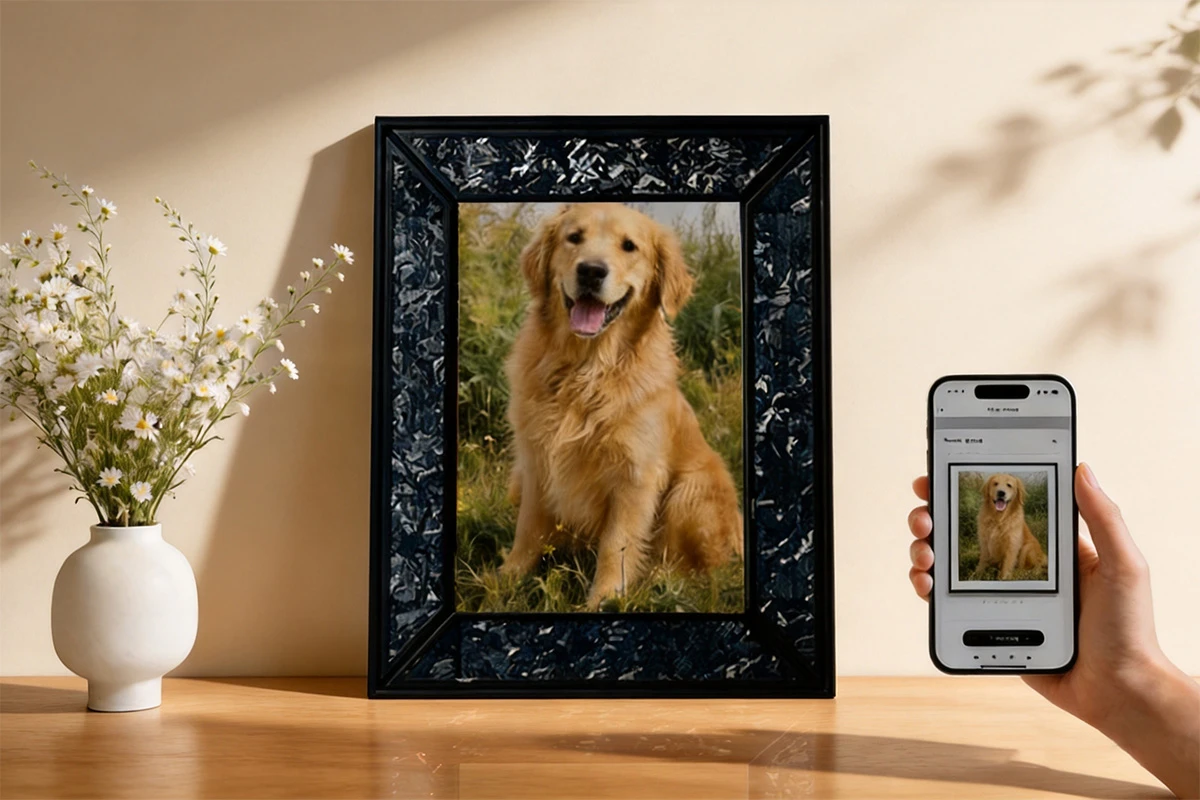
The first ePaper picture frame that runs entirely on sunlight sounds like the kind of thing that should have existed five years ago, and that's exactly why it's interesting. It's not a bigger screen, it's not a smarter frame, it's a frame that asks for nothing from you except a wall that gets light. That's the razor clam in this spec sheet: no cables, no batteries to swap, no charging dock pretending to be minimalist. The solar cell is the power source, and ePaper is the display, and together they pull off something that feels obvious in retrospect and radical in practice.
This thing lands in a weird moment for smart displays. Amazon's Bee wearable grows a wallet, and the price tag grows with it showed us what happens when a company asks you to wear a microphone for the privilege of having your conversations summarized. Apple's HomeView Finally Gives Your Smart Bulbs a Room With a View is a gorgeous piece of glass that still needs to be plugged in and connected and updated. Both of those products demand something from you, attention, wall space, a subscription, a plug, a willingness to be listened to. This ePaper frame demands a window. That's a genuinely different proposition, and it matters for anyone who has ever bought a digital photo frame, charged it for three months, and then watched it go dark because the cable was ugly and you lost the adapter.
Our opinion is straightforward: this is the kind of gadget that earns its place on a wall because it subtracts, not adds. It doesn't ping your phone, doesn't rotate through ads, doesn't require an app to change the photo (though it probably has one). It just sits there, sipping photons, showing a single image until you decide to swap it. That restraint is rare in consumer tech, and it's the reason this frame might actually outlive the Kickstarter campaign that's funding it. The campaign is live now, and the usual rules apply, this is a crowdfunding project, not a retail product, and the gap between a render and a shipping unit is where a lot of good ideas go to die. But ePaper is mature, solar cells are cheap, and the concept is so simple that the risk feels lower than most.
The concrete takeaway is this: if you have a wall that gets indirect light for a few hours a day, and you have ever wanted a piece of art that changes without asking you to remember to charge it, this is the closest thing to a set-and-forget decor object that the tech world has produced. The open question is whether the software side keeps up, whether swapping images is as frictionless as the hardware promises, or whether you end up wrestling with a clunky app while your sun-powered frame waits patiently for a new picture. That's the detail to watch. If they get the software out of the way, this frame disappears into the wall the way good design should. If they don't, it's just another clever thing that needed one more revision.