
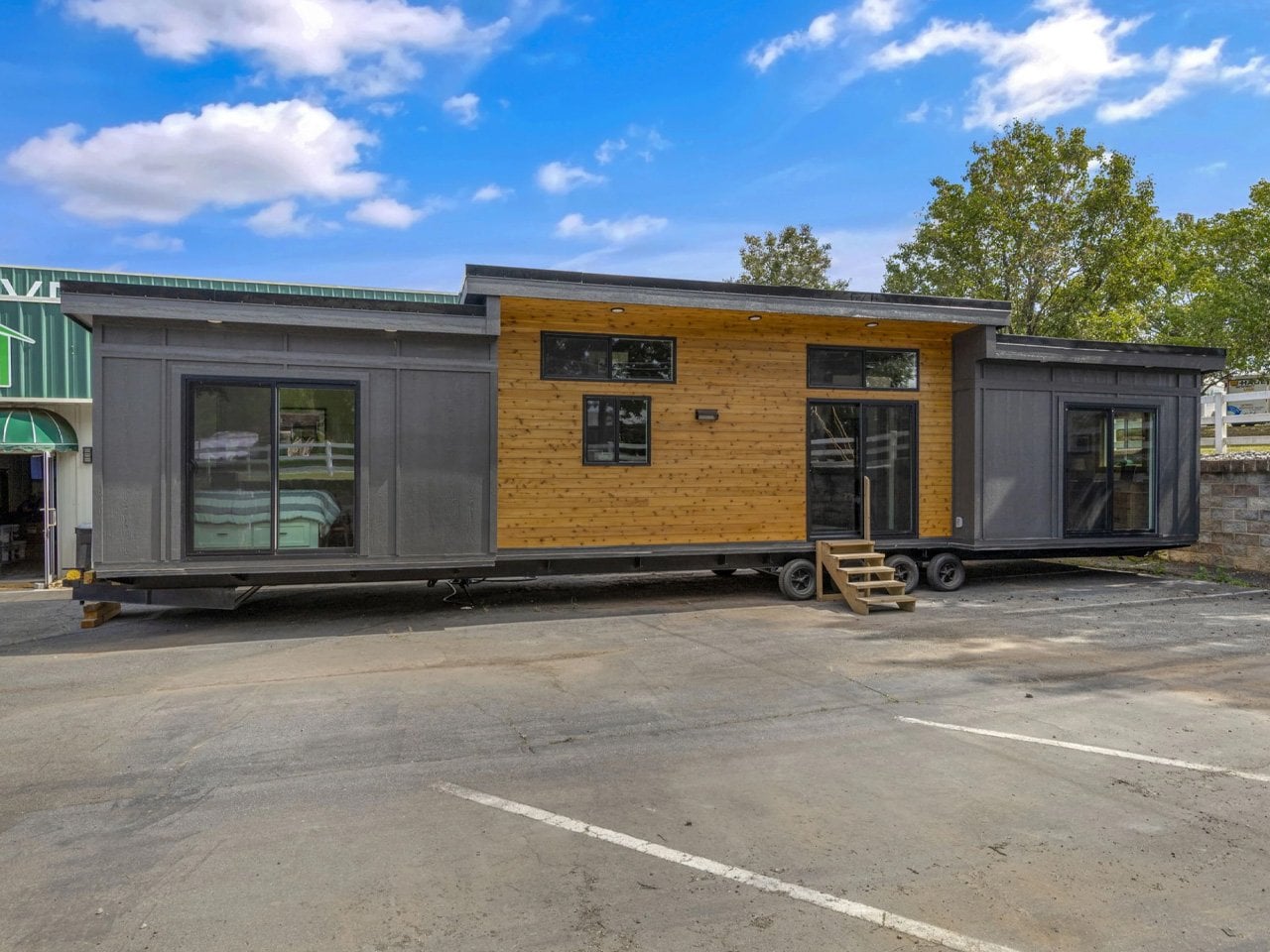
The Acadia doesn't whisper tiny. It shouts clever, and that's the only kind of tiny home worth paying attention to. Sweet-Haus has packed two bedrooms, two full bathrooms, and a kitchen you'd actually cook in into 700 square feet, and somehow made it feel generous. That's not just good design. That's the difference between a novelty and a home. For anyone who's ever circled back to a tiny house listing only to find a loft bed you reach by ladder and a compost toilet you empty yourself, the Acadia is the version where the word "tiny" stops mattering entirely. It sits on a quad-axle trailer, stretches 50 feet, and lands firmly in park model territory, the kind of home you place once and actually live in. Compare that to the Dragon Tiny Homes wedges a full-sized kitchen into 204 square feet, which proves you can do a lot with very little, but the Acadia proves you don't have to. And while That 20-foot tiny home burrows into the specs and finds a better floorplan shows what happens when every inch earns its keep, the Acadia shows what happens when you stop negotiating with yourself entirely.
The kitchen is the razor clam here, the detail everyone else scrolls past that tells you everything. Most tiny homes give you a two-burner cooktop and a mini fridge and call it a day. Sweet-Haus dropped in a Haier cabinet-depth fridge with bottom freezer, a 24-inch range, and an 18-inch dishwasher. That's a lineup that treats cooking as something that actually happens in this home, not as an afterthought you tolerate until you can afford a real house. The custom Ergo-craft millwork with soft-close hardware reads like furniture, not filler. The bathrooms offer a choice between a standalone shower or a tub/shower combo, a rare option at this scale, and one that says they expect someone to actually live here, not just sleep here between adventures. R19 insulation in the ceilings and floors, a three-head HVAC system, and black LowE 3 windows with argon gas fill mean the thermal performance matches the aesthetic ambition. At $176,500 MSRP, it's not cheap. But it's cheaper than most studio apartments in any city that matters, and it comes with two bedrooms and two full baths. The This A-frame cabin proves the best tiny house is the one you actually build makes a compelling case for doing it yourself, but the Acadia makes an equally compelling case for letting someone who knows what they're doing build it for you.
Here's the concrete takeaway: the Acadia is HUD-certified, which opens up financing options and simplifies placement in communities across South Carolina and North Carolina. That matters more than any square footage number. Most tiny homes on wheels exist in a regulatory gray zone, you can't get a mortgage, you can't park them in most RV parks, and you spend your weekends explaining to zoning boards why your 400-square-foot house is actually a dwelling and not a camper. The Acadia sidesteps that entirely. It's a park model that qualifies for conventional financing and slots into existing communities without a fight. The question worth watching: will Sweet-Haus ship beyond the Carolinas, or is this a regional solution for a national problem? If they scale the accreditation, this isn't just a clever floorplan, it's a template for how tiny living stops being a lifestyle choice and starts being a housing option. Stay spooty.