
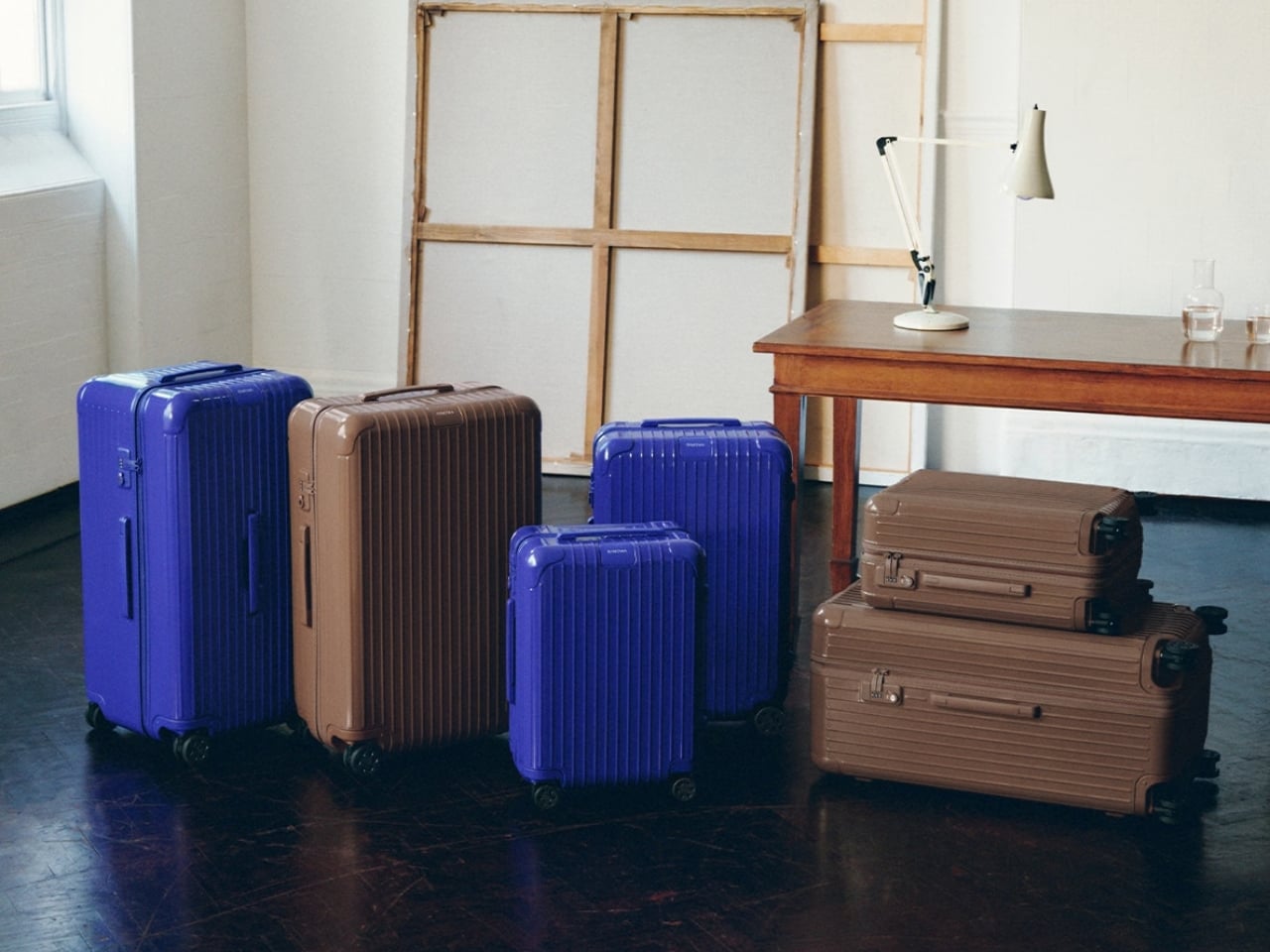
Here's the thing about the baggage claim carousel: it's the only runway where being forgettable is a design flaw. RIMOWA's new Umber and Ultramarine collection doesn't pretend to add packing space or shave minutes off a layover. It solves a quieter, sharper problem, the one where you're squinting at a river of black and gray hard-shells, wondering which one is yours. The new shades are an earthy brown and a deep, saturated blue, and they're a more considered answer than slapping a highlighter print on a case. This is the same instinct that makes us circle back to a sofa outlet that finally learned to reach you or a tiny home that proves better design beats more square footage: the small, sharp detail that changes how the thing works in real life.
The takeaway here is simple: RIMOWA didn't release a new suitcase. It released a way to stop playing the world's most expensive game of "which one is mine" without wearing a neon sign. Umber and Ultramarine are not novelty colors. Umber is an earthy brown, the kind of warm, grounded tone that reads like an old leather travel bag but sits on RIMOWA's grooved Essential silhouette like it owns the place. Ultramarine is a deep, saturated blue with enough pigment to hold its own in a sea of black and gray. Neither is a highlighter. Neither needs to be. The brand even tied the shades to historical pigments, Umber from earth, Ultramarine from lapis lazuli, and while that could have been marketing fluff, it actually gives the palette a logic: these are colors with history and weight, not shades picked because they'd pop on a phone screen. That matters, because at $990 for an Essential Cabin, you're not buying a passing trend. You're buying something you'll spot from across a carousel for years.
The quiet genius here is that RIMOWA didn't redesign the suitcase. It recolored the details. On the Essential silhouette, the color carries across the hardware for a monochromatic finish, which keeps your eye on the grooves and the shape of the case instead of breaking it up with contrasting bits. That's the same instinct that makes a well-chosen accessory worth circling back for, like Leatherman's sharpest EDC tools quietly slashed to half off, where the value isn't in a flashier tool but in a sharper, more considered way to carry one. The difference here is the price tag: RIMOWA lists the Essential Cabin in Ultramarine at $990, so the shade had better earn its place in your travel rotation. And that's the quiet argument Umber and Ultramarine are making, not that color will fix your travel life, but that a familiar shape can feel new when the details stop shouting and start working.
The entire premise rests on a small, sharp observation: the problem with good luggage is that everyone else bought it too. Rows of black and gray cases roll past, and your carefully chosen bag becomes the one you have to squint at. Color seems like the obvious answer, until it becomes the loudest thing in the terminal. What I appreciate here is the restraint. Umber and Ultramarine aren't a highlighter test. Umber carries the warmth of an old leather bag, and Ultramarine has the depth of lapis lazuli, according to the brand's campaign. Both colors run through the hardware for a monochromatic finish, which is a detail I love because it keeps the eye on the case's shape instead of breaking it up with contrast. That's the kind of decision that makes a product feel intentional rather than painted. It's the same energy as Your sofa's hiding the one outlet that finally learned to reach you, nobody needs another black box pretending to be invisible, and nobody needs another black suitcase pretending to be a statement. The point isn't the color itself; it's that someone finally thought about the object as a whole.
RIMOWA's framing of the two shades as modern riffs on historical pigments, Umber from earth tones, Ultramarine from lapis lazuli, could have been the kind of origin story that makes your eyes glaze over. But it lands because it gives the palette a logic beyond what