
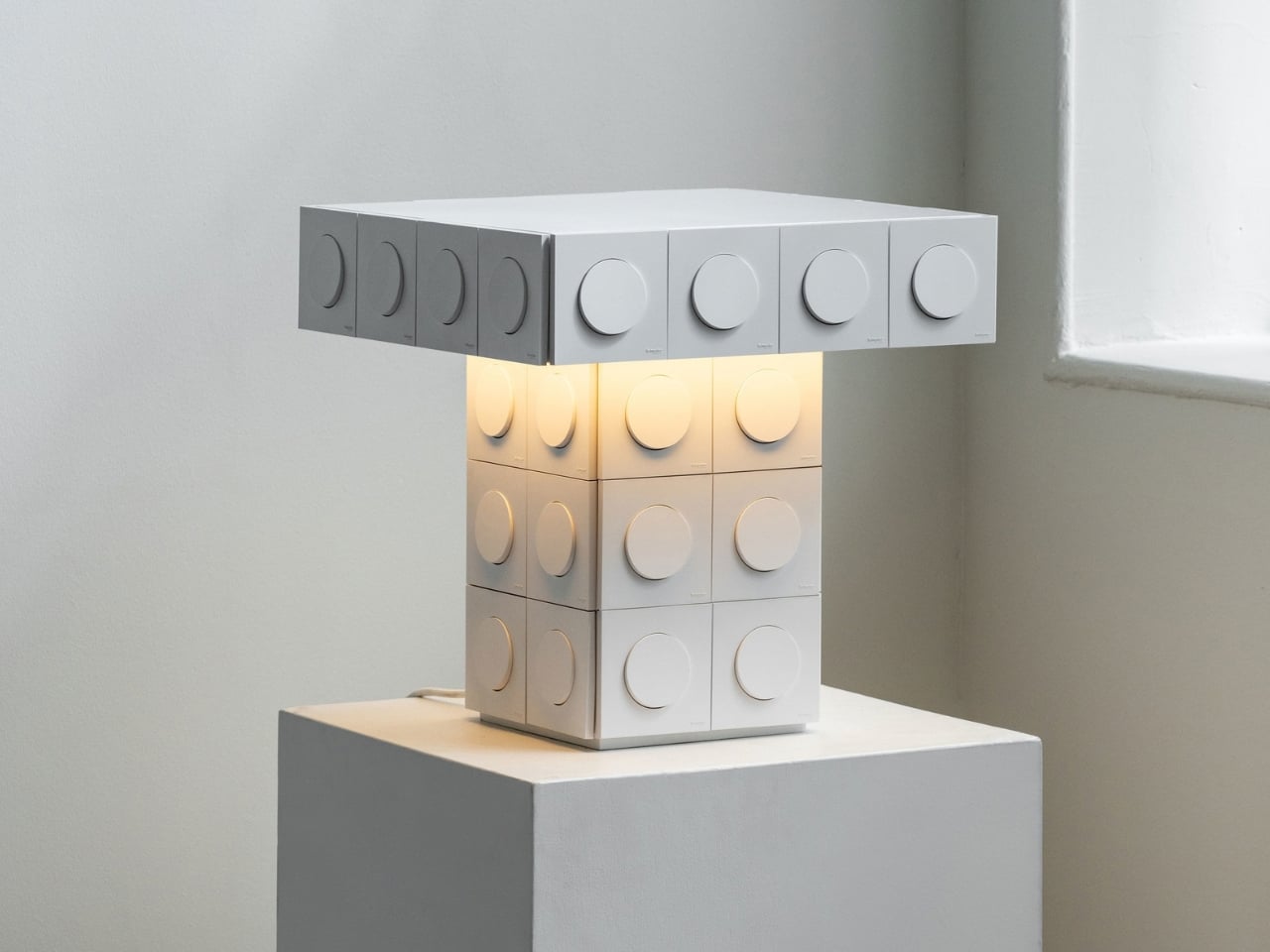
The outlet behind your sofa has been lying to you. It pretended it was usefully placed, and you pretended not to notice the daily contortion act required to charge anything. Volt Face, the collection from Studio 5.5 working with Schneider Electric's Odace sockets, finally calls the bluff. It takes the wall plate we've been hiding and puts it right on the furniture, in plain sight, where it should have been all along. This is not a revolution. It's a simple, welcome correction, and one that feels far more honest than the That 20-foot tiny home burrows into the specs and finds a better floorplan approach of squeezing more out of less space, because Volt Face doesn't ask you to sacrifice anything. It asks you to stop pretending the electricity isn't there.
The appeal is in the directness. A bedside table from the collection puts the outlet where you actually reach for it, not six inches lower and two feet to the left. A pendant light integrates its switch visibly, so you don't pat the wall in the dark. This is the opposite of the glossy, cord-concealing furniture that promises a seamless room but actually just hides a tangle behind a false panel, a promise that, like many crowdfunding campaigns, sounds great until you have to replace a broken charger and realize the whole lamp is now e-waste. Volt Face keeps its parts standard and its intentions clear. It's the design equivalent of Spoot stares at Samsung's SmartTag3 battery for 790 days and refuses to blink: a quiet, stubborn insistence that the useful thing should actually work well over time, not just look good on launch day.
The real takeaway here is about how we think about rooms. We plan for the sofa, the table, the lamp. Then we work around the outlet, or we buy a power strip and hide it under a rug. Volt Face suggests a different hierarchy: let the electrical point inform the furniture's shape, not the other way around. That doesn't mean every socket needs to become a design object. It means the ones in heavy-use spots, the bedside, the desk, the sofa arm, could stop apologizing for existing. A smart switch is neat, but a switch that's where your hand naturally falls is smarter.
Will it work in every home? Probably not. The collection uses specific modules and likely requires compatible wiring. That's fine. The question Volt Face leaves open is more interesting than its own product catalog: why do we keep designing furniture that ignores the one thing we plug into it every single night? If a table can acknowledge your phone, your lamp, and your glass of water in one honest gesture, the outlet has done more than most smart home gadgets ever will.