
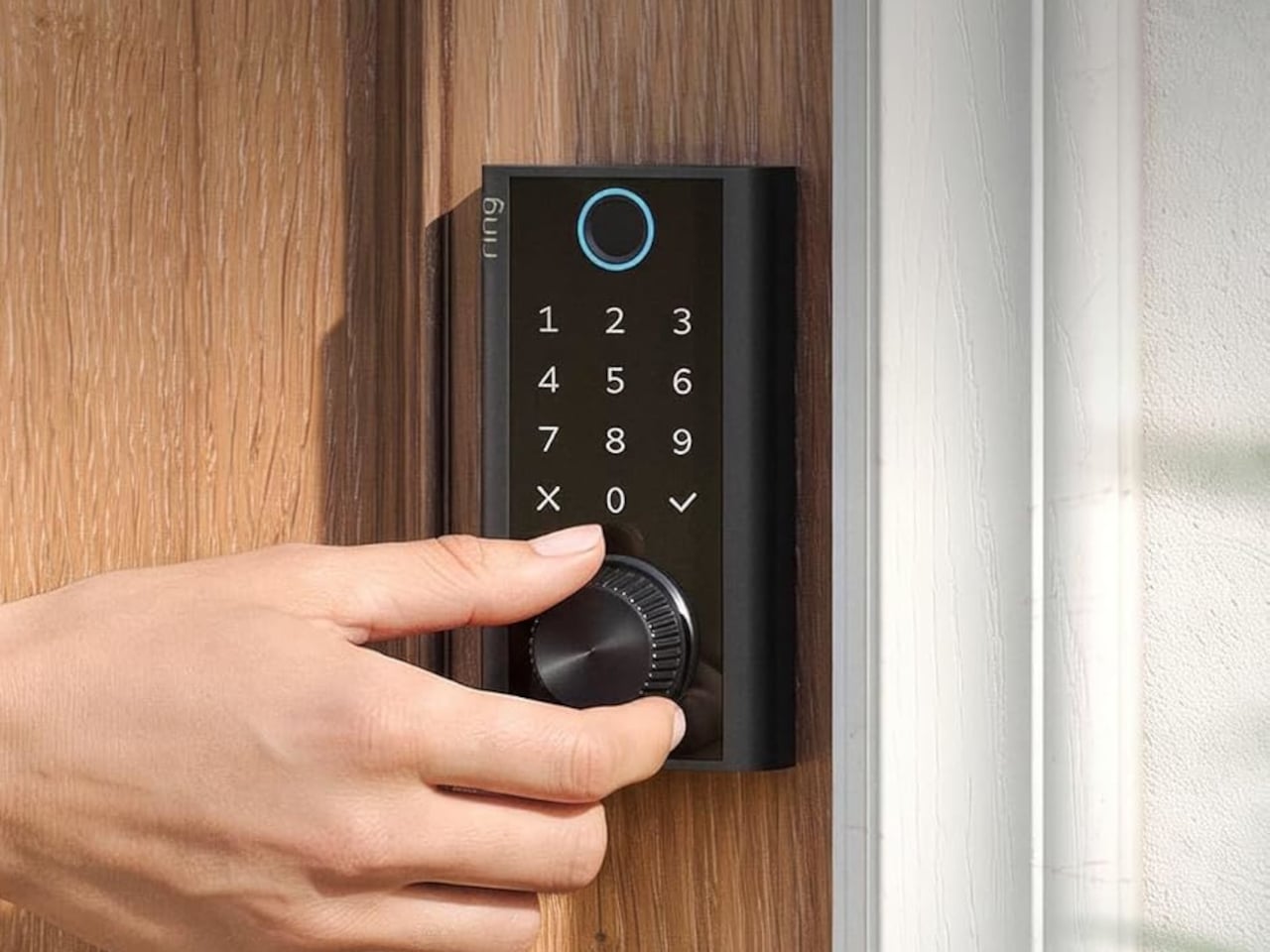
Ring's first-ever smart lock has a crank. A literal, turn-it-with-your-fingers crank. That's the headline, and it's the only part of this story that actually matters, because it solves the one problem that makes every other smart lock feel like a trap. You're standing there with groceries, the battery is dead, and instead of fumbling for a hidden key slot or a backup battery pack that you definitely did not bring to the farmer's market, you just turn a dial. The lock wakes up long enough to take your code. It's such an obvious idea that you'll wonder why nobody did it sooner, and then you'll remember that most smart lock companies would rather sell you a $20 backup battery kit than admit their product has a single point of failure.
The $249 Ring Smart Lock, expected in early 2027, is designed around that crank. It sits beneath a backlit touchscreen keypad and a circular fingerprint reader, stacked like a control panel rather than bolted awkwardly onto a deadbolt. On a normal day, you touch the fingerprint reader or tap in a code. The app works over Amazon Sidewalk, not your home Wi-Fi, which is a detail worth watching, it means remote access depends on coverage you might not have. But the crank is the thing. It powers the keypad just long enough to unlock the door, and it's the kind of low-tech solution that feels like a secret handshake between you and the product. It's also the kind of detail that Your luggage twin is rolling by right now, unless you pick these two new shades readers will recognize: a small, practical fix that nobody asked for but everyone will miss once they've used it.
The battery itself is a rechargeable pack that slides out without extra wiring, which means you don't have to hardwire the lock into your door frame. That's nice. But Ring hasn't disclosed battery life, and that's the other shoe. If the crank is a failsafe for when you forget to charge, how often are you expected to forget? The lock works with a standard single-cylinder deadbolt, so installation is straightforward. It shares the Ring app's activity feed with doorbells and cameras, which is convenient if you're already in that ecosystem and a subtle nudge if you're not, no camera built in, but the app integration is there waiting. The design comes in black, silver, and brass finishes, and it looks more like a considered object than a plastic brick. That matters. Your sofa's hiding the one outlet that finally learned to reach you was about an outlet that finally met you where you actually sit; this lock meets you where you actually stand, groceries in hand, battery dead.
The open question is Sidewalk. Ring says local unlocking happens at the door, so the crank and the fingerprint reader work without it, but remote features, the app, the activity feed, Alexa voice control, require Sidewalk coverage. That's a condition beneath the promise of convenience, and it's the kind of detail that makes you wonder whether the crank is a backup for the battery or a backup for the network. Either way, the lock is smart enough to know when to stop being smart. The specific takeaway: if you've ever been locked out of your own house by a dead smart lock, this is the first one that admits that will happen and gives you a way out without a second trip to the hardware store. That's not a feature. That's an apology for every other lock that left you standing in the dark.