
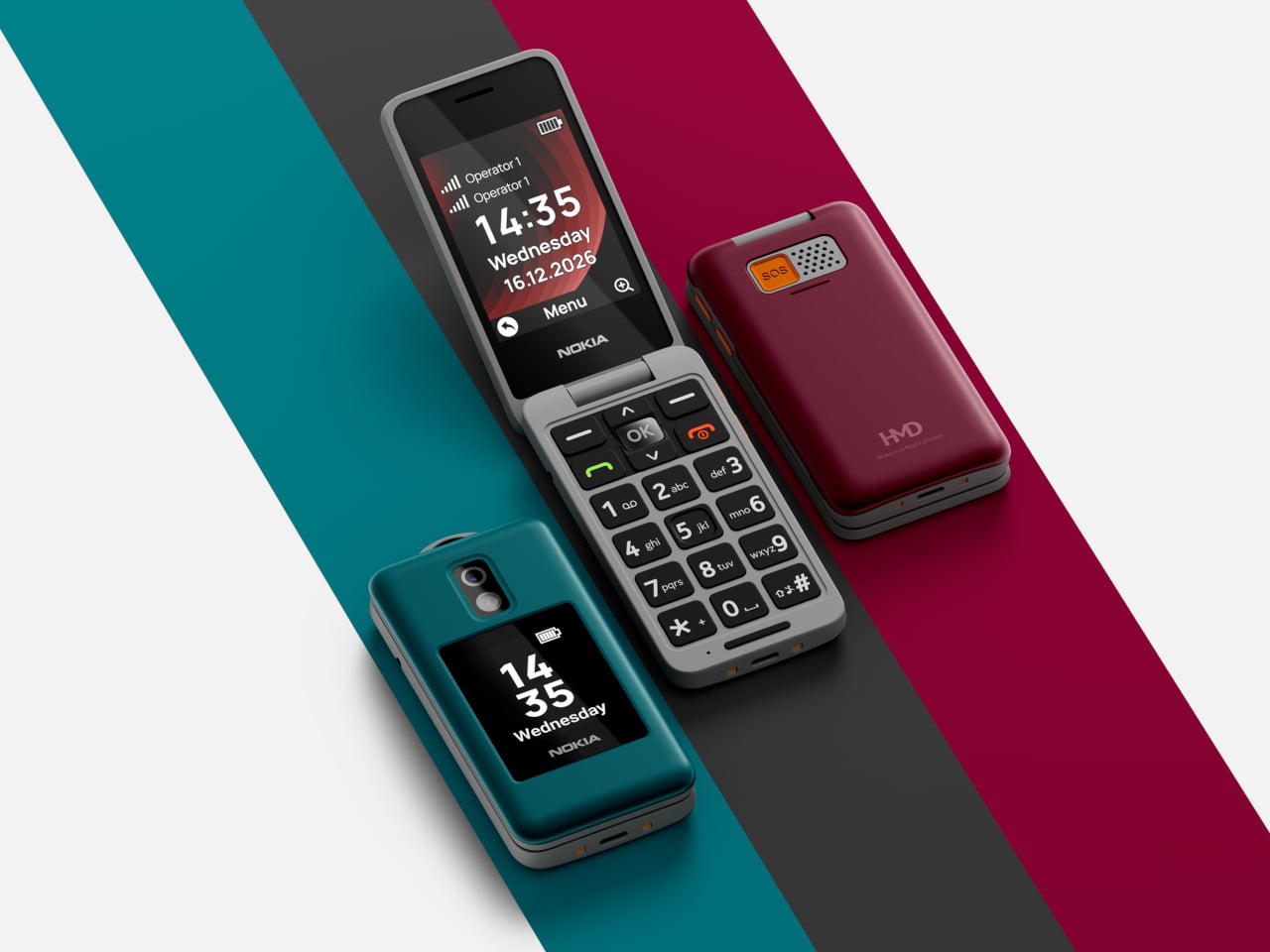
The Nokia 2360 Flip Phone is a thoughtful device built on a vanishing foundation, and that tension makes it impossible to fully recommend without a fistful of caveats. HMD has designed something genuinely considerate here, large buttons, a clamshell that answers and ends calls by opening and closing, remote contact management via SMS, an orange SOS button on the back, and then strapped it to a radio that only speaks 2G. That is not a small footnote. That is the razor clam hiding just below the spec sheet, and it changes everything.
For the person this phone is actually for, someone who finds smartphone menus overwhelming, who needs a family member to quietly update contacts from another room, the network limitation is not an abstract concern. It is a ticking clock. In the US, T-Mobile already turned off 2G in August 2026, leaving no major carrier with service. In the UK, EE plans to begin shutting down 2G in May 2029. The phone itself has a removable 1,450mAh battery and a USB-C port, suggesting HMD expects it to last. But a replacement battery cannot bring back a decommissioned tower. This is a different kind of obsolescence than the one we usually argue about, not planned software bloat, but a silent infrastructure withdrawal that makes the device inert regardless of its condition. It reminds us of another recent launch where clever design ran into a hard reality: the Draco the smart telescope wakes itself up to shoot stars while you sleep depends on clear skies and a willing app ecosystem. At least the stars will still be there tomorrow.
The Family Assist feature is genuinely clever. A relative can add contacts, set reminders, adjust volume, and configure SOS settings from their own phone via SMS, which means the Nokia does not need a data plan. That is the kind of detail that shows someone thought hard about the actual use case, the doctor's number changes, and the person holding the phone should not have to learn a new menu system to save it. The orange SOS button, held for three seconds, calls one preset number and texts up to five emergency contacts. These are features built around real moments of friction. But they all require a working cellular connection, and that connection is on borrowed time. The phone's parental controls and School Mode, which block everything but the clock and emergency calling, are similarly thoughtful, yet they raise the same question: who builds a device for long-term, low-fuss use and ties it to a network with a known sunset date?
We have written before about products that ask you to rethink what a thing should do rather than just do what it already does better. The Aura Smart Bird Feeder takes a $140 dive, and Spoot is watching from the couch made a similar bet on remote engagement over local simplicity. The Nokia 2360 makes its own bet, but the stakes are higher because the user is more vulnerable. A bird feeder that loses connectivity is a plastic box. A phone that loses connectivity is a brick with a loved one's emergency number trapped inside.
HMD has not announced pricing or retail availability internationally. That is an unusually wide open question for a device this close to launch. Before considering one, families need to check local 2G coverage, supported bands, and carrier shutdown plans, an awkward extra assignment for a phone built around removing assignments. The specific takeaway here is blunt: if you buy this phone for someone, you are also signing up to monitor whether their network still exists next year. That is not a feature. That is homework.