
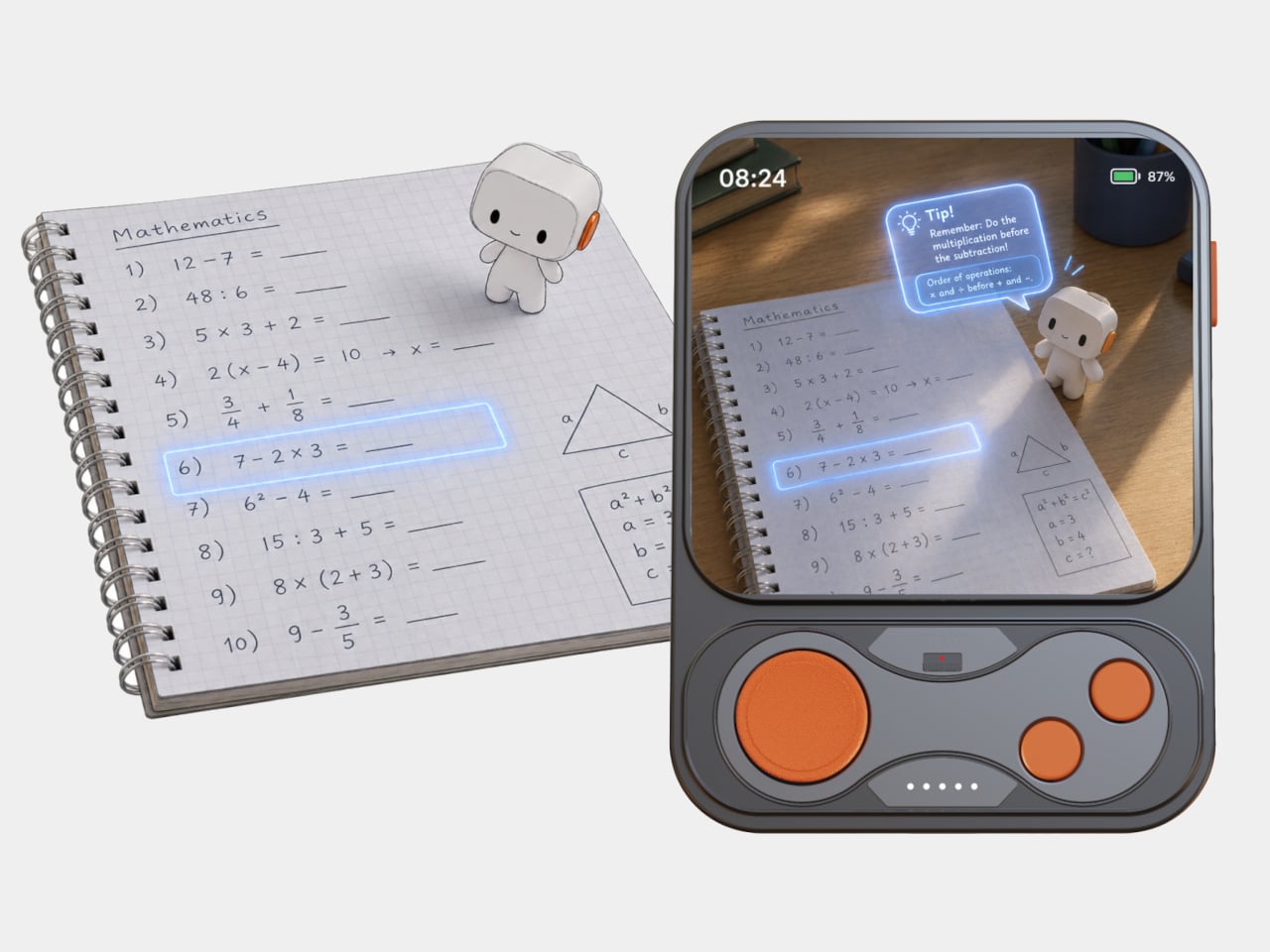
The joystick on Nico is the smartest thing in this concept, and it's also the thing most likely to get buried under the usual AI companion chatter. A handheld learning device that borrows the thumb-driven logic of a game controller is a genuinely interesting idea, because it treats the act of asking for help as a physical motion rather than a verbal one. You steer toward the problem. You don't type a question. You don't wait for an answer to drop from the cloud. You move. That's a small but meaningful rethinking of how a child interacts with a machine, and it's worth paying attention to before the inevitable Kickstarter video adds a dozen features that dilute the core.
The hardware itself is clean, a dark gray slab with an orange joystick and two buttons, arranged exactly where a child's thumbs would expect them. Designer Mikail Yücel Erdogan understands that a physical button beats another icon on a touchscreen, especially for a kid who might already associate joysticks with Mario rather than multiplication. That familiarity could lower the friction of asking for help, which is the whole point. Nico the character lives on the display, not in the plastic, so the device can shift from homework helper to virtual pet when the worksheet is done. That dual life is where things get complicated. The same joystick that nudges a child toward a math hint also opens a mini-game world, and the device that helps with fractions also offers a place to hide from them. The Tinde's porch roof steals the show before you step inside understood that a tiny house needs its most compelling space to be the one you occupy first; Nico needs to decide whether its most compelling space is the homework screen or the play screen, because those two paths lead to very different products.
The hint-based approach is the right instinct. Nico points out that multiplication comes before subtraction without filling in the blank, leaving the child to finish the calculation. That distinction, between finishing and understanding, is the razor clam in this spec sheet, the narrow detail that everyone else will scroll past while they argue about screen size and battery life. A device that refuses to give the answer is a device that respects the child's ability to figure it out, which is more than most educational apps can claim. But the concept leaves the hard questions unanswered. There is no stated privacy policy for the camera and microphone, no explanation of parental controls, no identified AI model. Those are unresolved design decisions, not evidence of wrongdoing, but they matter more than the joystick placement. The Traveler folds out a bed so you never climb a ladder solved its access problem with a single mechanical choice; Nico has not yet solved its trust problem with a single policy choice.
The important test for Nico won't happen in a concept render. It will happen when the device is turned off and the pencil starts moving again. If the child returns to the worksheet with a better idea of what to try next, the joystick earned its place. If the child reaches for the mini-games instead, the joystick became a distraction. That's a binary outcome that no amount of cute character design can fudge, and it's the one detail worth watching as this concept moves toward production, or doesn't.