
Kevlar has finally earned its vacation, and I want to shake the hand of the person at Benks who looked at a ballistic fiber and thought, "that needs a sunset gradient." The Haven Azure and Haven Rouge cases for the iPhone 18 Pro are genuinely surprising, not because they protect your phone, that was always the easy part, but because they treat a material born in a DuPont lab in 1965 as if it were a silk tie from Lake Como. This is the same kind of material recontextualization we loved in Spoot's not shelving this Kojima collab: it's checking if the gear holds up, where game-world gear asked to be carried, not just displayed. Benks is doing something similar: taking a fabric that stops bullets and asking it to look like a lake breeze. The trick is the weave. Benks uses a 600D floating jacquard technique, which is a fancy way of saying the pattern is built into the fiber itself, not printed on top. An 1800s loom would recognize the method, Joseph-Marie Jacquard automated it with punched cards, but nobody back then was feeding Kevlar through it. The result is a surface that can't scuff off because the color is the structure. That matters for a phone case, which lives in pockets, slides across tables, and gets dropped on pavement. Most cases look good for a week. These might look good until you lose the phone. The 600D denier rating, finer and denser than the common 1500D, gives a smoother surface and a slimmer profile, which is the kind of spec-sheet detail that makes Spoot sit up straighter. This is also where Benks earns the gentle skepticism we bring to every launch: the company is billing the 600D Kevlar jacquard as an industry first, and the product shots support the claim. Azure ripples in layered blues that read like sunlight on water, and Rouge glows in burgundy and pale gold that Benks calls Rouge Valley Red, a name that sounds like it was chosen by someone who has actually watched dusk settle over a valley. The weave gives each colorway a cross-stitch texture up close, tiny stitched pixels that add a handmade feel to a mass-produced object. That is rare, and it is worth the $69.99 price tag. But let's talk about what the case actually does, because hype loves to skip the practical details. The Haven series wraps the phone in a full-coverage shell with a raised metal camera frame, important for the iPhone 18 Pro, which has a physical variable aperture that deserves actual protection, not just a thin lip. The ArmorKey covers the Camera Control button entirely, and Benks promises crisp clicks, which is the kind of tactile promise that either delivers or doesn't. The case also has a built-in magnetic core for MagSafe accessories, so your charger and grip stay put. It's slim enough that you won't feel like you're carrying a brick, and the Kevlar texture wraps around the edges for slip resistance. The design choices here are smart, not flashy, and that's what we look for in a product that costs seventy bucks. Compare this to the material experiments in Denim plates and paper chairs: five ways scrap gets weirdly good, where designers asked what happens when you treat waste as a resource. Benks is asking a similar question: what happens when you treat a serious material as a canvas? The answer is a case that protects your phone and also makes you want to look at it. The open question, and this is the detail to watch, is whether the color holds up over a year of daily abuse. Benks says the design is woven into the fiber, not laminated on, so it shouldn't peel. But Kevlar is notoriously hard to dye, and the 600D weave is new territory. If the blue stays blue and the red stays red after six months of pocket lint and coffee shop tables, then Benks has done something genuinely impressive. If it fades or frays, then it's a clever idea that couldn't survive the real world.
camera phone features
Kevlar phone cases are here, and they're more vacation than vest
Kevlar has spent most of its career in serious places, like bulletproof vests, racing tires, and the occasional helmet.
4 min readYanko Design
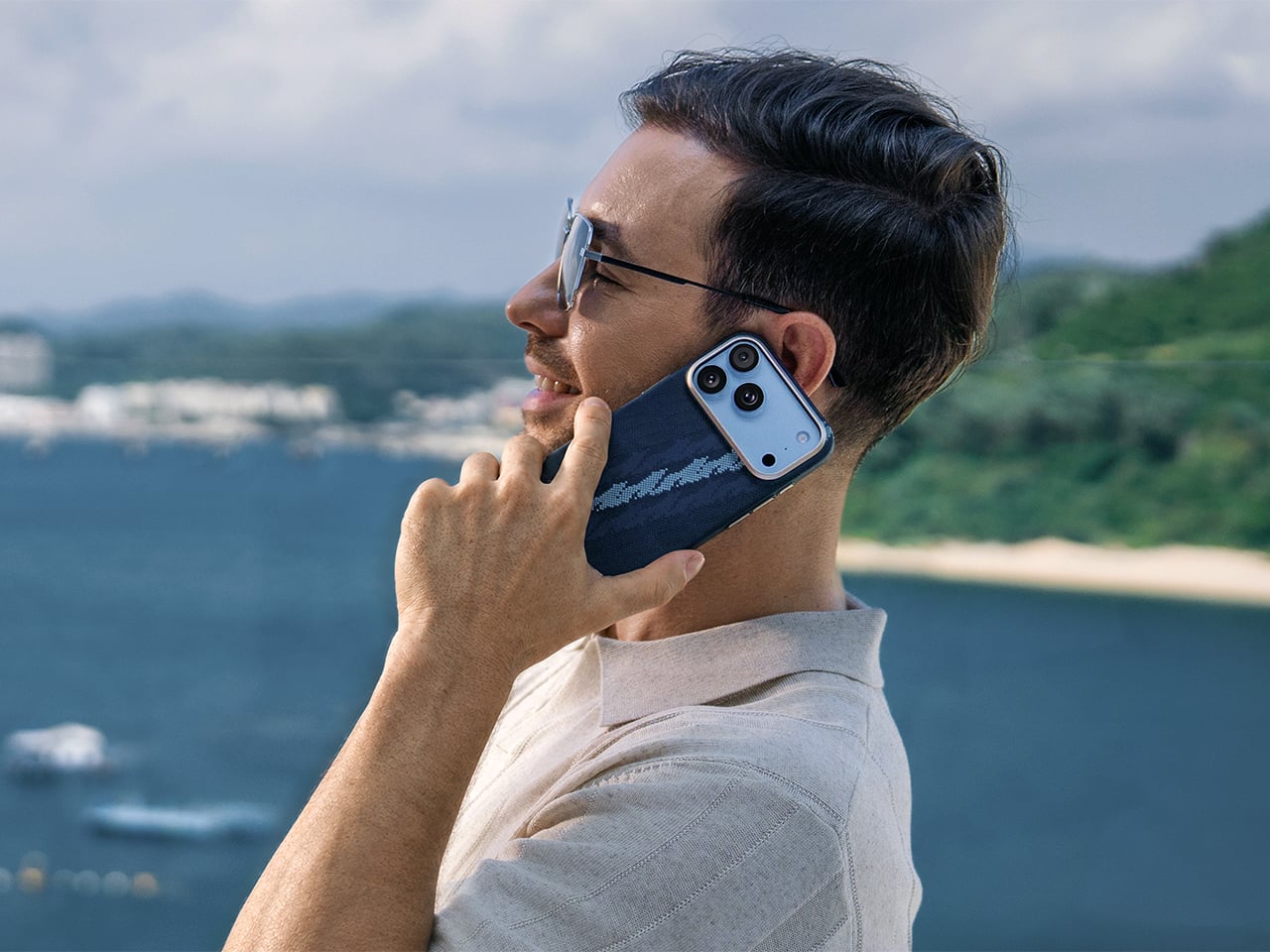
Kevlar has spent most of its career in serious places, like bulletproof vests, racing tires, and the occasional helmet. Chemist Stephanie Kwolek invented it at DuPont in 1965, and I doubt anyone in that lab imagined a functional fabric like Kevlar would one day be asked to look classy. Today the fiber basically has a second life as a fashion fabric. I find that delightfully absurd, like learning your bodyguard also had a career as a swimsuit model. Benks has been leaning into that split personality for a while, and its latest drop takes it somewhere sunnier.