
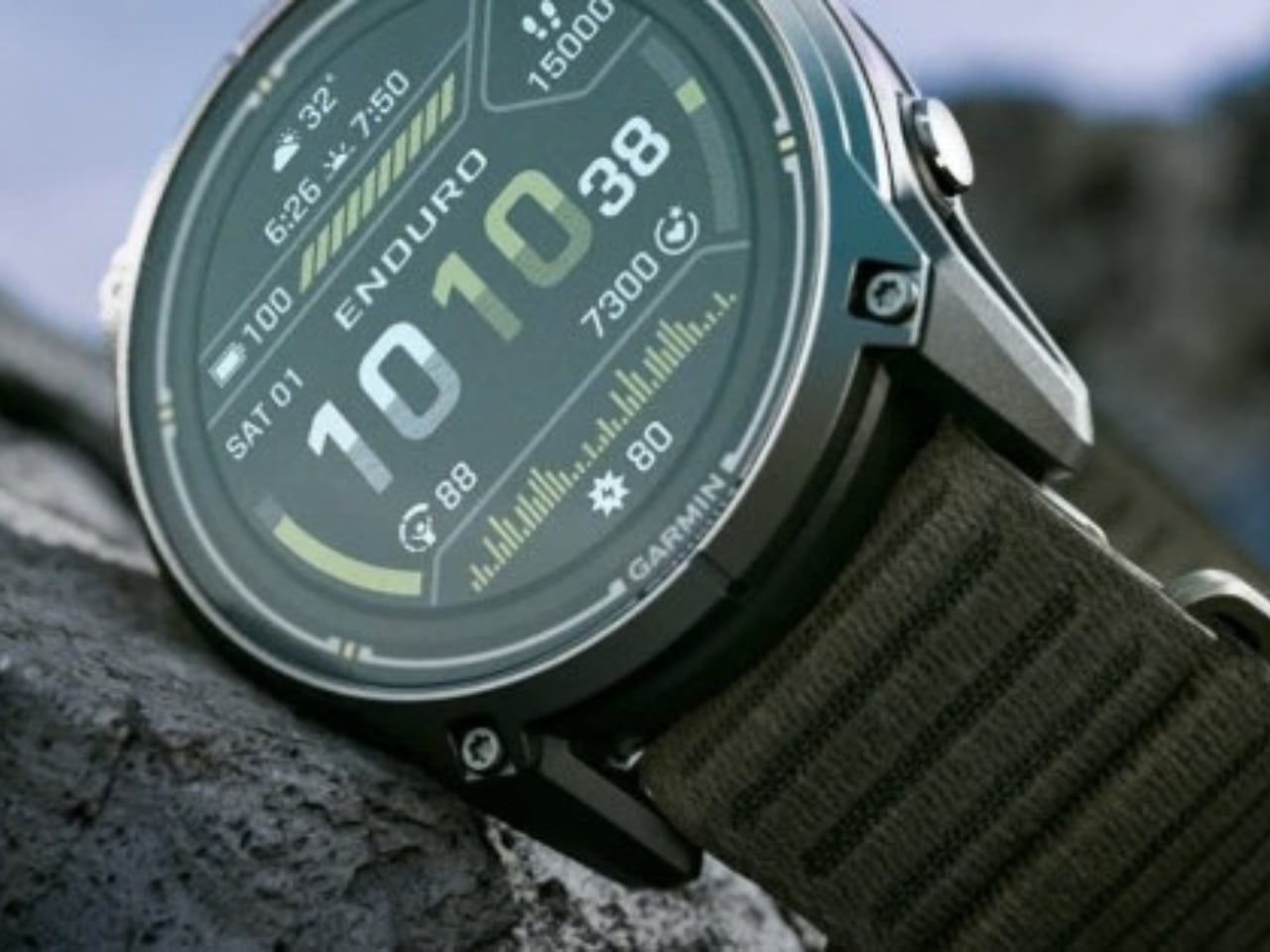
Here's the thing about a 320-hour battery: it's not a spec, it's a dare. Garmin looked at the entire genre of wearable anxiety, the phantom percentage drain, the mid-ultra low-battery panic, the silent calculation of whether you can stretch one more day, and responded with a watch that basically says, "Stop thinking about me." The Enduro 4's 320 hours in activity mode is the kind of number that makes you wonder why every other smartwatch still treats a long weekend as a crisis. But Spoot doesn't do hero worship. The real question is whether all those hours actually change what you do, or if they're just a number that looks good in a spec sheet. And that's the same question we'd ask of any launch, especially when we've seen how quickly Amazon's October sale nibbles Apple prices without asking if you really need a new iPad or how two Anker 45W chargers for under fifty bucks can tempt you into buying something you never planned to want.
Spoot's take: Garmin knows exactly what it's doing, and the Enduro 4 is the most honest argument for a watch I've seen in a long time. The 320-hour activity-mode figure is a promise built around a specific kind of person: someone who measures trips in days, not hours, and who has been burned by a watch that died at mile 42. The Approach S72, meanwhile, is a quieter kind of flex, a golf watch that wants to feel like an everyday wearable, not a rangefinder strapped to a wrist. Neither one is trying to be everything. That is exactly why they work.
The Enduro 4 is not subtle about its priorities. A 51mm case, a titanium bezel and a fiber-reinforced polymer case add up to 66 grams, which is substantial without feeling like a brick. Garmin rates it for up to 320 hours of activity mode or 90 days of smartwatch mode, with solar charging doing the heavy lifting under ideal conditions. Those numbers are best-case, and the story says so. The real point is the design priority: spend less time managing the watch, more time moving. The S72 takes the opposite path. It uses a bright AMOLED screen and a smaller 43mm or 47mm case because its job is legibility on the course, not weeks in the backcountry. It tracks swing metrics, reads greens with contour data and pairs round data with heart-rate trends. It is a different animal, but the same species: a tool built around reducing uncertainty. Neither watch is trying to be everything. The Enduro 4 says: your plans outlast ordinary battery life. The S72 says: your golf game deserves better feedback. That is a refreshingly specific way to design hardware. Plenty of wearables chase specs that look good on paper. Garmin is chasing moments when a watch can actually help, and that is a far more interesting product story.
OUR TAKE: Spoot's take on this story: 320 hours. Let it sink in. That is not a weekend. That is not a week. That is nearly two weeks of continuous activity tracking, and Garmin just shrugged and said, "Yeah, we made that." But before you start planning your next thru-hike, let's do what Spoot does best: find the razor clam. The 320-hour number is real, but it is also a best-case figure, solar charging, specific conditions, probably a lot of sunlight and a lot of patience. The real story is not that the battery lasts a long time. The real story is what that decision says about the product's priorities. Nothing Ear 1 dips to a whisper while October deals circle the drain and Amazon's October sale nibbles Apple prices without asking if you really need a new iPad are about getting more for less, but Garmin is making the opposite argument: the point isn't a better deal, it's a better trade-off. You give up a flashier screen for a battery that outlasts your ambition. And honestly? That trade feels increasingly radical.
The Enduro 4's 320-hour claim is the kind of number that makes you check the source twice, and you should, because it comes with solar-ch