
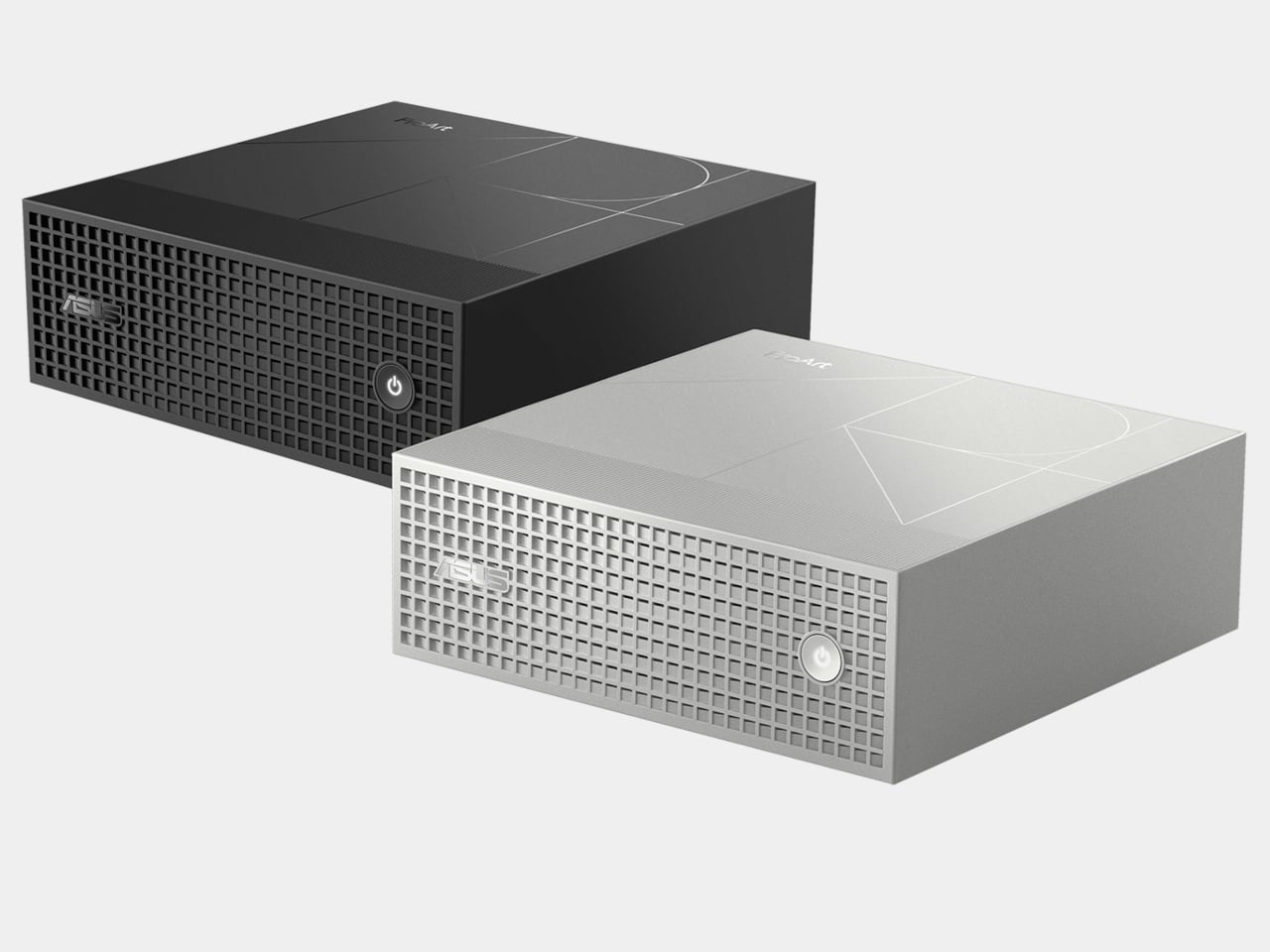
ASUS has done something genuinely clever and also a little infuriating here, which is exactly the kind of thing Spoot lives for. The ProArt GR1X is an AI workstation that hides in a box designed to look like a stereo component, and our take is that this is the most honest expression of what a local AI tool should be: a quiet appliance that lives on your desk, not a glowing tower that demands your attention. This isn't just a smaller computer. It's a refusal to let AI remain a cloud subscription or a server-room abstraction, and that refusal comes wrapped in sandblasted aluminum with a grille that looks like it could push air across a tube amp. We've seen design try to disappear before, Sony resurrects 1979 Walkman cans with USB-C and foam squish pulled the same trick of making old tech feel new by changing almost nothing about its silhouette, but ASUS is doing something different. It's not reviving nostalgia. It's disguising a 140W thermal monster as furniture, and that's a much harder magic trick.
The practical details are where Spoot finds its razor clam. The GR1X is a Windows mini PC running on Arm architecture, not the x86 you probably assume, and that matters when you check your plugin compatibility. It packs an NVIDIA RTX Spark with a 20-core Grace CPU and a Blackwell RTX GPU sharing 64GB or 128GB of unified memory, which means you can load large AI models without splitting resources between separate pools. That's the spec-sheet detail that everyone scrolling past will miss, and it's the one that makes this thing genuinely useful for local image-generation workflows in ComfyUI or MuseTree, client work that stays on your machine instead of floating through someone else's server. ASUS even gave it 57 cooling fins and four heat pipes to keep the thing alive during long renders, which is the kind of obsessive thermal engineering you'd expect from a company that once made a laptop that could cook an egg. But then you notice the ports: no USB-A, no memory card reader, and one of those four USB-C sockets is just for power. MIXO's detachable face lets your AI buddy follow you out the door understood that an AI companion needs to move with you, but the GR1X is aggressively stationary, it sits there, clean-fronted and portless, and expects you to have already solved the dongle problem before you unbox it.
Here's the specific takeaway that matters more than the industrial design or the thermal fins: at $4,499 for the 64GB configuration, this is not a cheap experiment. It's a dedicated desktop that costs more than most laptops, and its entire justification rests on the bet that you want your AI tools to run locally, on Arm silicon, without cloud dependencies. That bet pays off if you're a creative professional who handles client material you cannot upload, or if you need an assistant that keeps processing while you close your laptop and walk to a meeting. But the photographer returning with a camera card will need an external reader, and the video editor who relies on a specific Arm-compatible plugin will need to check compatibility before pulling the trigger. The GR1X is a beautiful, focused object that solves one problem perfectly, keeping AI local and persistent, while leaving a trail of smaller, messier problems scattered across the desk it was designed to clear. That tension between the clean front grille and the tangled reality of everyday creative work is exactly the spot where Spoot stays sharp, because the best design doesn't just hide its ports; it asks you whether you're ready to live without them.