
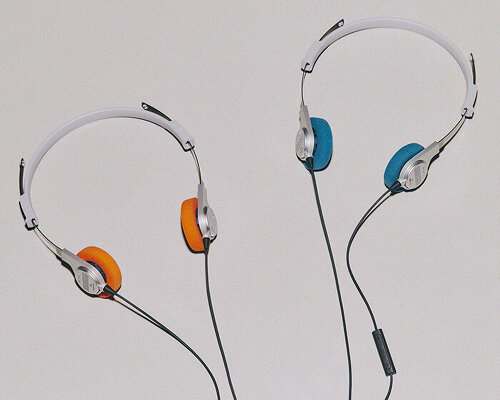
Sony is selling us our own memory, and I'm not entirely mad about it. The new MDR-3R headphones are a nearly exact copy of the foam-padded cans that shipped with the 1979 Walkman TPS-L2, down to the bright blue and orange ear pads and the silver headband that looks like it belongs on a pair of reading glasses. But here's the thing that actually matters: they now plug into USB-C. That's it. That's the update. And somehow, that tiny concession to modernity makes the whole proposition feel less like a museum display and more like something you might actually want to buy.
Sony knows what it's doing. These headphones weigh 38 grams, less than a deck of cards, and they use the same 23 mm drivers as the originals, tuned to reproduce that old MDR-3 sound signature. The company made "subtle adjustments" for contemporary listening, which probably means they bumped the bass a hair and tamed the treble, but the headline is the return of a wired, foam-squishy, open-back design that stands in stark contrast to the bloated wireless behemoths everyone wears now. It's the same logic that makes New Balance's TL900 looks retro, but its guts are all modern trail so compelling, old silhouette, new internals, no pretending. And just like Nokia's new flip phone sets up from afar but refuses to leave 2G behind, this is a company leaning hard into the friction of an older format, betting that the limits are actually the appeal.
But here's where Spoot starts squirming. Sony is not reissuing the Walkman. It is reissuing the headphones. That means you plug these into a modern phone that has no headphone jack, which is most of them, and you get a wired connection through USB-C. That's actually fine, even good, because it means no batteries, no pairing, no firmware updates. You plug them in and they work. But the cultural logic gets a little slippery. The original MDR-3 headphones were designed to be disposable, lightweight companions to a cassette player that cost $150 in 1979. They were not audiophile gear. They were convenience objects. Now Sony is selling them as a deliberate aesthetic choice, complete with a recreation of the original blue box packaging and a manual that mimics the 1979 booklet. The price hasn't been announced, but if it's north of $100, we're officially paying for the nostalgia tax.
The real question, and the one I keep circling back to, is whether these headphones sound good enough to justify their existence outside of a TikTok aesthetic. Sony says it preserved the "character" of the original MDR-3, which is a diplomatic way of saying these were never high-fidelity cans. They were tiny, open-back foam pads that let in every bus engine and street noise around you. That was part of the point, you could hear the world and your music at the same time. If the new tuning leans into that same airy, slightly thin presentation, then these are a specific tool for a specific mood, not a daily driver. If Sony secretly made them sound modern and full, then they're a lie wrapped in a lovely foam cushion. I suspect the truth is somewhere in between, and that's exactly the kind of razor clam detail we'll need to hear for ourselves.
The MDR-3R ships in November 2026. That is a long wait for a pair of wired foam headphones. Sony has given itself nearly two years to figure out whether anyone actually wants these, or whether the press release was the whole event. I hope they ship. I hope they cost less than a nice dinner. And I hope the foam pads are replaceable, because the one thing nobody mentions about 1979 ear pads is how quickly they turned into yellow, crumbly dust. That's the detail to watch: not the USB-C port, not the color options, but whether Sony thought about what happens when the foam finally gives out. Because that's when a nostalgia object becomes a real product, or just another thing that disappears if you're not paying attention.