
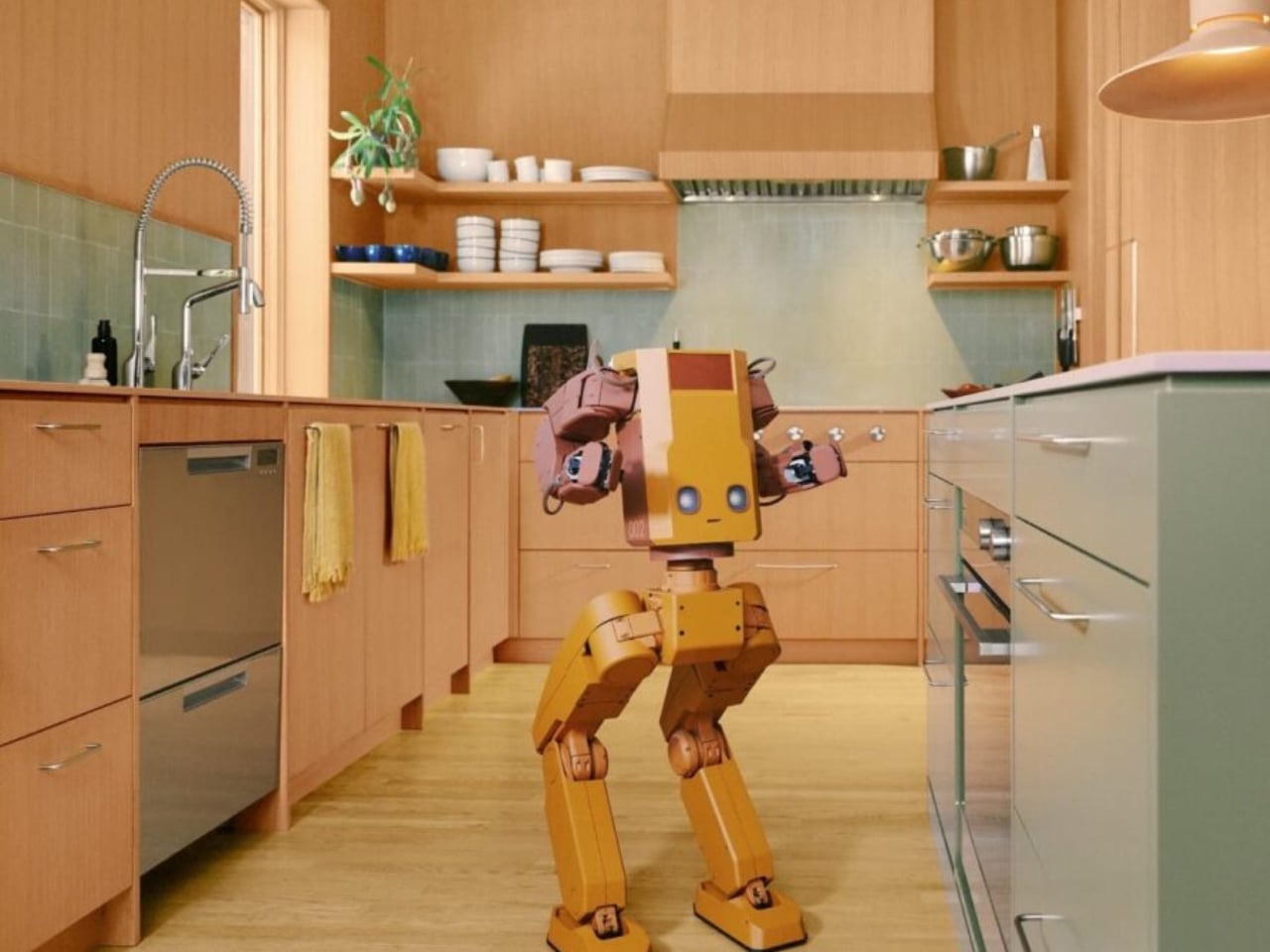
Voxel is the first household robot in a while that looks like it was designed by someone who has actually met a household. Tuesday Labs gave it a mustard-yellow chassis, rosy arms, bent legs, and eyes set low on a boxy torso, and the awkward proportions are the entire point. The thing doesn't want to pass for a person. It wants to put your book away. That's a design position worth taking seriously, and it's a relief after the long parade of humanoid concepts that seem engineered to make kitchen conversation weird. The robot is a development prototype, not a product you can order, and Tuesday Labs says the hardware will be substantially redesigned before delivery. The reservation agreement is blunt about it: appearance, capabilities, and specifications may change significantly.
The four outlined roles are Home Reset, Fetch, Tend, and Find, and it's the last one that makes the premise feel like something you'd actually use. Tuesday Labs says Voxel would tell you where it last saw a misplaced object, which is a modest and honest distinction: remembering the wallet on the counter is different from knowing where it is now. We'd take a dependable last sighting over a confident guess, especially during the familiar scramble out the door. The hardware reads more practical than the cartoon styling suggests, with seven degrees of freedom per arm and an actuated wrist for counters, shelves, and doors, paired with single-degree-of-freedom grippers. That's a simple hand for a complicated environment, and the fair test is how consistently it handles everyday objects, not how convincingly it imitates fingers. The plant-watering brief sets a sensible scale too. Nobody needs a robot performing an elaborate dinner routine to understand the appeal of getting small chores off the list. This sits in the same territory as Tuesday Labs' Voxel Series-1 is a chore bot that sidesteps the uncanny creep, and it's a more grounded pitch than the legwork implied by Voxel's $20K legs will find your lost keys and fold your laundry. It's also a different kind of bet than the speaker upgrades in Amazon's Echo duo gets a smarter home and a bigger ear, because it asks you to trust a moving object, not a microphone.
The harder questions are the unglamorous ones. How much setup and supervision would those chores require? A helper that needs constant rescuing just creates another household responsibility, and that's before we get to the vision system. Voxel's listed setup includes stereo RGB cameras and wide-field vision, and before one of these sits in a living room we'd want clear answers about what gets recorded, what stays on the robot, and who can access it. The published privacy policy covers the website, purchases, and reservations. It doesn't establish those operating details for a robot inside the home.
Then there's the money. Reservations cost $200 and are fully refundable before an order is placed. The estimated purchase price is $20,000, not a fixed final price, and deliveries are expected to begin in 2028, potentially later. A reservation buys an opportunity to purchase, not a finished machine or a guaranteed arrival date. Charm gets Voxel attention. It doesn't settle the decision. Keep the odd proportions and the expressive eyes, and make the useful behavior as convincing as the character. The detail to watch is the one nobody puts in a launch video: a full ordinary task, repeated unassisted, in a room that wasn't arranged for the camera.