
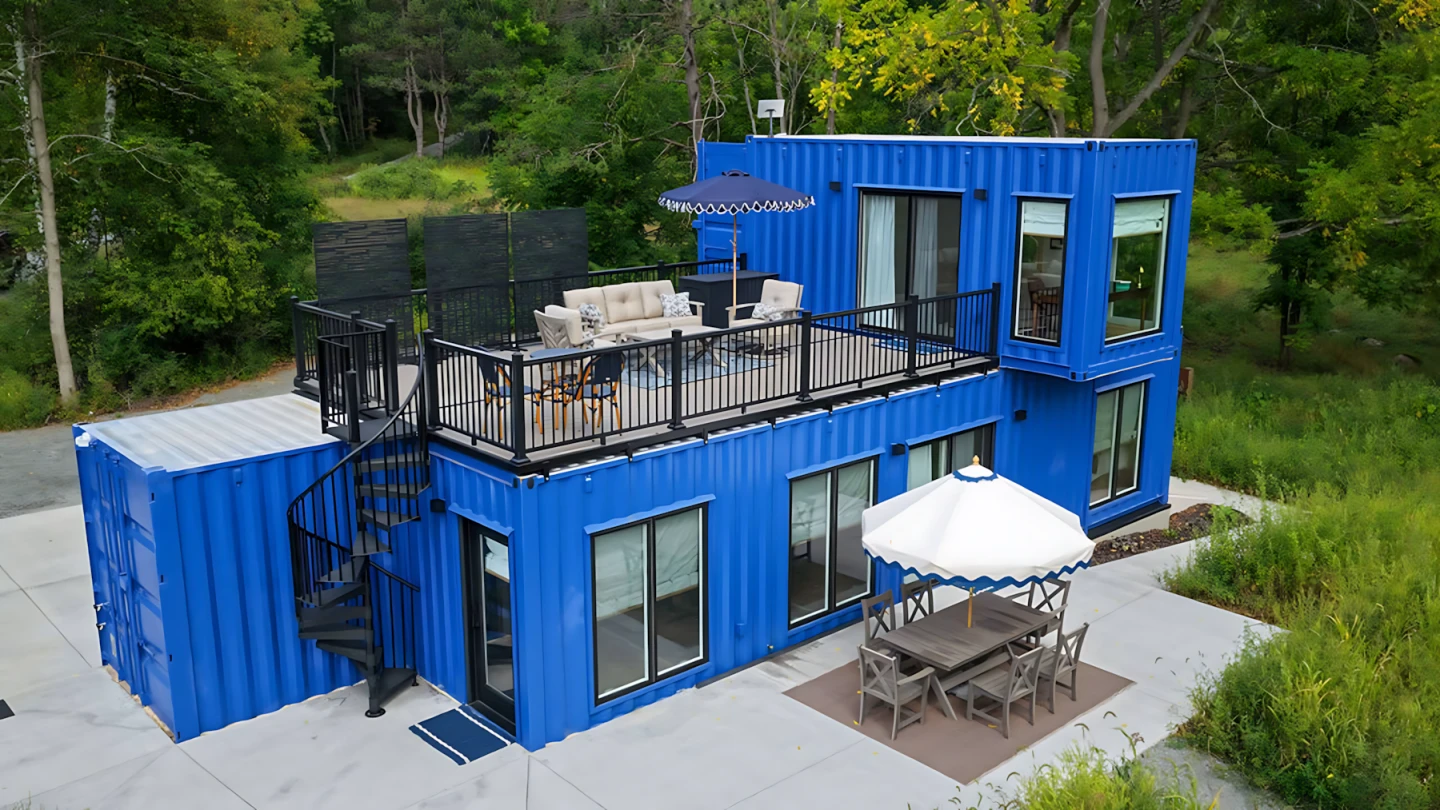
Three shipping containers walk into a construction site, and somehow the punchline is a rooftop sauna. That is the whole appeal of this build, and it is exactly the kind of thing that keeps us refreshing project pages at odd hours. We have seen containers turned into everything from emergency shelters to pop-up coffee bars, but this one earns its keep by refusing to treat the box as a limitation. It treats the box as a starting point. Stack three of them, carve out a real interior, and suddenly the conversation shifts from "how do you survive in a metal tube" to "how do you get the sauna to fit." That is a compromise we can get behind, and it is the same spirit that made us fall for the eVista XL proves a tiny house can dodge the usual compromises and the A-frame cabin proves the best tiny house is the one you actually build. All three share a quiet rebellion against the idea that small or repurposed living has to feel like a dorm room.
The clever part is not the sauna, though the sauna is a delightful flex. It is the spatial math. Three containers give you roughly 960 square feet of floor area, but the trick is that you are not just adding boxes side by side. You are cutting openings, joining volumes, and treating the steel shell as a structural exoskeleton rather than a ceiling you have to live under. That is how you end up with a rooftop terrace that does not feel like an afterthought and an interior that does not echo every footstep. The material is unforgiving, so the design has to be precise. This is not a weekend DIY project; it is a proof of concept that container homes can graduate from novelty to legitimate architecture.
What matters for anyone reading this is the cost of entry, and the story is frustratingly quiet on that number. We know it is listed on Airbnb, which means it is a rental experiment as much as a home. That is the honest lens. A custom container build with this level of finish is not cheap, and the people who pull it off are usually either very handy or very funded. The takeaway is not that you should go buy three containers tomorrow. The takeaway is that the container's reputation as a cheap fallback is outdated. It is a material with real structural limits, but the limits are known, calculable, and increasingly well-documented by projects like this one. That is useful information.
Watch the joinery. Watch how the containers meet at the corners and how the roof handles drainage and insulation, because those are the details that separate a clever render from a habitable dwelling. The sauna will get the clicks, but the real story is whether this becomes a repeatable template or a one-off vanity project. If the builders publish their plans or even a decent breakdown of the construction sequence, that is the moment this stops being a pretty Airbnb listing and starts being a blueprint. Until then, it is a very good argument that the shipping container has stopped being a gimmick and started being a building material with a personality. Stay spooty, and keep your towel handy.