
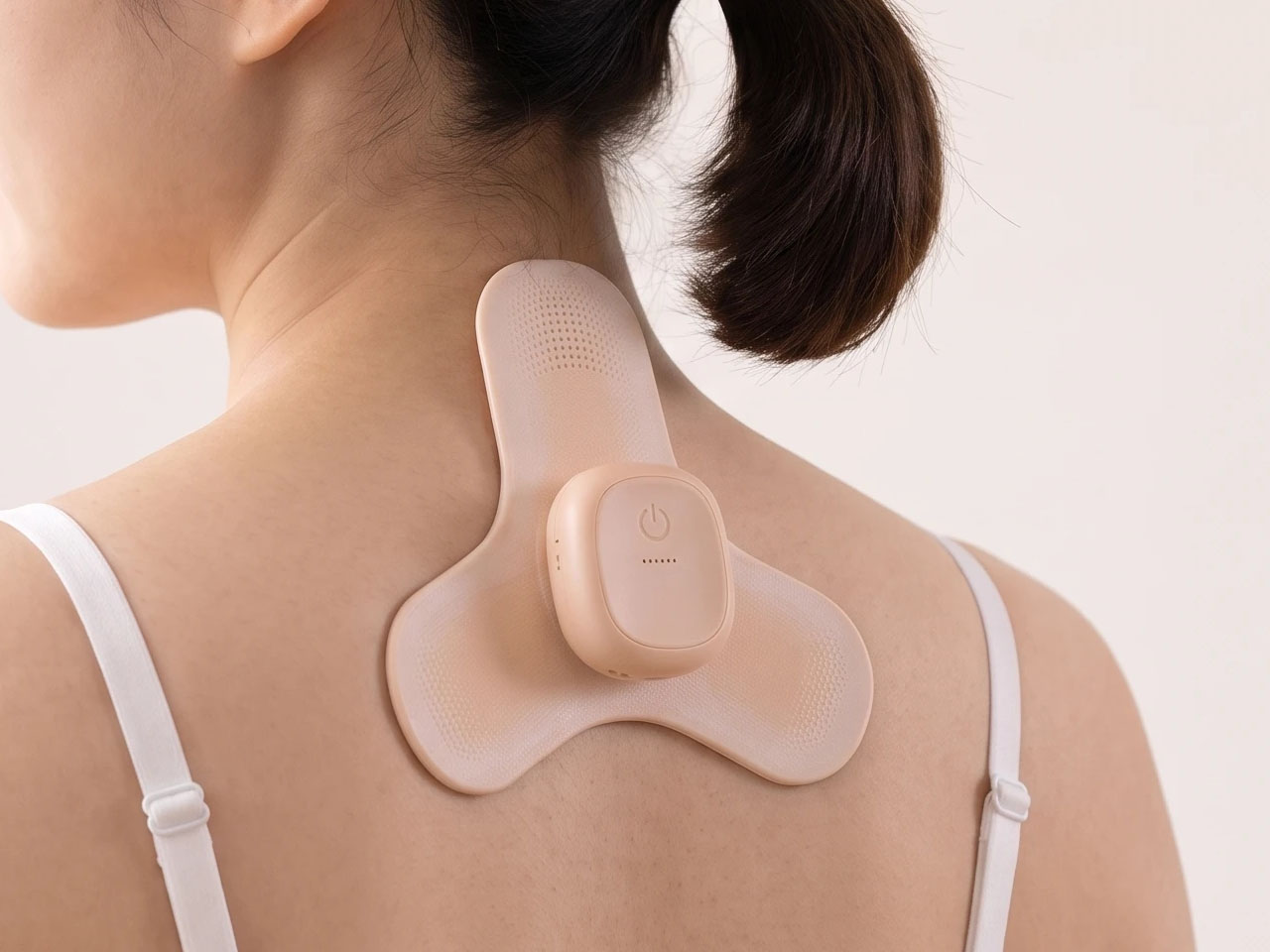
The smart heat patch from BODYLUV is exactly the kind of concept that makes us want to burrow into a spec sheet and stay there. It is not a gadget that screams for attention. It is a quiet, thoughtful piece of design aimed at a problem that affects roughly half the human population, and it does something genuinely useful: it wraps cramps in warmth that actually listens to your body. We are here for it. This is the sort of thing you show someone who asks why you spend your evenings scrolling crowdfunding campaigns and concept renders. It is the same impulse that made us curious about this glowing polycarbonate cube talks to you without a single screen, a willingness to ask whether a device needs a screen to communicate, or whether it can just feel right. The heat patch is asking a similar question: does pain relief have to mean sitting still with a bulky hot water bottle, or can it move with you?
The designers, Keetae Kim, Wonjae Lee, and superkomma, are Korean and they are very clear about who this is for. The device is optimized for women with severe menstrual cramps, and it comes with three interchangeable pads that snap on magnetically. You wear it on your neck, shoulder, lower back, or abdomen. The heat and vibration are controlled by onboard buttons, and the whole thing is thin, wireless, and skin-toned enough to disappear under clothes. That last detail matters more than most people realize. If you have ever tried to go about your day while a heat pack slides down your waistband, you know that the design of the thing is not a luxury, it is the difference between using it and abandoning it in a drawer. The same attention to physical presence shows up in the Google Home Speaker finally got a price that matches its clean design, where form and function stopped fighting each other long enough to make a device you actually want on your counter. BODYLUV is chasing that same truce between what a device does and how it sits on your body.
Now the part where Spoot gets gently skeptical. This is a concept design. There is no word on battery capacity, no price, no shipping date. The designers mention applications for athletes and fitness recovery, which sounds plausible, but the device is currently optimized for menstrual pain and we have no data on how well heat plus micro-vibrations actually performs compared to, say, a standard heating pad or ibuprofen. We are not saying it will not work. We are saying the launch video skipped those questions, and until someone puts a production unit on a cramping abdomen and measures the result, the promise is still a promise. That is fine. Concepts are allowed to be concepts. But if BODYLUV wants to be the thing you reach for at 3 AM, it needs to ship, and it needs to ship with a battery that lasts longer than a single cramp cycle.
The concrete point to watch is the interchangeable pad system. That magnetic clip is the razor clam in the spec sheet, the narrow detail that everyone else scrolls past but that determines whether this thing lives in your bag or in a landfill. If the pads are cheap and replaceable, the device becomes modular and long-lived. If they are proprietary and expensive, it becomes another gadget you stop using because the refills cost more than the unit. BODYLUV has a genuinely thoughtful concept. The next step is proving it can survive contact with the real world, and with a body that is not a render.