
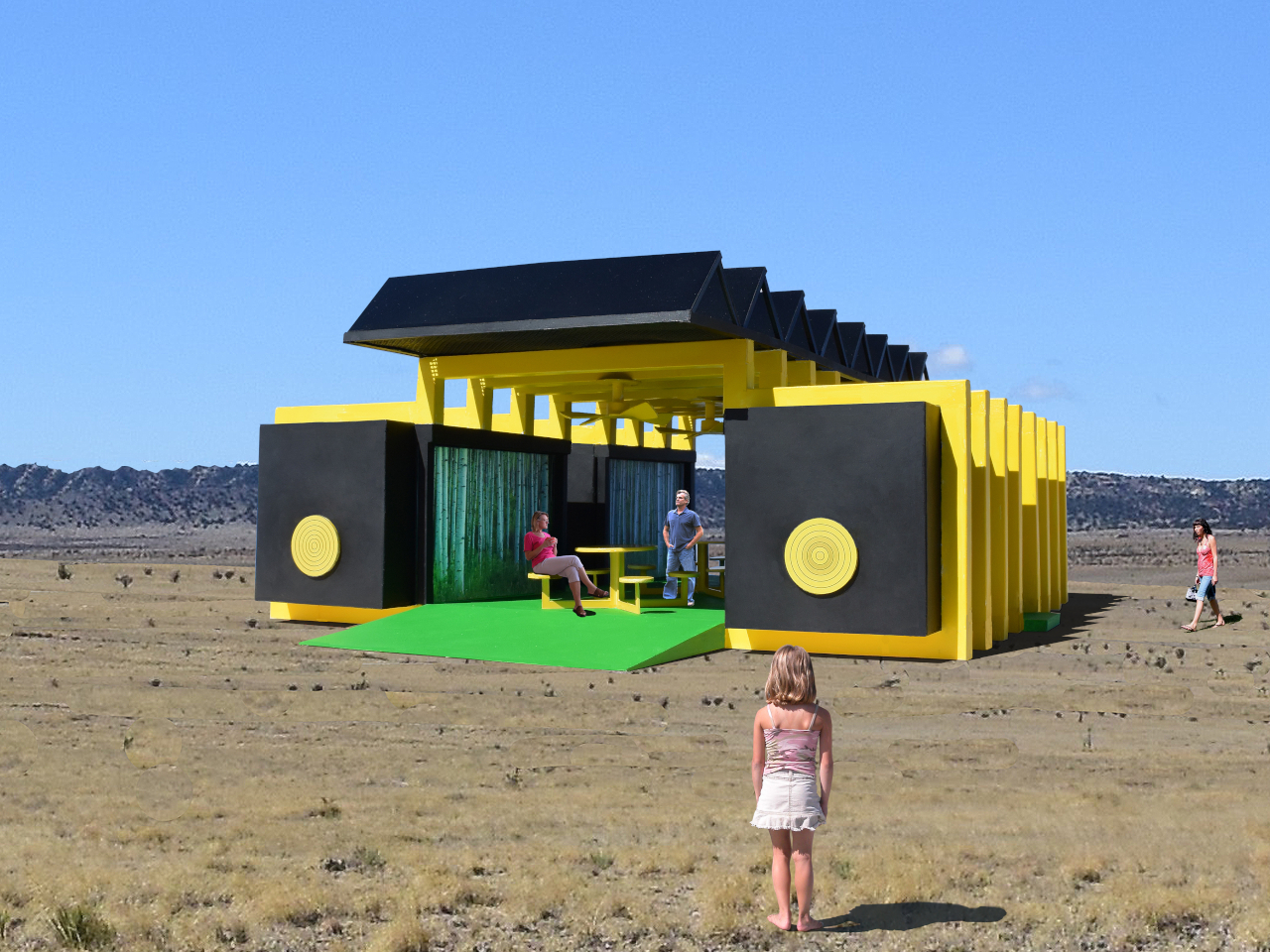
Here's the thing about the Solar Electric Oasis: it's a wonderful idea that forgets to ask who it's actually for. A picnic shelter that also feeds the grid sounds like exactly the kind of double-duty design we love around here, the sort of thing that makes you wonder why every park bench doesn't quietly top up a battery bank. And yet, the more you stare at those bright yellow frames and the artificial turf, the more you suspect this pavilion was designed for the festival organizers, not the person trying to eat a soggy veggie wrap in the shade. That's a problem.
We've seen this before. The Raven Prism Glasses Squirt Linux Directly Into Your Peripheral Vision cram a full computer into your line of sight, which is brilliant until you realize you still need to type on something. The Beach Wagon Finally Gets a Motor, Remote, and a Glow-Up solves the problem of hauling coolers across sand, but it doesn't tell you where to park it. Great hardware often forgets the human context. The Oasis is no different: it collects sunlight beautifully, but it doesn't collect much actual shelter. Those open sides let in daylight and breezes, sure, but they also let in low sun, wind-driven rain, and the kind of weather that makes you abandon a perfectly good table for a crowded tent. A place that generates power shouldn't force you to choose between charging your phone and drying your socks.
Where the Oasis earns its keep is in its bones. The prefabricated, disassemblable design is genuinely useful for temporary architecture, festivals, markets, emergency pop-ups, and the decision to keep the battery modules outside the structural load path is the kind of quiet engineering detail that makes a Spoot reader nod slowly. It means the batteries can be swapped, upgraded, or maintained without taking the roof down. That's the razor clam in the spec sheet. But the concept stops there. It doesn't tell you how much power those four modules actually hold, or how long they take to charge, or whether they can run the festival's sound system or just a few phone chargers and a blender. The Bluetti's expandable battery finally meets the monster that is your kettle taught us that one appliance can eat an entire battery bank for breakfast. Without real numbers, "solar station" is just a marketing phrase.
Our take is simple: the Oasis is a solid chassis for a conversation that hasn't started yet. The solar panels, the storage, the knockdown structure, those are all worth building. But until someone adds adjustable screens, a realistic power budget, and a palette that doesn't look like a construction site, this shelter will keep its users in the sun while charging the gear they can't use because their hands are full of sandwich. The question to watch isn't whether it works. It's whether the next version asks the person sitting under it what they actually need.