
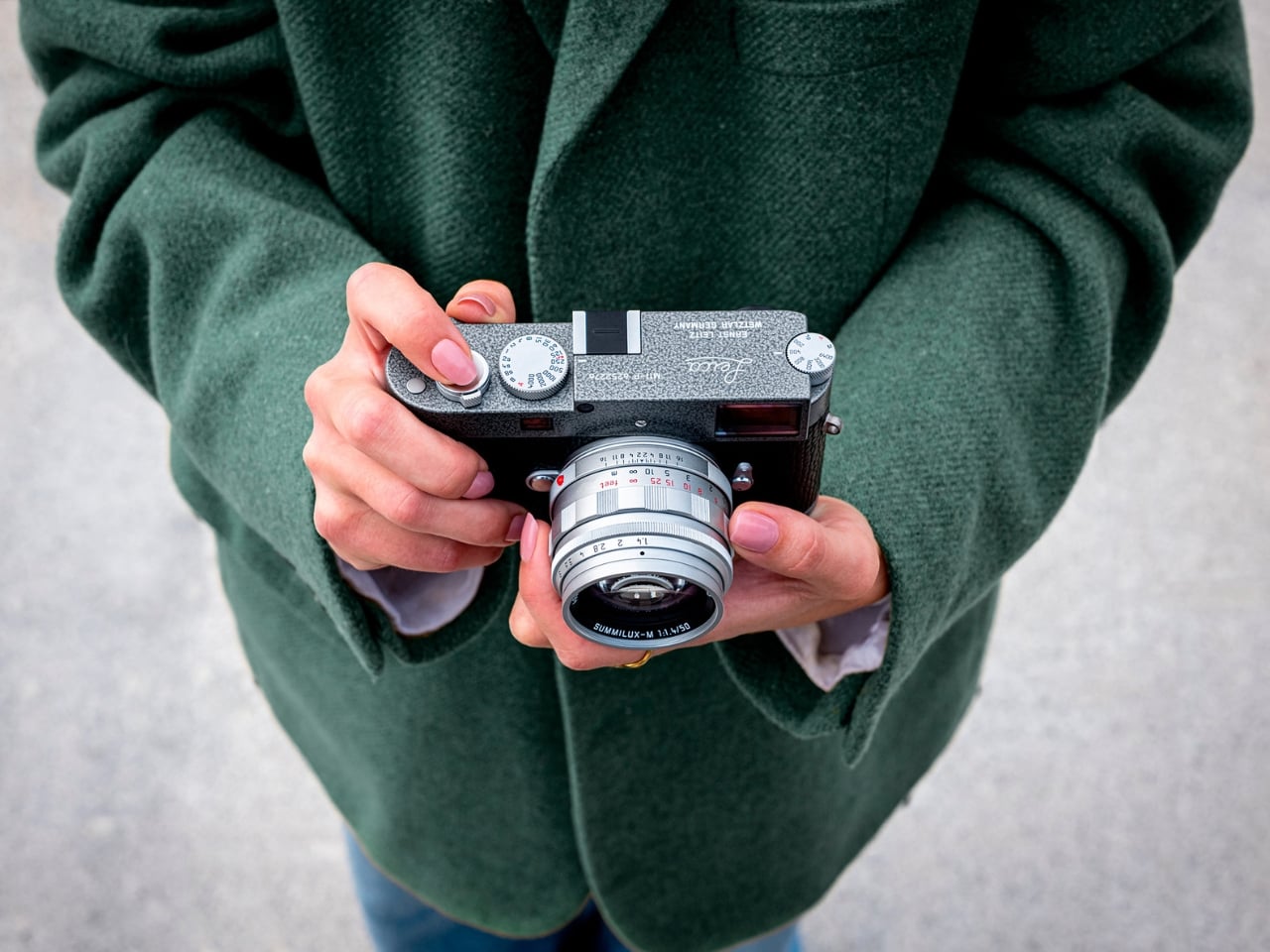
There's a difference between a camera you use and a camera you can't stop touching, and Leica just made that distinction physical. The new M-A Hammertone and M11-P Hammertone special editions don't add a single megapixel, autofocus point, or digital trick. They add texture. That's it. And it might be the most honest thing Leica has done in years. While The K4 Air folds three chargers flat enough to hide in a pocket solves the problem of carrying more juice and Nothing's keyboard phone isn't real yet but the fan renders are already perfect feeds the fantasy of a physical keyboard comeback, these Hammertone cameras address something quieter and weirder: the way a tool can make you feel like a real version of yourself just by how it sits in your hand.
The finish is paint, not hammered metal. Leica says metal pigments and special additives create variations in surface tension as the coating dries, giving every camera a slightly different pattern. Specialists at the Wetzlar factory oversee the process. That means no two M-A or M11-P Hammertone bodies are identical, which is a genuinely rare thing to say about a mass-produced electronic device. The solid-brass top and base plates sit above a black vulcanite-style leatherette, and silver controls with cross knurling break up the irregular gray surface. It's a deliberate contrast, geometric against organic, smooth against rough, and it works because nothing about it is necessary. The camera would function identically without any of this. That's the point.
The M-A Hammertone is fully mechanical. No battery, no screen, no exposure meter. You set aperture, shutter speed, and focus by hand, and you judge the light yourself or bring a separate meter. ISO is whatever film you loaded; the dial on the back is just a reminder. It is photography stripped to its skeleton, and it asks you to earn every frame. The M11-P Hammertone keeps the digital conveniences, 256GB of internal storage, 60/36/18MP resolution options, Bluetooth and Wi-Fi connection to the FOTOS app, but wraps them in the same tactile shell. Both cameras retain the standard models' technical specs. Neither will make you a better photographer. The appeal is subtler than that.
The writer who covered this story remembers losing a film camera in college and still missing its feel. That's the detail that sticks. Not the sensor size or the shutter speed range, but the memory of a surface treatment that made them feel like a legitimate filmmaker. The Hammertone finish doesn't change what these cameras do. It changes what they mean to the person holding them. In a world where every gadget tries to do more, Leica has released two editions that do exactly the same thing as before, but feel completely different while doing it. The open question is whether that difference is worth the premium Leica will inevitably charge, and whether the people who buy these will actually shoot them or just keep them on a shelf, running their fingers over the paint. Either way, the finish knows what it is. It's not trying to be anything else. That's rarer than a good photograph.