
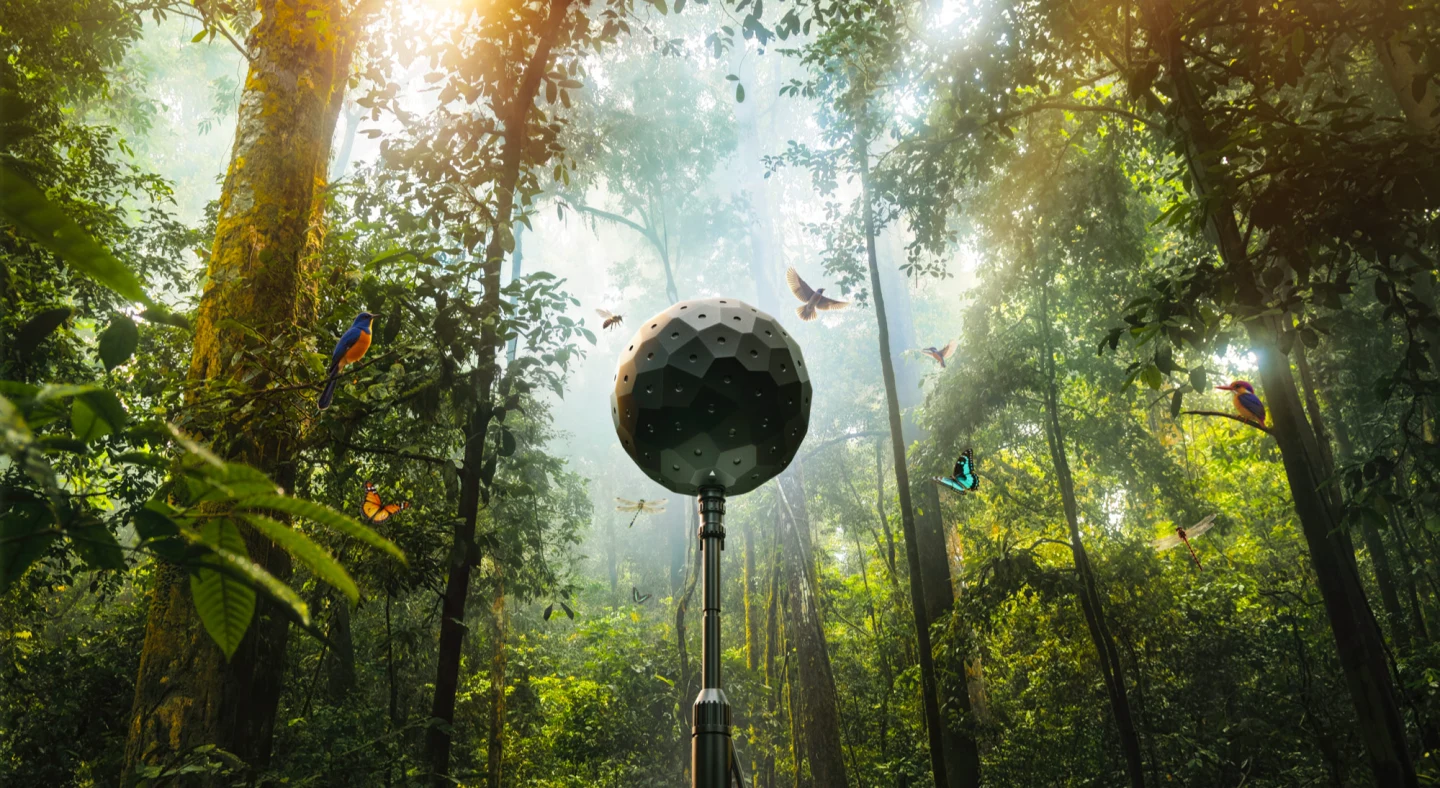
Blackmagic Design has done something absurd and beautiful: it crammed 108 microphones into a faceted metal sphere small enough to perch on your camera, and I think that's exactly the right kind of overkill. This is not a product that whispers "maybe", it's a product that shows up with a weird metal hedgehog of MEMS sensors and dares you to find a better way to capture the sound of a room. For anyone who has ever shot 360-degree video and then watched it back with audio that sounds like a phone pressed against a fishbowl, this thing is a genuine answer. It's also a reminder that Blackmagic, the same company that made cinema cameras affordable by being weird about it, still hasn't lost the instinct to look at a problem and say "what if we just threw more hardware at it until physics blinked."
The Ambisonic Microphone is built to match the all-encompassing visual field of a 360-degree camera with audio that wraps around your head the same way. That means 108 individual microphones, all tiny MEMS capsules, arranged inside a metal sphere that's small enough to sit on a hot shoe. The math works because each mic captures a slightly different slice of the sound field, and software stitches them together into a full spherical audio image. It's the kind of detail that makes you wonder why nobody else has done it this way before, which is exactly the feeling I had when I chased the Apollo CAST-1 into a dusty bookshelf speaker and came out the other side smiling, that moment when a company decides a problem is worth solving unconventionally. And just like the Borslon gaming mouse that wraps around your finger like a curious crab, this mic makes you stop and ask: wait, how does that even work? That curiosity is the point.
But here's where Spoot's gently skeptical ear perks up. 108 microphones is a lot of potential points of failure. MEMS capsules are cheap and consistent, which is why they can stuff so many into a small space, but the real question is what happens when the software has to reconcile all those signals in real time. Blackmagic has a strong track record with firmware that punches above its weight class, but this is a fundamentally different challenge than processing video. The company hasn't announced pricing or a ship date yet, and for a product this specific, it's really only useful if you're shooting immersive video, that matters. If it costs more than a decent lens, the audience shrinks to professionals and hardcore experimenters. If it costs less than a decent dinner, it changes what's possible for anyone with a 360 camera and a good idea.
The takeaway here is direct: this is not a gimmick, but it is a question mark. Blackmagic has built a microphone that could make spatial audio as straightforward as plugging in an XLR cable, but only if the software delivers and only if the price doesn't make you wince. For now, the thing to watch is whether Blackmagic releases a shipping date and a number that makes the rest of the audio industry scramble, or whether this faceted sphere stays a fascinating concept that never quite lands in your hot shoe. Either way, it's the kind of weird, specific, razor-clam detail that makes you glad you showed up early.