
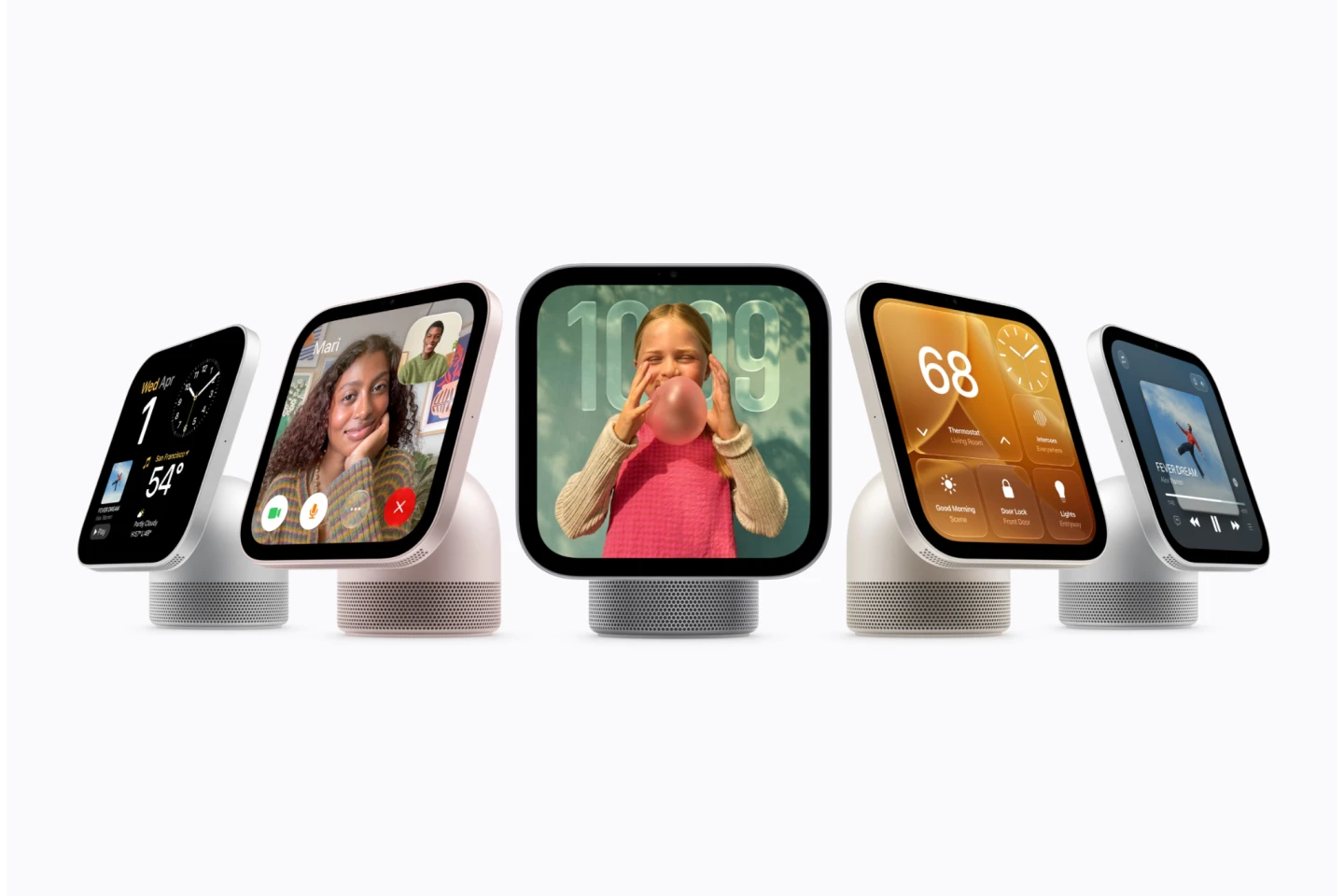
Apple just reached into its own attic and pulled out the iMac G4's floating neck, bolted it to a HomePod base, and called it HomeView. The 7-inch display is a chimera of nostalgia, and that's exactly the point. This is Apple finally admitting that the smart home hub has been a problem it couldn't solve with software alone, so it's solving it with furniture. The HomePod Mini 2 finally exists, preorders are open, and Spoot already has a tab open, but this is the more interesting sibling. John Ternus is making Apple weird again and twelve new designs prove it, and HomeView is the weirdest of the bunch because it's the first one that feels like it was designed backward from a living room, not a spec sheet.
The razor clam here is the hinge. The floating display isn't just retro styling; it's a practical answer to the smart display's biggest failure: nobody agrees on where it should live. A countertop slab demands you stand over it. A wall mount demands you commit to one spot. HomeView's adjustable neck lets you tilt it toward the sofa, the kitchen counter, or the bedside table, and that's the difference between a gadget and a fixture. It borrows the Apple Watch's faces, which means the glanceable info is customizable without needing a full app grid. It has the iPad's touchscreen, so it's not a glorified speaker with a screen. It has the HomePod's base, so it sounds like a speaker, not a tablet with a buzz.
But let's not swallow the hype whole. Apple finally built a smart home hub, and it brought some friends, but HomeView is still a first-generation product. The connected home is a mess of protocols, and this device doesn't fix that; it just makes the mess prettier. The price hasn't been announced, and that's the tell. If this lands above $299, it's competing with the iPad it already cannibalized. If it lands closer to $199, it's a genuine centerpiece. The practical takeaway: don't preorder on day one. Wait for the first teardown to see whether the speaker base is actually a HomePod in disguise or a hollow plastic ring with a driver in it. The nostalgia is earned, but the hardware needs to justify the memory.
What we're watching is whether this becomes a platform or a one-off. Apple has a habit of shipping a beautiful chimera and then abandoning it when the next product cycle shifts priorities. HomeView could be the start of a new home line, or it could be the AirPower of displays: a lovely idea that evaporates. The concrete detail to watch is the connector. If the display detaches from the base, that's a signal Apple plans to iterate on the neck, the screen, or the speaker independently. If it's fused, this is a closed box. The original iMac G4 was beloved because you could adjust it to your posture. HomeView needs to prove it can adjust to your life, not just your counter. Stay spooty, and keep one tab open on the teardown video.