
Apple put the M6 in the same iMac and called it a day, and honestly? That might be the smartest thing it has done all year. This is not a redesign. It is not a reinvention. It is a chip transplant, and for the thousands of families still orbiting an Intel iMac like a dying star, that is exactly the upgrade they need. The screen stays at 24 inches and 4.5K. The camera stays at 12 megapixels. The seven colors stay. The speakers stay. The only thing that changed is what is inside, and inside is where the M6 does its real work on TSMC's first-generation 2nm process, swapping FinFET transistors for gate-all-around nanosheets that leak less power and push memory bandwidth from 120GB/s to 170GB/s. Apple skipped the M5 entirely to get here, and the result is a machine that is up to 18 times faster than an Intel iMac, a number that should make anyone still running a 2019 or 2020 model sit up very straight. If you just bought an M4 iMac, enjoy it, because your browser tabs will not notice the difference. If you are still on Intel, this feels like time travel. The real story here is not the chip, though. It is what Apple decided not to touch. The iMac is the family desktop that also handles homework, taxes, and the occasional late-night gaming session, and now it can drive two 6K displays at 60Hz or a single 4K panel at 240Hz from a single Thunderbolt port. The Ethernet jack lives in the power brick again, this time at 2.5 Gigabit instead of the old 1 Gigabit, which means pulling a giant photo library off a home server finally stops feeling like waiting for a kettle to boil. Apple also swapped in its own N1 wireless chip for Wi-Fi 7, Bluetooth 6, and Thread, which fits neatly with the smart home energy that just landed in the kitchen via the new HomeView. Speaking of which, if you missed it, we covered the The iPad Mini Sheds Weight, Gains OLED and a Whole New Reason to Stare alongside this month's other Apple announcements, and the pattern is clear: Apple is doing a home makeover, not a desk makeover. The iMac is the steady hand in the corner, unchanged and unbothered, while the new stuff orbits around it. But here is where Spoot gets gently skeptical. The M6 iMac starts at $1,499 for a 10-core, two-port model, and $1,699 gets you 12 cores, four Thunderbolt ports, and Ethernet in the brick. Those are the same prices Apple charged for the M4 iMac after June's price hike, so the extra cores are a free upgrade, but compared to the M4's original $1,299 launch price in 2024, the cheapest iMac now costs $200 more. That is not nothing, especially for families who are the real audience here. Apple name-drops vibe coding in its press release for a computer that comes in pink, which is a very 2026 thing to say, and the on-device AI jump, up to five times faster than M4 in LM Studio, is genuinely impressive. But the display is still 500 nits, the design is still 11.5mm thin, and the keyboard and mouse still charge over USB-C. The iMac is not trying to surprise you. It is trying to be the thing you already know, but faster. The specific takeaway: if you are running an Intel or M1 iMac, this is the moment. Apple claims up to 18 times faster performance than Intel, and even a 1.5 times jump over M4 in Excel and twice the speed in photo editing. The four-port model at $1,699 is the one to buy, because it bundles Ethernet, more display options, and the full 12-core chip for $200 more than the base model. Pre-orders open October 28, deliveries start November 6. That makes it the third new Apple product in two days, alongside the M6 MacBook Pro and after the iPad mini, with touchscreen Macs still on deck. The iMac is not the star of this show. It is the reliable sibling who shows up, does the family's homework, and refuses to make a scene.
new product launch
Apple put the M6 in the same iMac and called it a day
Apple put the M6 in the same iMac and called it a day.
5 min readYanko Design
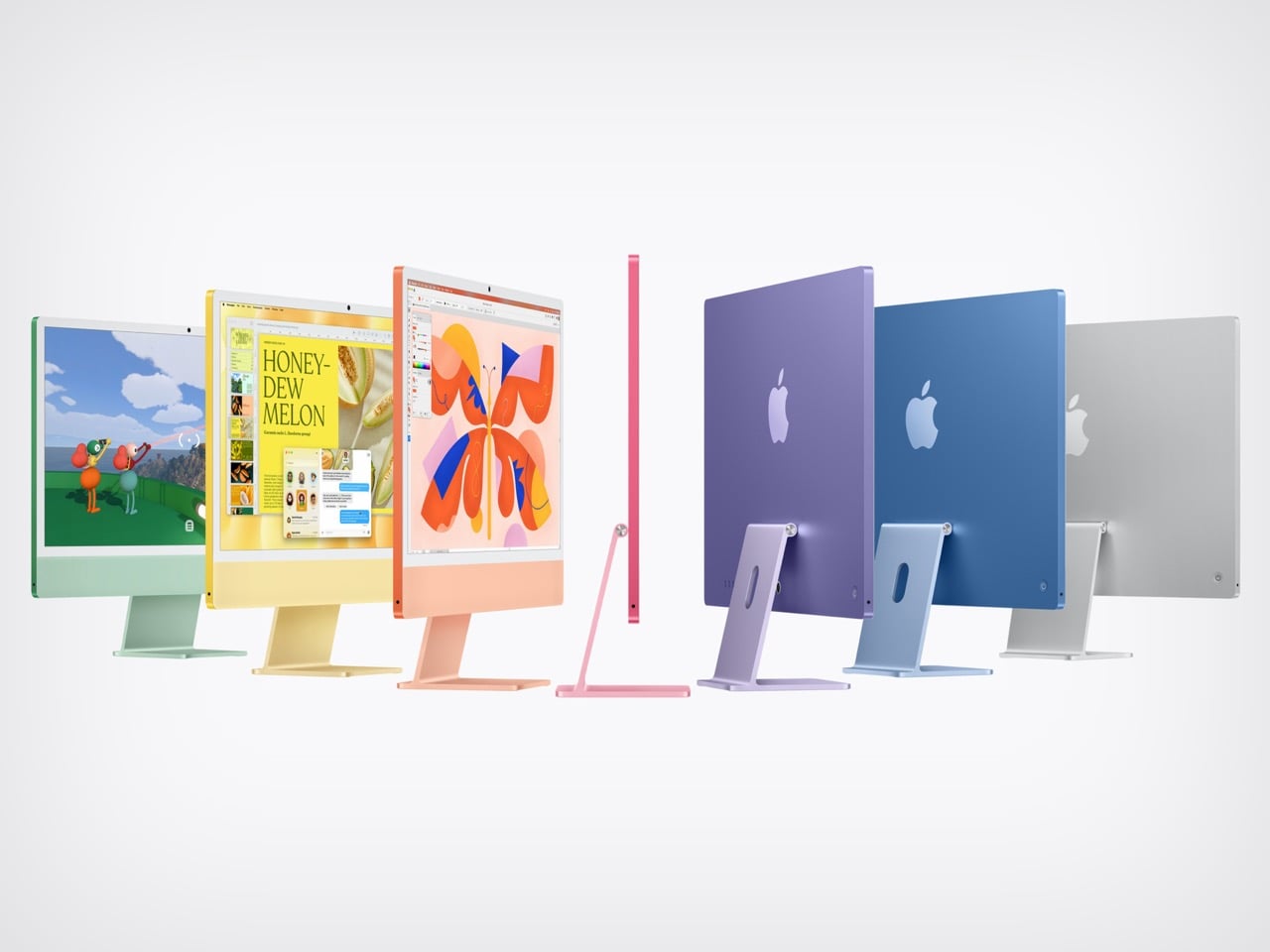
Apple’s October has turned into a full-on home makeover. First came HomeView, a $299 smart display for the kitchen with a generous helping of iMac nostalgia baked into its design. Now the iMac itself is back with the M6 chip, which feels a bit like the original star showing up after the spinoff already aired. The two aren’t rivals at all, because a 7-inch hub and a 24-inch desktop live very different lives. They play for the same team, with HomeView running the house while the iMac sits on the desk handling homework, taxes, and the occasional late-night gaming session.