
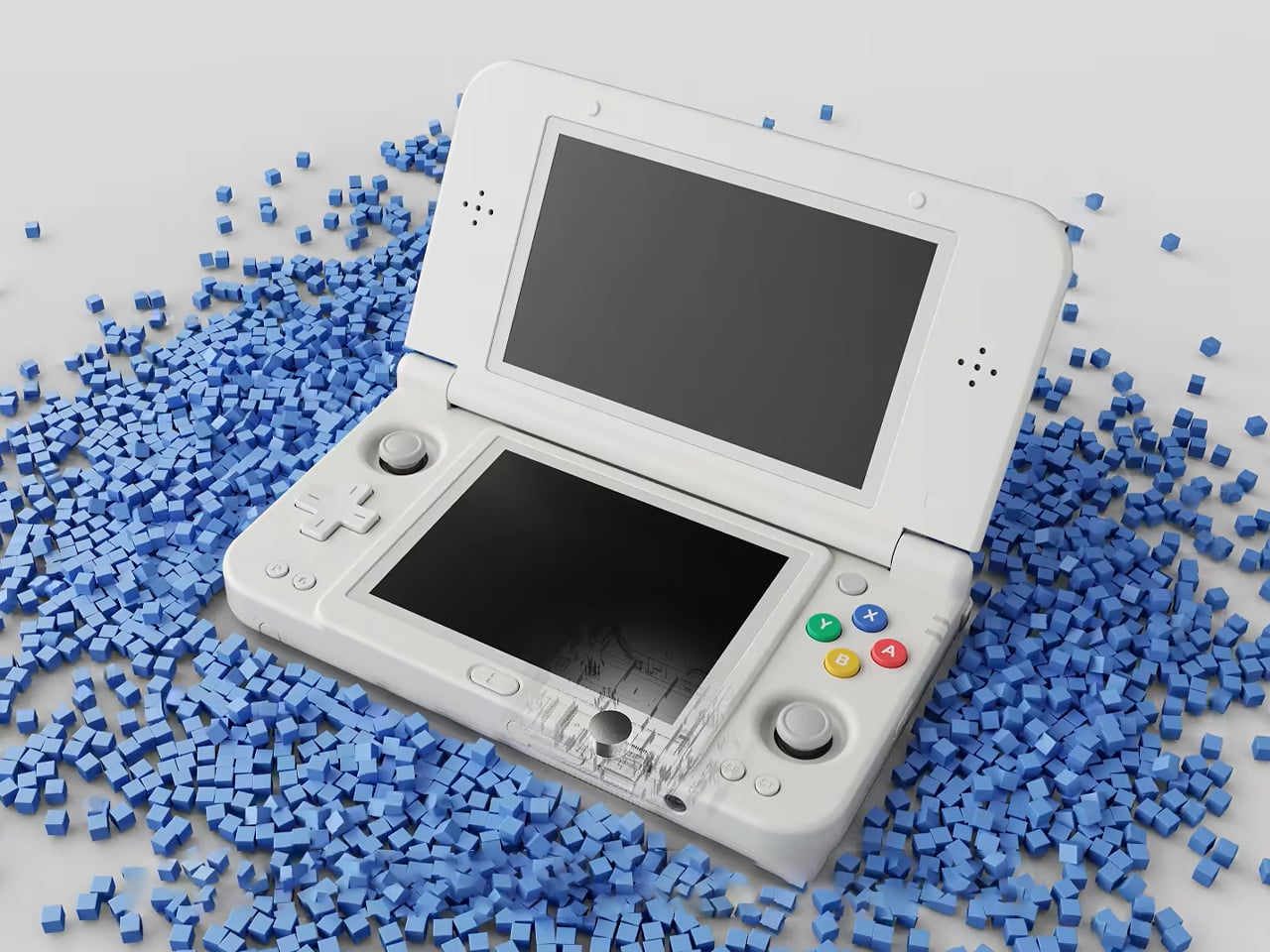
There's a specific kind of joy in watching Anbernic stop apologizing for the past and start weaponizing it. The RG DDS isn't just another clamshell with a familiar face; it's the first real argument that dual-screen gaming can grow up without losing its weird, wonderful soul. And for anyone who has been burned by underpowered nostalgia boxes, that's a genuinely exciting shift. This is the handheld that finally treats the New 3DS design as a starting point, not a shrine. The Snapdragon G2 Gen 2 chip and Adreno A22 GPU are proper modern hardware, the kind that makes demanding emulation feel like a possibility instead of a prayer. The 4.7-inch top screen at 1200 × 720 and the 4-inch bottom panel at 960 × 720 both hit 300 PPI, which means 3DS games can run at clean 3× integer scaling. That's the razor clam hiding in the spec sheet: sharper pixels without the blurry smear that usually ruins the dream. It's the detail everyone scrolls past, and it's the one that actually matters.
The practical additions are just as telling. A full-sized right analogue stick replaces the New 3DS's nubby C-stick, which was always a compromise masquerading as a feature. Two recessed thumbsticks broaden the library beyond Nintendo's own catalog. The retractable stylus with a mesh tip is a small fix, but it's the kind of thoughtful tweak that suggests someone at Anbernic actually plays these games. Front-firing speakers, a linear vibration motor, active cooling, and a 6,000mAh battery all point toward a device that wants to be a daily driver, not a shelf ornament. Even the AI button is intriguing, though its purpose remains gloriously unexplained. That mystery is fine for now, but it's also the thing to watch. A button without a function is either a placeholder or a promise, and Anbernic has a history of shipping the former.
The real question, as always, is whether the software can keep up with the silicon. Emulation is a fickle beast, and 3DS games are notoriously demanding. The hardware should handle the heavy lifting, but real-world performance will depend on individual titles and how well the firmware is tuned. Anbernic hasn't confirmed the final RAM configuration, though interface footage hints at at least 8GB. That's encouraging, but it's not a guarantee. And then there's the price, which remains unannounced. The dual-screen competition is already real: the Retroid Pocket Duo and AYN Thor are both circling the same territory. If Anbernic prices the DDS aggressively, it could own this niche outright. If it doesn't, the Snapdragon kick won't matter much.
What we're really watching here is a company deciding that nostalgia isn't enough. The RG DS and RG DS Plus were charming but limited. The DDS is a leap, not a step. It's the difference between a camera that shoots 24 frames and one that makes every frame count, or a watch that dies after a day and one that stubbornly runs for 320 hours. The hardware is finally worthy of the form factor. The next few months will tell us if the software is worthy of the hardware. Keep your tab open on this one; it's the kind of launch that either delivers on its promise or disappears before you can blink. The stylus is retractable, the screens are sharp, and the battery is big. Now all we need is a price that doesn't make us flinch.