
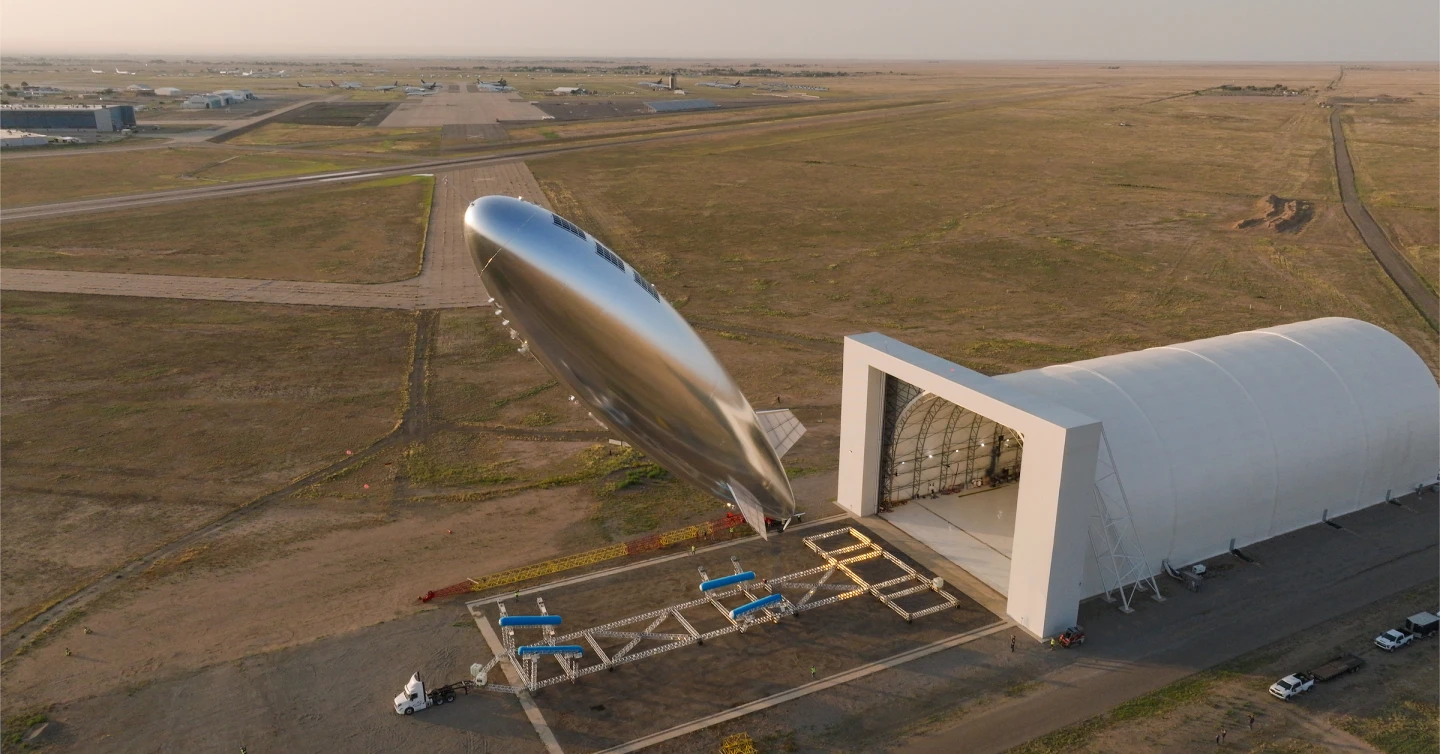
There's a blimp floating in the stratosphere right now that just gave an ordinary phone in Japan a cellular signal from ten miles up, and honestly, that's weirder and more interesting than any satellite constellation you've heard about this year. Our take: this is the most quietly radical infrastructure play in wireless right now, and it deserves way more attention than a rocket launch.
Here's what actually happened. An unmanned Sceye airship launched from New Mexico, flew across the Pacific to Japan, and back again, beaming mobile service to standard phones the entire time from the stratosphere. Not a test of "can we do this in a lab." A test of "can we do this over an ocean to another country." SoftBank, one of Japan's major carriers, is already looking at commercial service by 2026. That's not vaporware timing. That's "we already know this works and we're figuring out the business model" timing. If you've been following the slow, expensive rollout of Starlink's direct-to-cell or wondering why Amazon's Project Kuiper keeps sliding, you already know the problem: satellites are hard to launch, expensive to replace, and their signals struggle with interference from the ground. A blimp doesn't have those problems. It sits there. It stays up for months. It covers an area the size of a small country.
The razor clam in this story is the altitude. Ten miles up puts you well above weather and commercial air traffic, but still inside the atmosphere. That means the signal path to your phone is short enough to work with existing handsets. No special antenna. No satellite phone plan. Just a tower in the sky that's been floating there since before you woke up. For rural Japan, for island chains, for disaster zones where cell towers get knocked flat, this is the kind of infrastructure that doesn't need concrete. It needs helium and solar panels and a ground station that can talk to a blimp. That's it.
So here's the question SoftBank and Sceye haven't answered yet: what happens when the wind gets weird? The test flight worked, but the stratosphere isn't empty. There's jet stream shear, there's pressure variation, there's the small matter of keeping a giant fabric envelope stable for months at a time without human intervention. If they solve that, and the test suggests they're close, then 2026 becomes the year the cell tower finally floats. Watch the endurance data from the next flight. That's the number that matters.