
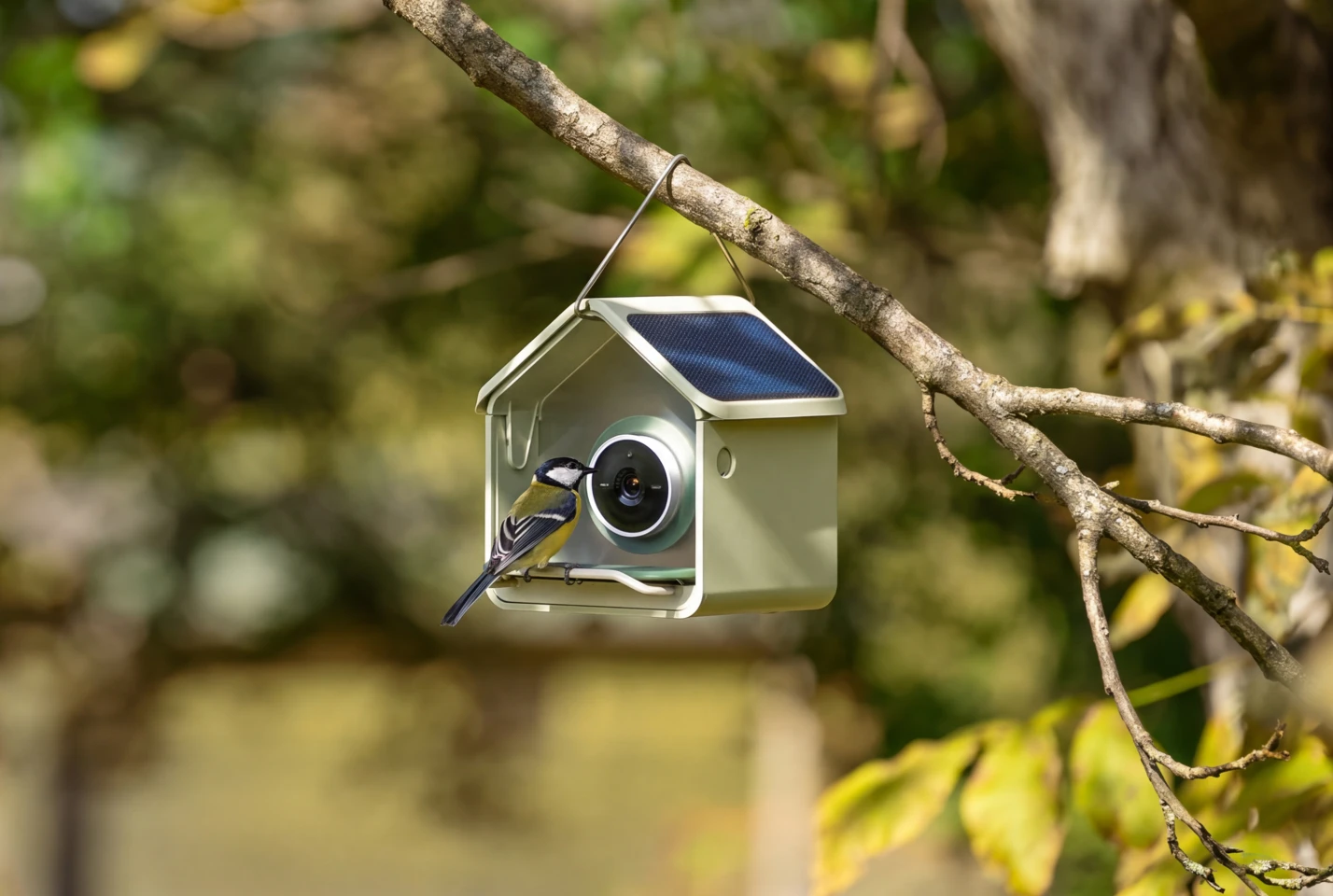
A bird feeder that identifies 11,000 species while you're stuck at work is either the best thing to happen to backyard birding or a quiet surrender of the whole point, and we think it's mostly the first one. The case against is easy to make: birdwatching is supposed to be the excuse you use to leave your phone inside, to sit still and let the world come to you. A camera-equipped feeder with smartphone connectivity drags the screen back out to the garden. Fair. But here's the detail hiding under the spec sheet, the one everyone scrolls past: the rare bird doesn't care about your schedule. It shows up at 10:40 on a Tuesday while you're in a meeting, and by the time you get home it's gone. A feeder that logs what visits and tells you about it is doing the one thing your lunch break can't, which is be there when you aren't. It's the same instinct that put a camera in a screwdriver so it could ID the bit for you, and the same one that sent a lamp poking its nose into a wood stove so you didn't have to, and the same seasonal curiosity that had Volvo studying leaves for an EV's interior. We keep building small instruments that notice things on our behalf. Sometimes that's a gimmick. Sometimes it's the whole point.
The honest question is what the 11,000-species claim actually buys you. Identifying a bird is the easy part; knowing what to do with the identification is where these things live or die. A feeder that tells you a chickadee stopped by is a novelty. A feeder that tells you something you've never seen in your county is a reason to keep the thing filled through February. Until we know how the ID holds up on a blurry 6 a.m. visit, whether the app tells you anything beyond a name, and what the hardware costs, treat the species count as a ceiling, not a promise. Birdwatching has gone digital whether the purists like it or not, and the smart feeder is the logical end of that drift, but the number on the box is marketing until someone tests it against a real winter.
Our take, stated plainly: this is worth watching precisely because it solves a real problem for real people, the ones who want to know what's in their yard but can't sit in it all day. It is not a replacement for sitting in the yard. The takeaway is simple. If you buy one of these, buy it for the log, not the list. The log is the thing you'll actually use, the record of who came and when, and it's the part that makes a Tuesday meeting slightly more bearable. The list is for showing off.
What we want to know before anyone gets excited is the boring stuff the launch copy skips: price, ship date, and whether this is a shipping product or a crowdfunding campaign still looking for backers. If it's the latter, say so, and we'll say so too. A feeder that IDs eleven thousand species is a lovely idea. A feeder that actually arrives on your porch, survives a raccoon, and still recognizes a finch in bad light is the one worth the money. Watch the delivery date, not the species count.