Two Supertankers Reverse Course After Approaching Strait Of Hormuz As US-Iran Talks Fail
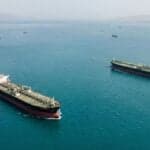


Two empty supertankers, including a Pakistan-flagged vessel, turned back at the Strait of Hormuz on Sunday after reaching close to the key transit point, as talks between the United States and Iran ended without any agreement.
Ship-tracking data showed that three very large crude carriers (VLCCs), none directly linked to Iran, began moving towards the strait from the Gulf of Oman late on Saturday.
They reached near Iran’s Larak Island early on Sunday, which is seen as a checkpoint for vessels entering the waterway.
At this point, the Iraq-bound Agios Fanourios I and Pakistan-flagged Shalamar, which was heading to Das Island in the United Arab Emirates, took a U-turn and moved away from the strait.
A third tanker, Mombasa B, continued its journey and passed through the Iran-approved route between Larak and Qeshm islands into the Persian Gulf. The vessel is not currently indicating a clear destination.
The exact reason why the two tankers turned back is not known. Both Iraq and Pakistan had earlier received approval from Iran to use the route.
However, the change in course happened at the same time when talks between US and Iranian officials in Islamabad ended without a deal.
The negotiations lasted for around 21 hours. US Vice President JD Vance said that while there had been some progress in discussions, no final agreement was reached. He added that the outcome was “bad news for Iran” more than for the United States.
The Strait of Hormuz remains one of the most important routes for global oil trade. Since the US and Israel began strikes on Iran about six weeks ago, movement through the strait has been heavily affected, leading to supply disruptions.
Reopening the route has been a key issue in the talks, but both sides have not been able to agree. During this period, Iran has maintained control over the passage and allowed limited movement under certain conditions.
In recent weeks, several vessels have tried to pass through the strait but later turned back due to safety concerns. Most ships have been trying to leave the Persian Gulf, but empty tankers are also needed to enter the region to load cargo.
Two Chinese container ships had earlier taken a U-turn before later managing to exit the Gulf. A liquefied natural gas carrier also turned back last week.
There have been some successful movements as well. On Saturday, two Chinese supertankers and a Greek vessel exited the Gulf through Hormuz carrying crude oil.
The US military said that two Navy warships had moved through the strait to begin clearing it of mines and to make the route safe for commercial vessels. Iranian authorities denied this and warned they would respond if US warships entered the waterway.
Iran’s Revolutionary Guards’ Naval Command also said that safe passage during a two-week ceasefire applied only to civilian vessels under specific conditions.
References: moneycontrol, economictimes
Want to read more?
Check out the full article on the original site