Iran Rejects Temporary Ceasefire Proposal With U.S. To Reopen Strait Of Hormuz


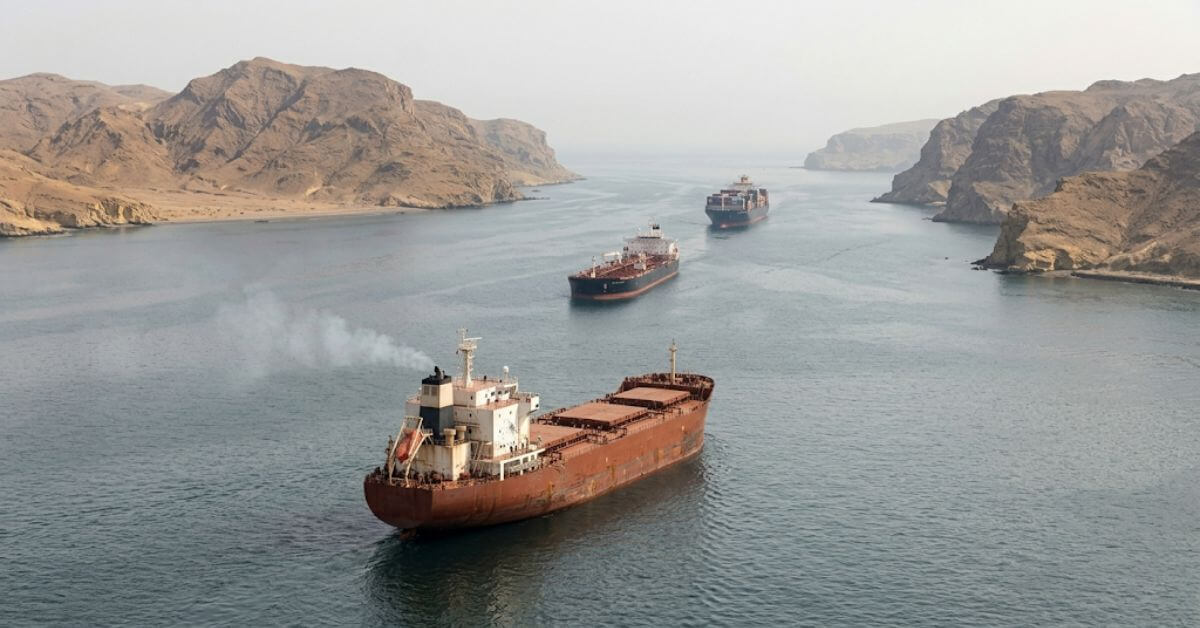
Iran has rejected a temporary ceasefire proposal with the United States, raising uncertainty about reopening the Strait of Hormuz, a key route for global oil and shipping trade.
The proposal was prepared by Pakistan and shared with both Iran and the United States through overnight communication. It suggested a two-step plan, starting with an immediate ceasefire followed by talks on a wider agreement.
The initial step also included reopening the Strait of Hormuz to allow normal shipping movements. However, Iranian officials said they would not accept reopening the strait in exchange for a temporary ceasefire.
A senior official stated that Iran is looking for a permanent end to the war and does not see the United States as ready for such an agreement. The official added that Iran does not accept pressure or deadlines to make decisions.
Iran has confirmed that it received the proposal and is reviewing it, but has already made its position clear.
According to Iran’s state news agency IRNA, Tehran has sent its response through Pakistan, rejecting the ceasefire and stressing the need for a permanent end to the conflict.
The response includes ten points. These cover an end to conflicts in the region, a clear protocol to ensure safe passage for ships through the Strait of Hormuz, lifting of sanctions, and support for reconstruction. Iran has also indicated that any final deal should include guarantees to prevent future attacks.
Iran’s Ambassador to India, Dr Mohammad Fathali, said the country is being careful in its approach due to past experiences. He noted that earlier cycles of war, ceasefire, negotiations, and then renewed conflict have not worked in Iran’s favour. He said decisions on negotiations will depend on whether the country’s interests can be protected.
Diplomatic efforts continue through intermediaries, with Pakistan playing a key role in relaying messages between the two sides.
Per sources, Pakistan’s army chief, Field Marshal Asim Munir, has been in contact with senior US officials, including Vice President JD Vance and special envoy Steve Witkoff, as well as Iran’s Foreign Minister Abbas Araqchi.
Earlier reports had suggested that a 45-day ceasefire was being discussed as part of a broader two-phase deal. Under that plan, the ceasefire would begin immediately, with around 15 to 20 days set aside to finalise a larger agreement.
The proposal, informally called the “Islamabad Accord”, also included the idea of final talks taking place in Islamabad.
Iran has also received messages from other mediators, including Turkey and Egypt. Discussions around a final agreement have included possible limits on Iran’s nuclear programme in return for sanctions relief and the release of frozen assets, although no agreement has been reached.
Iran’s foreign ministry spokesperson Esmail Baghaei said earlier proposals were unrealistic and not suitable for Iran’s interests. He added that Iran quickly prepared its own response and that presenting its position should not be seen as weakness.
Regional tensions remain high, with ongoing strikes between Iran and Israel. In a recent development, an Israeli strike reportedly killed Majid Khademi, the intelligence chief of Iran’s Islamic Revolutionary Guard Corps.
References: Reuters
Want to read more?
Check out the full article on the original site