Bees on the brink
Bees on the brink
WSU scientists are fighting to save honey bees from multiple threats.
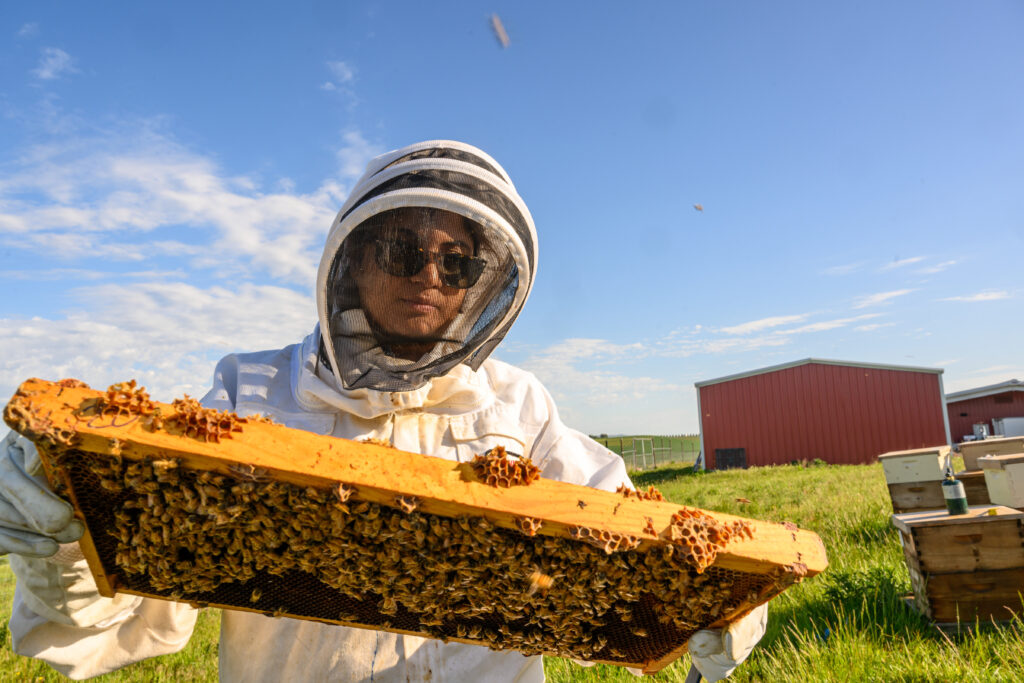
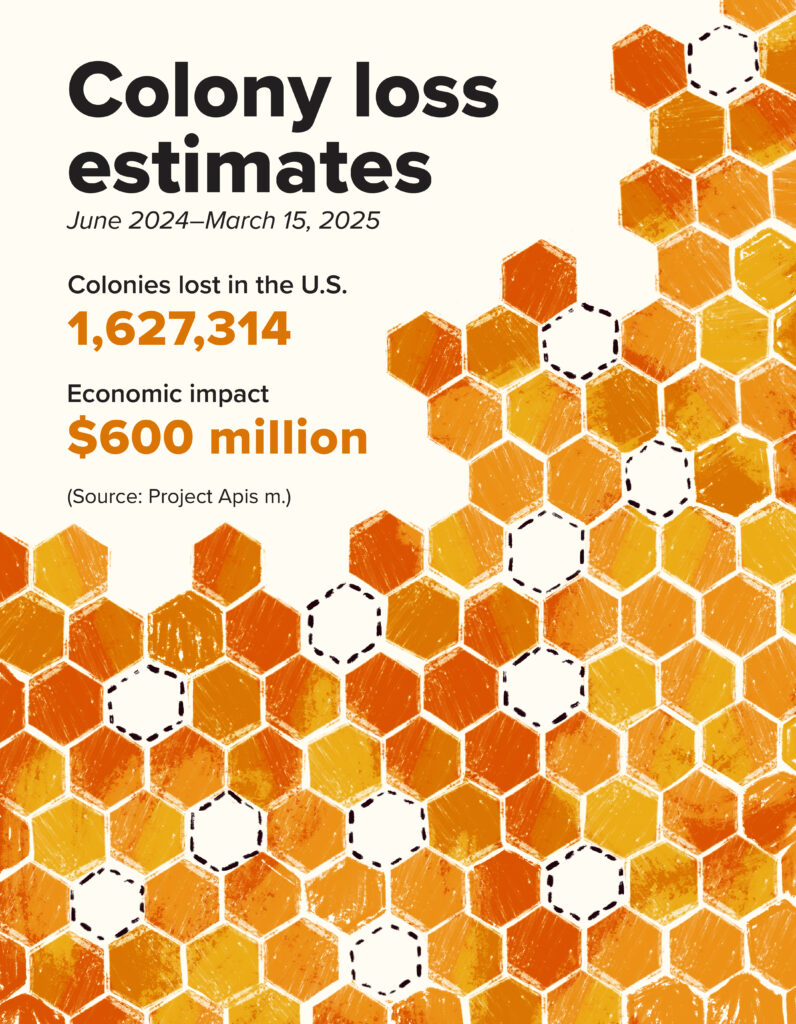
The news was disturbing. Scientists at Washington State University observed that up to 70% of commercial honey bee colonies died over the past year, a much higher rate of loss than usual.
Commercial honey bee operators are a linchpin of the U.S. agriculture industry, and fewer pollinators could mean smaller harvests and higher food prices.
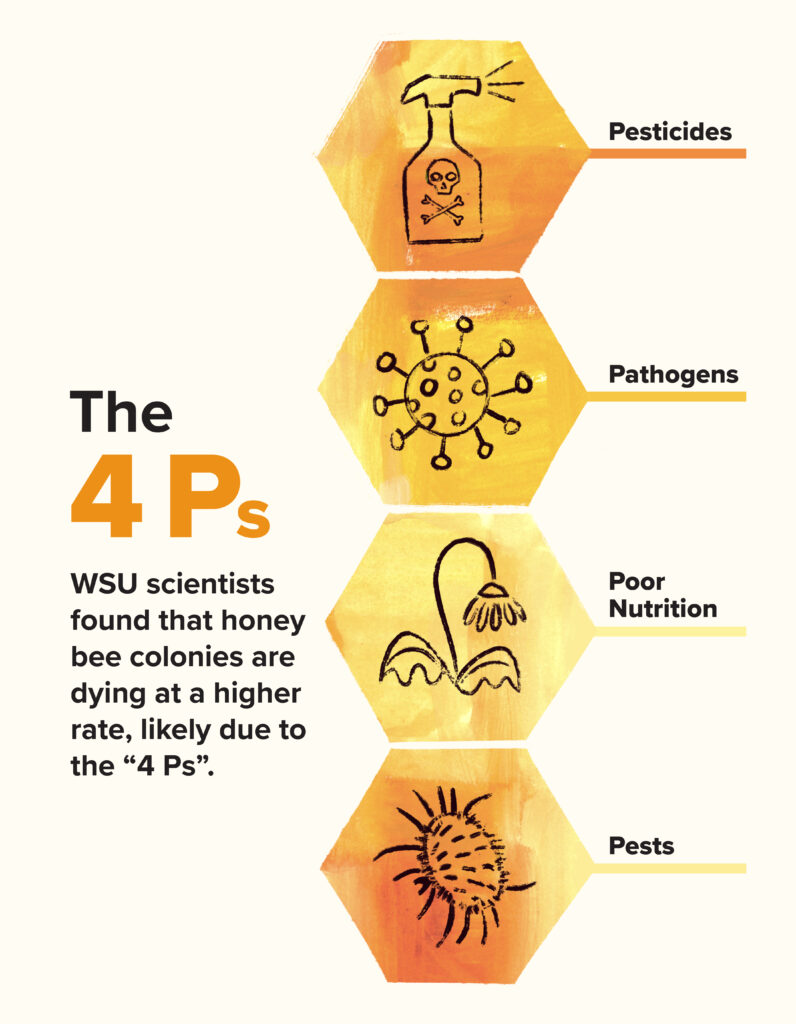
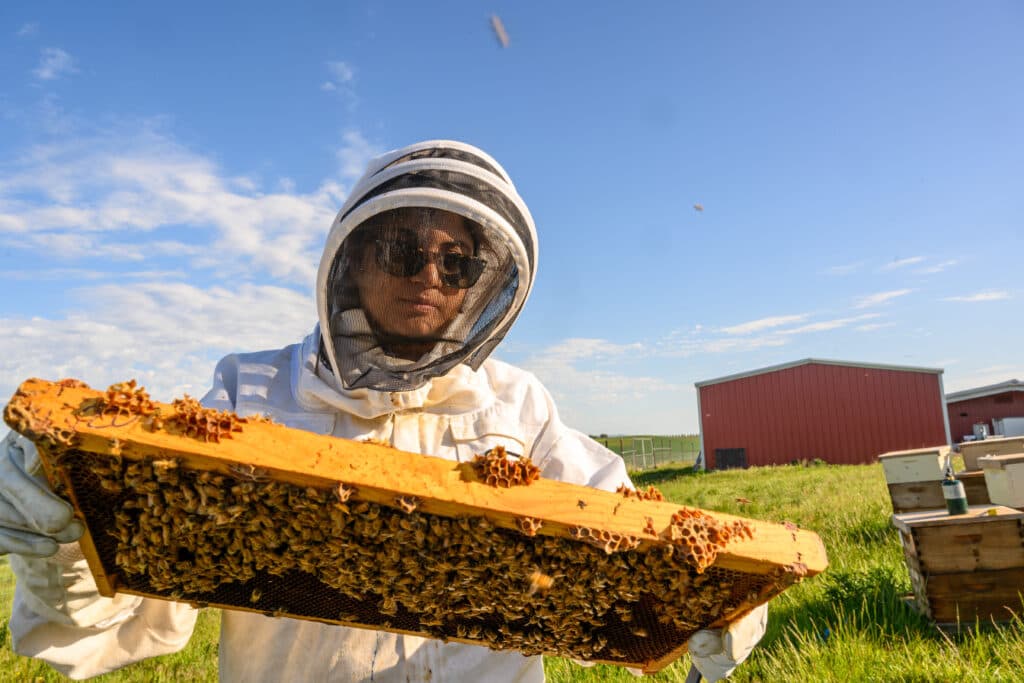
The reason for the decline isn’t clear. It’s probably a combination of things, say Priya Basu and Brandon Hopkins, principal investigators in the WSU Honey Bee + Pollinators Program. Scientists call the troubles besetting honey bees “the 4 Ps”: pests, poor nutrition, pesticides, and pathogens.
That’s why WSU takes a holistic approach to addressing colony collapse, said Basu, assistant professor of pollinator health and apiculture.
“You won’t find a bee in the landscape that’s just affected by pests, or just affected by poor nutrition,” she said. “We are tackling it all.”
For example:
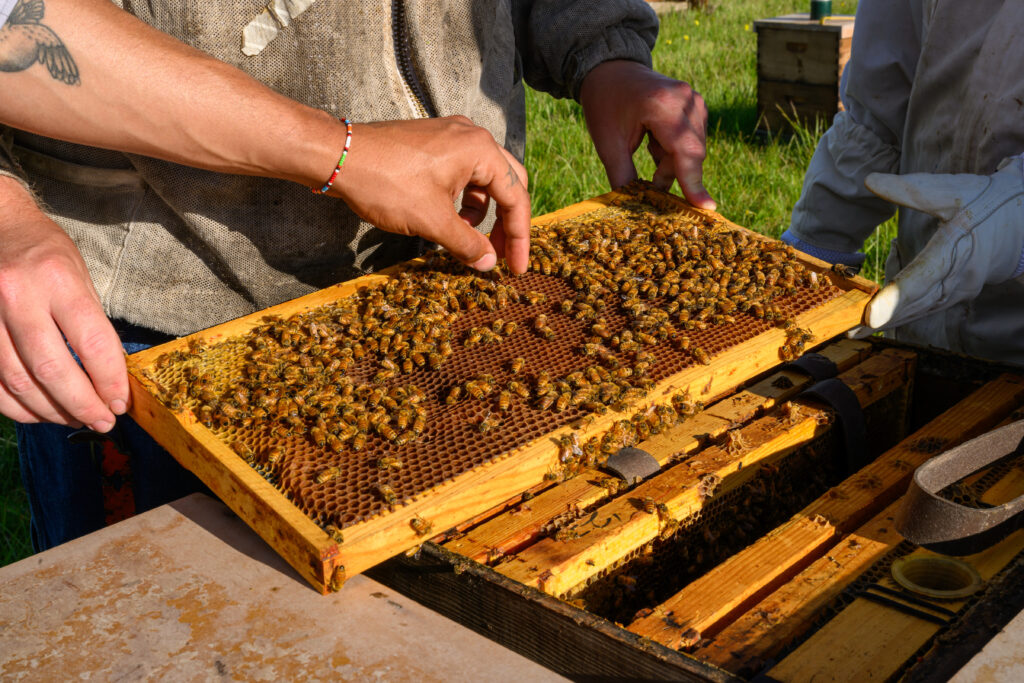
- WSU scientists have come up with new ways to control deadly parasitic mites that can devastate a colony, including a fungal biocontrol that kills the parasites without harming the bees.
- WSU contributed to major shifts in management practices such as storing bees indoors in cooler temperatures to disrupt the mite infestation cycle and reduce winter mortality. More than 30% of the nation’s commercial colonies are stored indoors in the winter months now.
- Scientists field-tested a new food source designed to sustain honey bee colonies when there’s a shortage of natural pollen. They’re also mapping the quality of pollen sources bees find across North America.
- They’re conducting basic research to understand diseases in honey bees.
- WSU scientists are diversifying the U.S. honey bee gene pool through a nationally recognized breeding program.
- WSU Extension shares the latest research, and produces useful information and training for beekeepers, farmers, orchardists, conservationists, and the general community.
You won’t find a bee in the landscape that’s just affected by pests, or just affected by poor nutrition. We are tackling it all.
Priya Basu
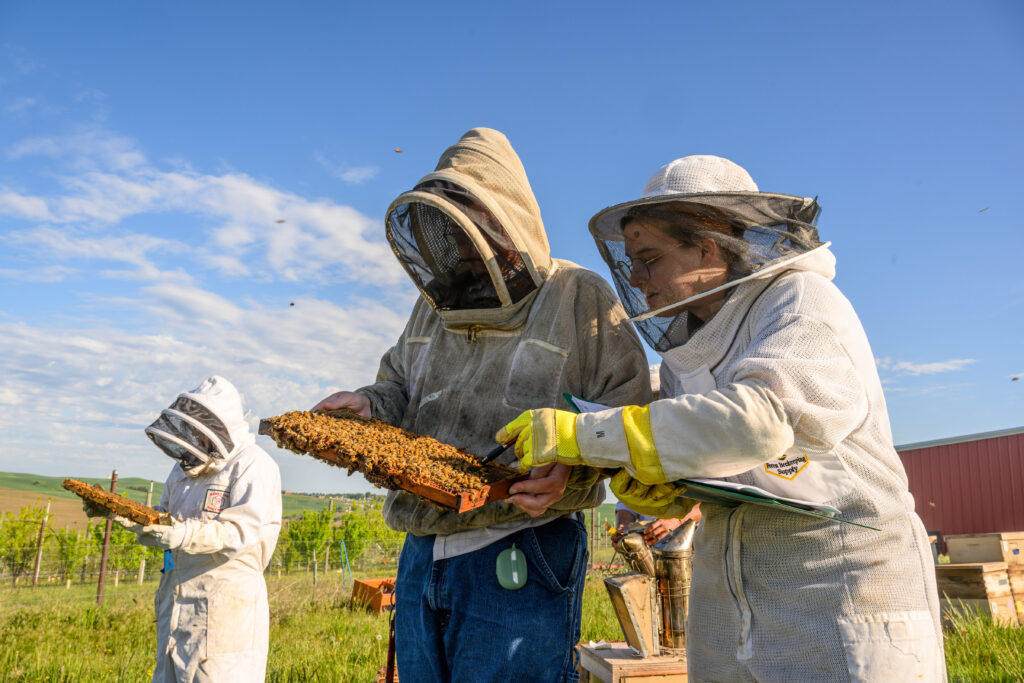
Saving the honey bees is something of a race against time, for researchers and for beekeepers. “For a lot of these operators, another year of big losses and they’re out of business,” said Hopkins, the P.F. Thurber endowed distinguished professor of pollinator ecology.
There aren’t good alternatives to natural pollinators, either. Mechanized sprayers or even robotic “bees” are not well-developed and would be expensive and less effective. And, “I don’t think people want their food to be produced that way,” Hopkins said of those methods.
Added Basu, “We have to be able to support beekeepers and growers by finding actionable solutions to these problems.”
Infographic full text
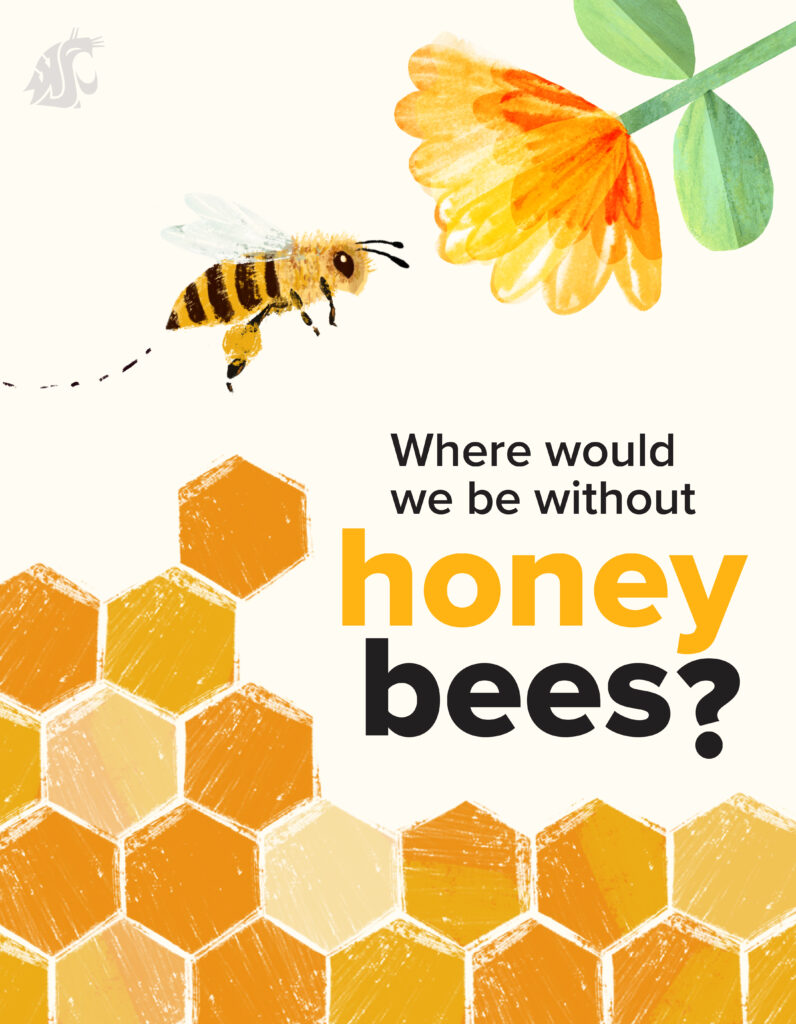
- Where would we be without honey bees?
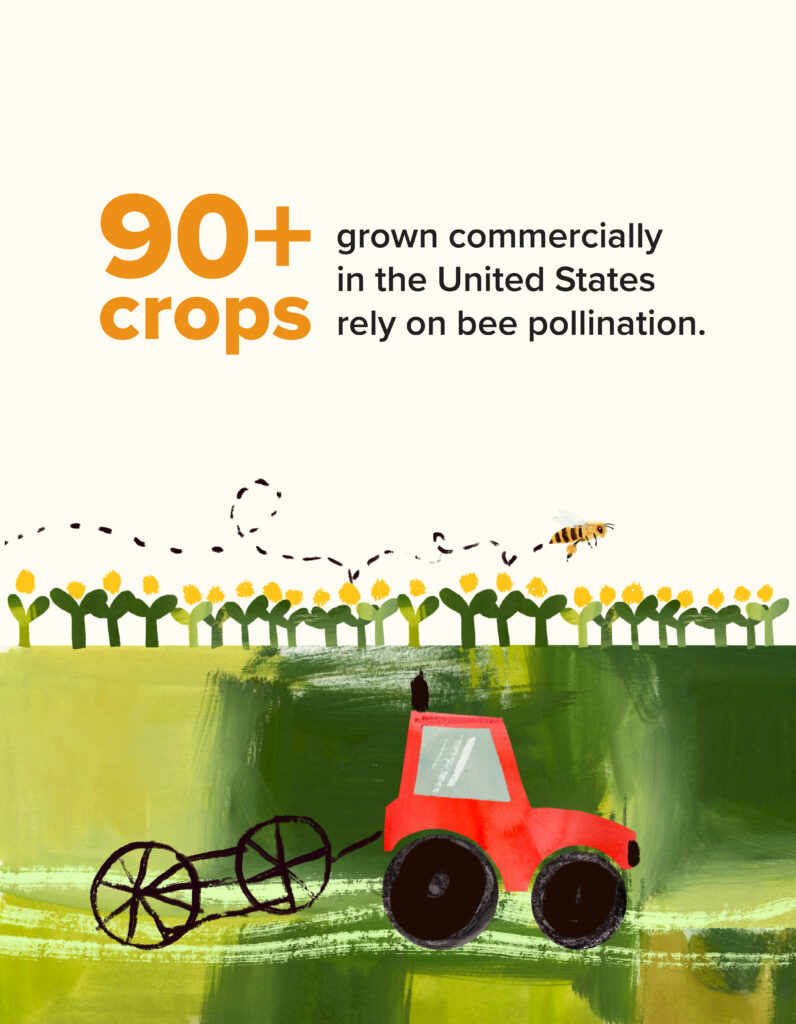
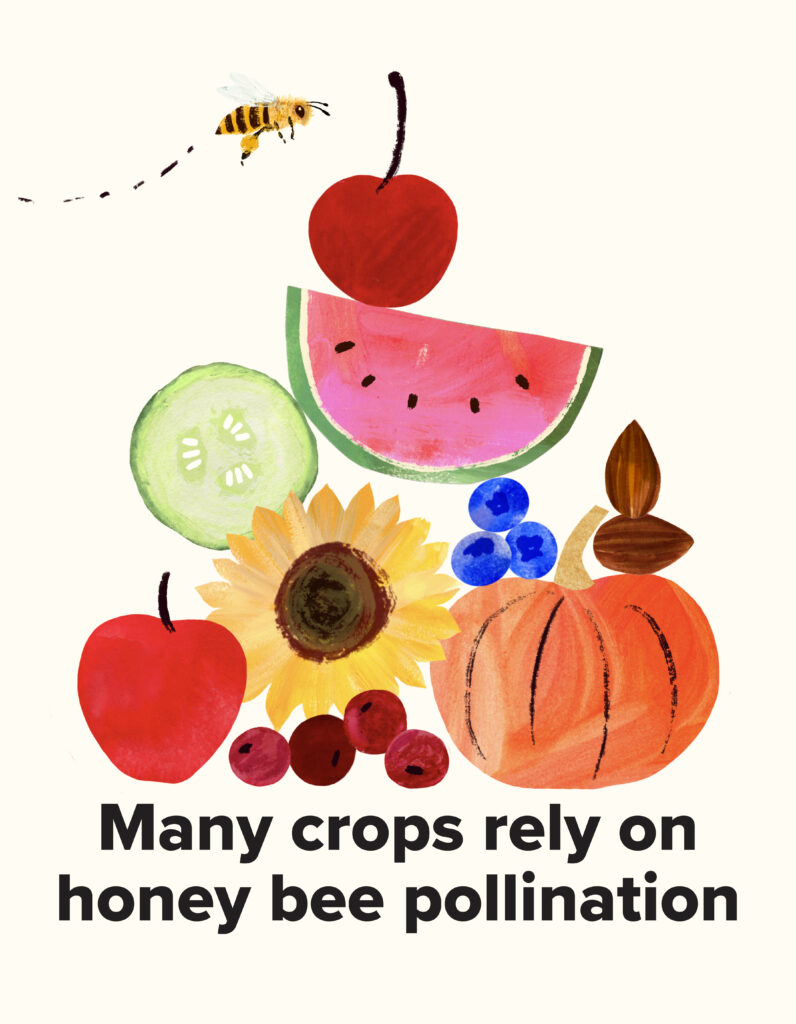
- 90+ crops grown commercially in the United States rely on bee pollination.
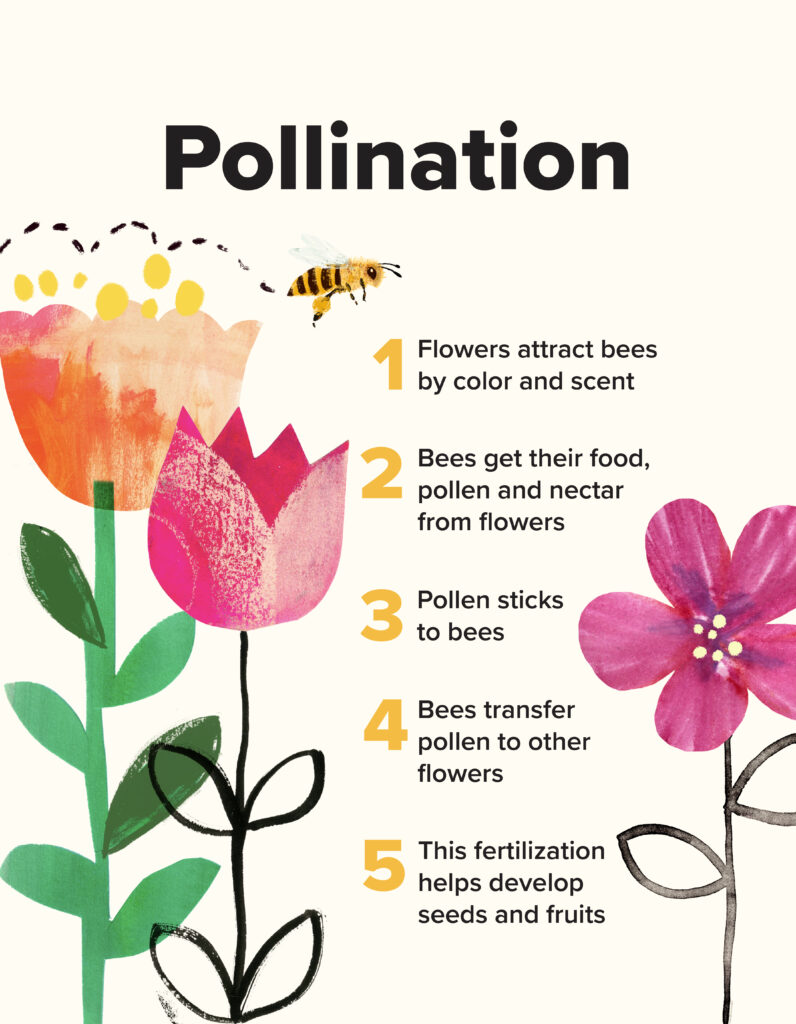
- Pollination:
- Flowers attract bees by color and scent.
- Bees get their food, pollen and nectar from flowers.
- Pollen sticks to the bees.
- Bees transfer pollen to other flowers.
- This fertilization helps develop seeds and fruits.
- Many crops rely on honey bee pollination.
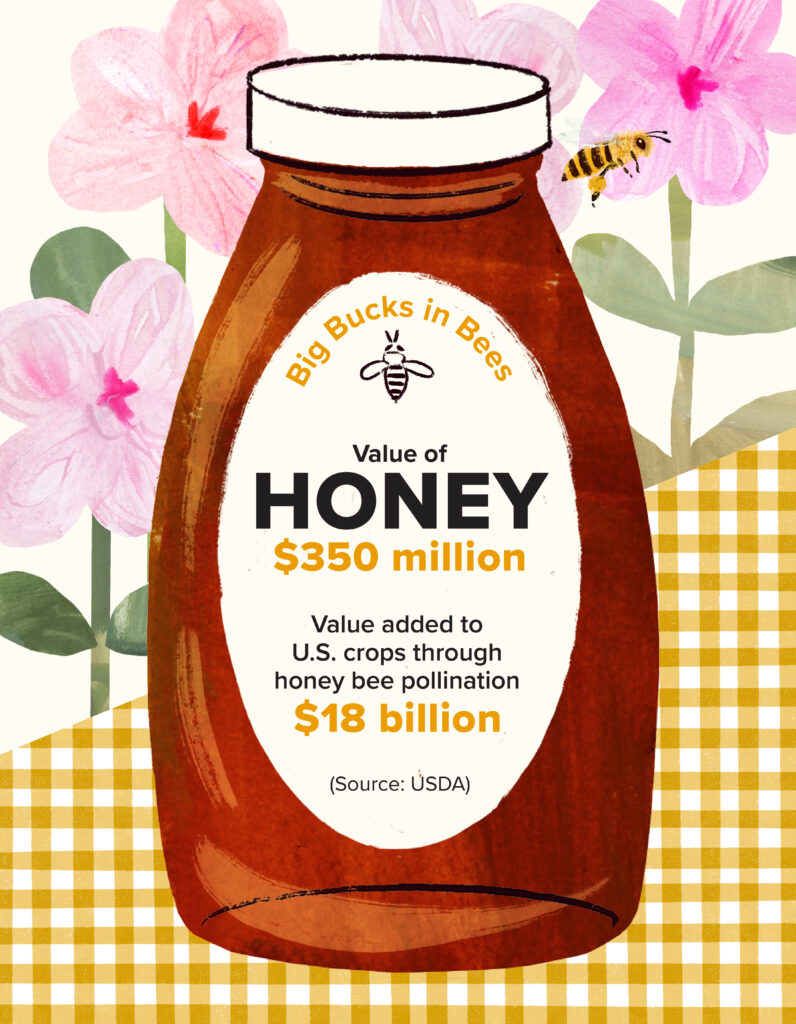
- Big Bucks in Bees. Value of honey $350 million. Value added to U.S. crops through honey bee pollination $18 billion. (Source USDA)
- The 4 P’s. WSU scientists found that honey bee colonies are dying at a higher rate, likely due to the “4 P’s”: pesticides, pathogens, poor nutrition, and pests.
- Colony loss estimates, June 2024-March 15, 2025. Colonies lost in the U.S.: 1,627,314. Economic impact: $600 million. (Source: Project Apis m.)
Explore WSU News to learn more about how WSU’s impact goes beyond the numbers.
WSU Delivers
Bees on the brink

Rehab isn’t just for humans
Trending






Want to read more?
Check out the full article on the original site