
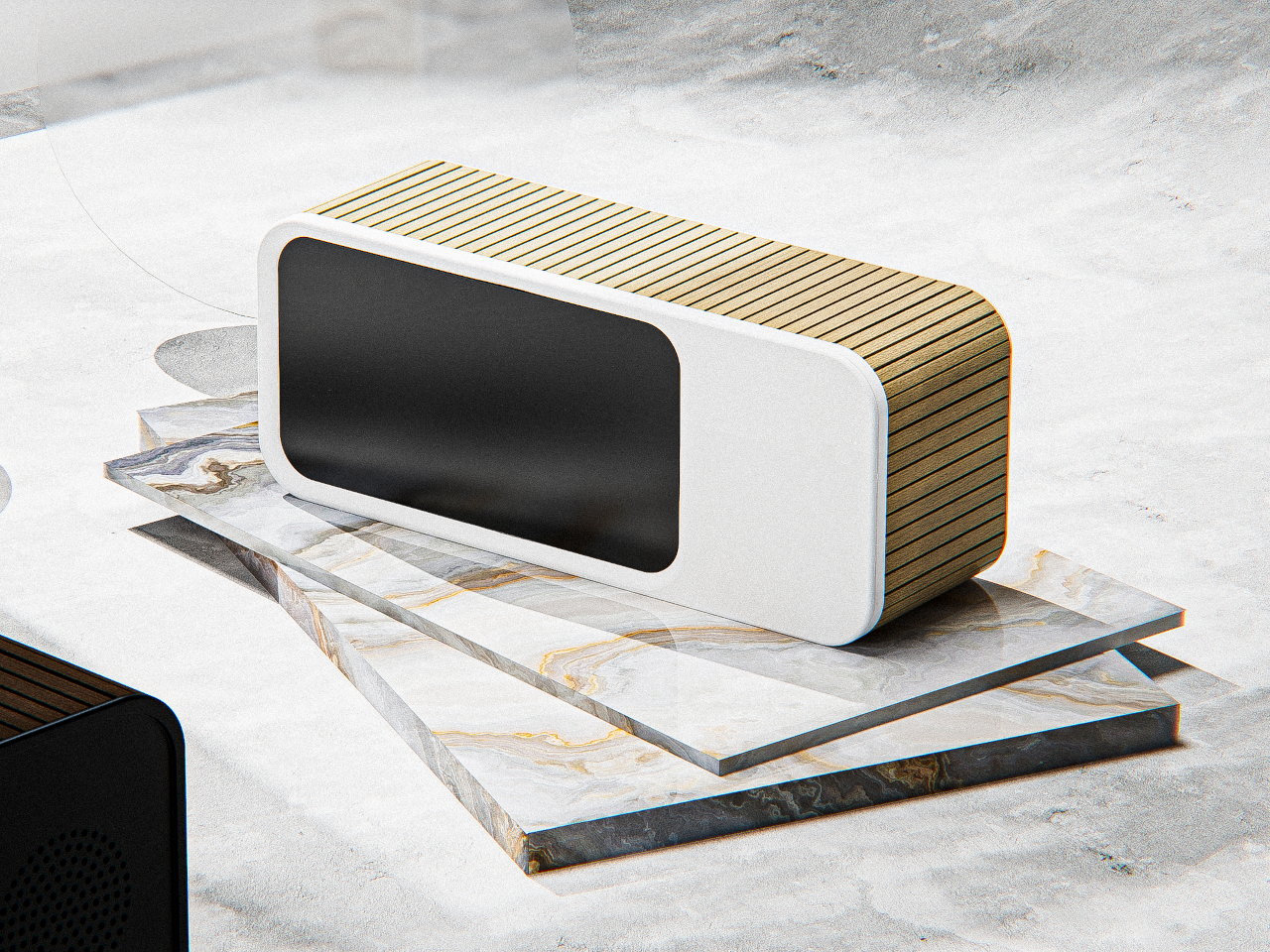
The snooze button is a masterpiece of bad design. It is so perfectly terrible at helping you wake up that it has ruined millions of mornings, and we should be grateful the KAIROS smart alarm clock concept wants to break your thumb's muscle memory. This thing trades the satisfyingly large button on top for a pattern you have to trace on the screen before the ringing stops, a different pattern every day, so you cannot learn it and drift back into a dream about a talking raccoon. We like this. We like it a lot. But we also know that a clever hinge on a concept is not the same as a product you can actually buy, and this thing has a few hinges of its own that need a closer look.
The core idea is sound: force your brain to engage before your body gets permission to ignore the world. It is the same logic behind a phone that forgot social media, like the That candy-colored keypad hides a 4G phone that forgot social media, which strips away the endless scroll so you can actually use a tool for its intended purpose. KAIROS wants to strip away the autopilot from your morning. The problem is that drawing a fixed pattern with your finger, as the concept itself acknowledges, can quickly become second nature. You will learn the muscle memory for a specific shape just as fast as you learned the location of a button. The real trick is that the pattern changes every day, which means you have to look at the screen. You have to see the time. You have to decide, consciously, if you are getting up or if you are going to draw another shape and roll over. That small moment of decision is the entire point, and it is a genuinely clever way to break the loop.
But here is where the concept gets slippery, and where we have to squirt some water at the press release. The companion app lets you add headlines, social media, or stock updates to the display, and that is a trap dressed up as a feature. Checking the weather before you pick a jacket is useful. Reading a group chat before you have found your socks is how you start the day already stressed about something your cousin posted at 2 AM. The most important setting on this clock might be the one that lets you leave all that noise off. It is the same restraint that makes a tiny home work, where every square inch has to earn its keep, as seen in Ten tiny homes that let you stay grounded and skip the ladder. A clock that shows you the temperature and the humidity is a tool. A clock that shows you the market is a leash.
Then there is the second sleeper problem, which the concept does not solve. At six in the morning, a few extra seconds of ringing while you trace a pattern might be a fair price for getting yourself upright, but the person beside you did not sign up for a puzzle. There is no mention of a quick override or a way to dismiss the alarm without seeing the screen. A feature like this makes perfect sense for the early train you cannot miss, but on a Saturday when you would rather not wake the rest of the house, a plain alarm would do just fine. The concrete question that will decide whether this clock stays on the nightstand or ends up in a drawer is simple: can you choose which mornings call for the pattern? If the answer is yes, this is a genuinely thoughtful piece of design. If the answer is no, it is a gadget that works against you half the time, and that is the kind of detail that separates a concept from something you actually want to reach for in the dark.