
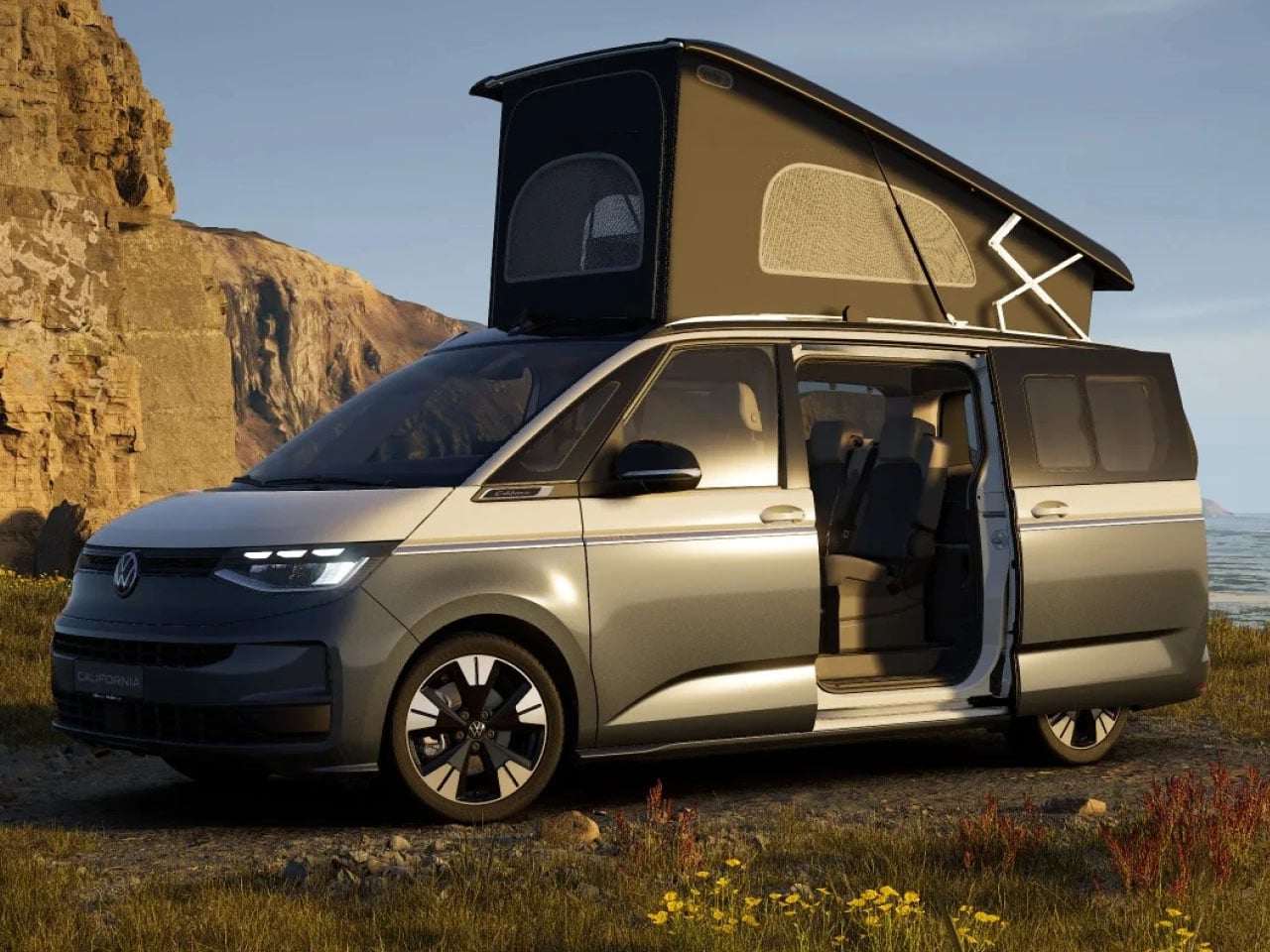
Seventy-two thousand dollars. Let that number sit for a second, maybe on the roof of a Volkswagen California while you stare at a sunset you paid a mortgage payment for. The new 2027 California line has landed in the UK, with prices starting at £54,065 (roughly $72,000), and Spoot has a tab open and a very specific question: who exactly is this for? Because while Volkswagen has clearly put genuine thought into the Beach, Coast, and Ocean trims, and yes, the eHybrid 4MOTION system that can heat or cool the cabin for eight hours without the engine running is genuinely clever, the price tag is the razor clam in this spec sheet. It's the narrow, slippery detail that everyone scrolling past the glossy renders of 19 new color options really needs to grab.
This is the same kind of pricing logic that makes a Motorola wants sixteen hundred bucks for a phone that looks like a spider feel almost reasonable by comparison, almost. The California has always been the people's campervan, the one you'd see at a muddy festival with a dent in the side and a story to match. Now it starts at the price of a small house in parts of the country, and the base Beach model gets you manual pop-up roof, a mini-kitchen, and heated front seats. That's a lot of money for the privilege of manually cranking your bed into position. The Coast and Ocean trims add the good stuff, larger kitchen, cabinetry, an electric pop-out roof, climate control, but the gap between "adventure" and "adventure with a fridge and ambient lighting" is now measured in thousands of dollars. Meanwhile, Anker's new window cam watches your yard without ever leaving the house for under a hundred bucks, proving that clever solutions don't always need a luxury price tag.
Let's be clear: the California still has the DNA. The Travel Assist and Emergency Assist system that guides the van to the hard shoulder if the driver has a medical emergency is the kind of feature that saves lives, not just Instagram posts. The power-latching doors and tailgate are the details that make a campervan feel like a home rather than a shed on wheels. And the 12.9-inch infotainment system that doubles as a camping control center is exactly the kind of software-integrated thinking that makes a product feel smarter than its competitors. But the price point is the thing. Volkswagen has narrowed the range to three trims, but in doing so, it has also narrowed the audience. This is no longer the van for the person who wants to throw a mattress in the back and hit the coast. This is the van for the person who wants to finance their adventure over 72 months.
The real question, the one that sticks in the throat like a fish bone, is whether the California has drifted from its roots or whether the market has simply drifted upward to meet it. The Beach trim starts at $72,000. That's the *entry level*. For that money, you could buy a used van, outfit it with a custom kitchen, solar panels, and a bed that folds into something more than 78 by 43 inches, and still have enough left for a year of fuel and campsite fees. But you wouldn't get the eHybrid climate control. You wouldn't get the driver assists. You wouldn't get the 19 paint options. And maybe that's the trade-off Volkswagen is banking on: that the person buying a California in 2027 isn't looking for the cheapest way to sleep under the stars. They're looking for a way to do it without giving up the things they've gotten used to. The question, the one that will matter when deliveries start in early 2027, is whether that trade is worth $72,000, or whether the razor clam in this spec sheet is actually a hole in the hull.