
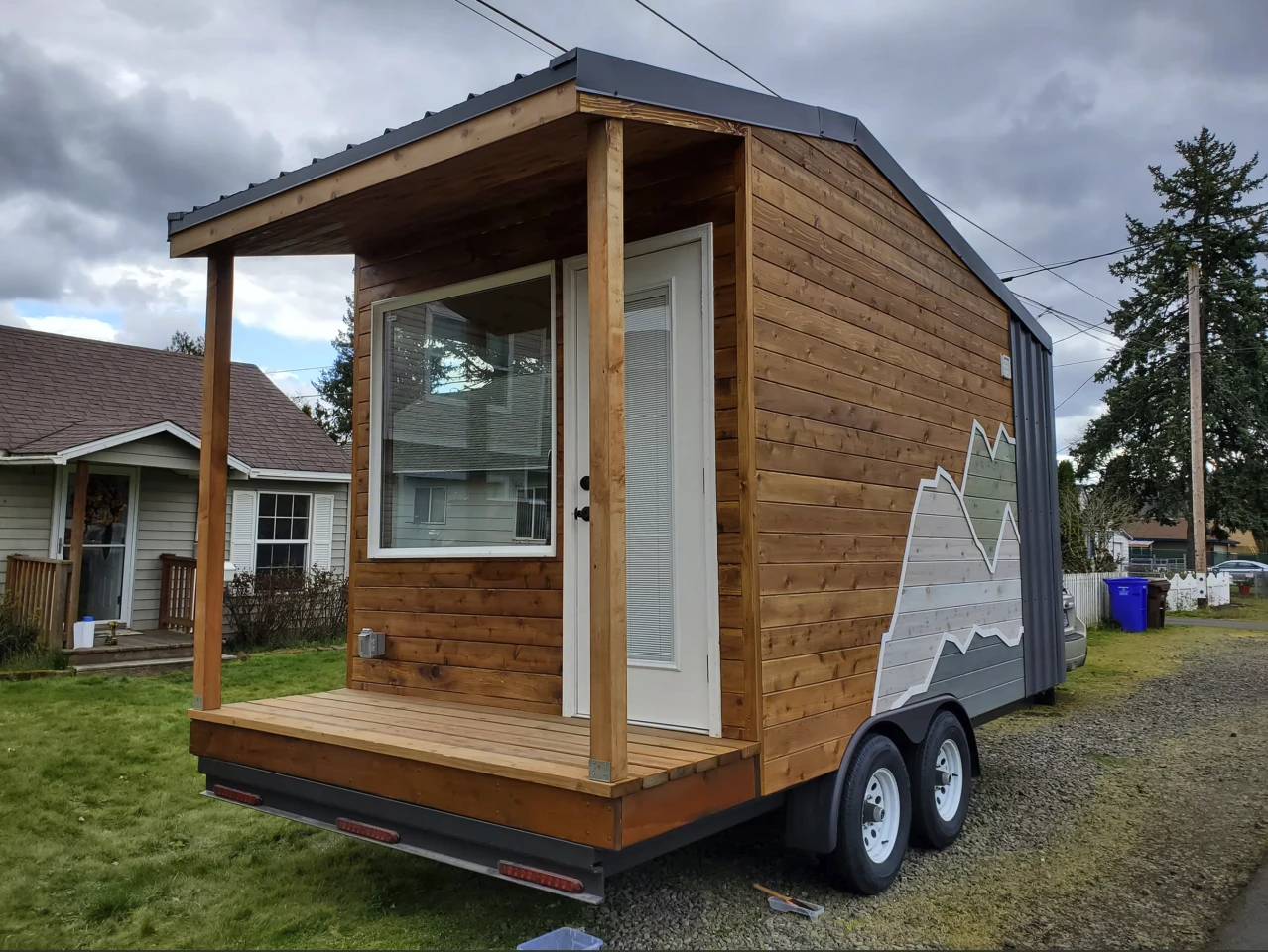
The tiny house scene has a size problem, and it's not the one you think. For every clever micro-dwelling that rolls out, there are three more that stretch to 30 feet, add a second loft, and quietly morph into a suburban house on wheels. The Traveler isn't interested in that arms race. It's small, it's cheap, and it's built to chase the road, not the family. That's the right call, and it's one more proof that the most interesting ideas in this category aren't the biggest ones.
We've seen this instinct before. The Atlas tiny home rolls its bed onto the deck, turning sleep into an escape hatch, and that's a house that understands the point of being tiny isn't to replicate a condo, it's to make the outdoors part of the floor plan. The Traveler does something similar with its whole footprint. Instead of adding a bunk room, it subtracts. It says the person who buys this doesn't need a nursery or a home office; they need a rig that doesn't groan when the highway gets twisty. And that bed slides straight onto the deck for a real night under the stars because the best feature a tiny house can have is the one that gets you outside it. The Traveler's whole pitch is that the house itself is the escape hatch, not just the bed.
The practical takeaway here is blunt: if you're a solo nomad or a couple who doesn't own a lot of stuff, you are being underserved by the current market. The manufacturers chasing families are building for a demographic that often wants a permanent foundation anyway. The Traveler is for the person who actually moves, who wants to park somewhere for a week and then leave without breaking a sweat. That's a different engineering problem, and it's worth noting that "affordable" in this niche usually means cutting weight, not cutting corners. The question nobody answers in the launch video is how it tows, because a tiny house that's too heavy defeats the entire purpose. We're not going to invent a curb weight, but the fact that the story leads with portability over square footage tells us where the priorities sit.
What we're watching for is the hinge. Not a literal one, but the moment the Traveler actually ships to someone who lives in it for a full season. The concept is sound, the philosophy is correct, and the price point is the right bet against an industry that keeps inflating. But a tiny house is only as good as its first winter, its first muddy driveway, its first 10,000 miles. The Atlas and the deck-bed models prove the genre is full of clever ideas; the Traveler has to prove it's a durable one. That's the detail to track, and it's the one that will tell us whether this is a real alternative or just another render with a good story.