
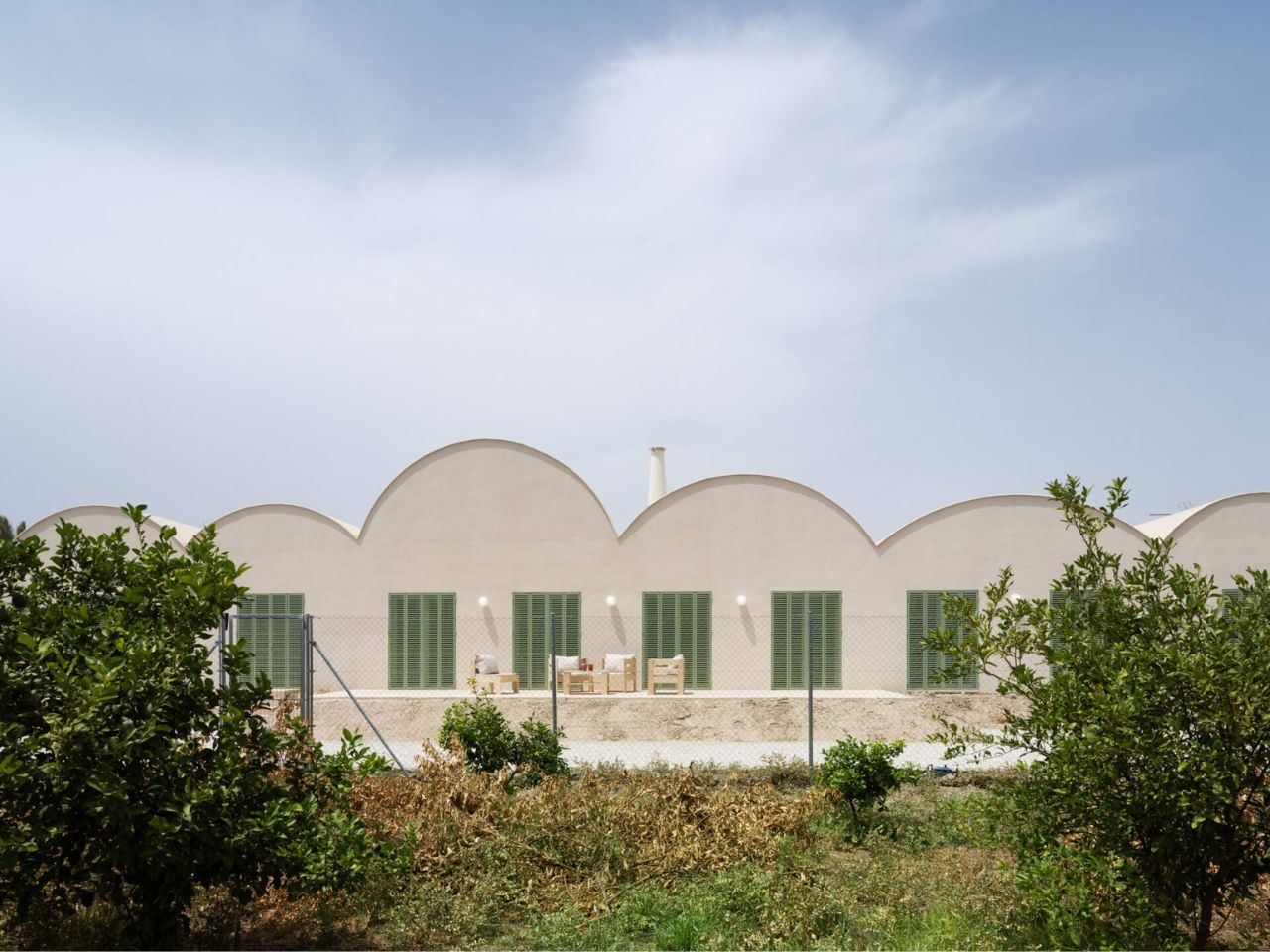
This house gets it. Casa Vereda doesn't slap a solar panel on a box and call it passive. It takes the oldest trick in the book, a curved Catalan vault, and wraps the whole thing in cork, letting the building sweat for you instead of the other way around. That's the razor clam in this spec sheet: sprayed cork isn't just a texture gimmick. It's a breathable, insulating skin that regulates moisture and temperature across both walls and roof, which means the house does part of the climate work before your thermostat ever wakes up. For anyone who's been burned by a smart home that needs its own IT department, this is the quiet, material-level rebellion worth watching.
L'Aura Ortín Architecture For Happiness calls it a balance between contemporary identity and rootedness, but what that really means is they let the landscape dictate the moves. The long, single-story layout, the handcrafted terracotta tiles on the patio, the Mallorcan-inspired shutters, they're not decorative. They're functional decisions that connect the house to its Mediterranean setting the way a good tool earns its place in your hand. The pale sprayed cork on the exterior isn't just about temperature; it's about texture that blurs the line between built and grown. And the interior terrazzo flooring? It absorbs winter sun and stays cool when the shutters close. That's not a feature list. That's a system. The living room's vaulted ceiling in terracotta, pink, and sandy beige brick does the heavy lifting, literally and thermally, while the cherry-toned cabinetry and modular sofas just get out of the way.
Here's the thing, though: this house is a concept render's worst nightmare because it actually ships. There are no vaporware promises here. The Catalan vaulting technique is real, the cork is real, and the passive strategies, lower bedroom ceilings for easier heating and cooling, glass doors with slatted shutters for adjustable ventilation, are so straightforward you wonder why every new build doesn't start here. The open question is cost. L'Aura Ortín Architecture For Happiness doesn't publish a price, and custom handcrafted brick vaults plus sprayed cork cladding don't come cheap. For the reader who's circling back on this, the concrete takeaway is this: the most compelling climate tech isn't an app or a battery. It's a roof shape and a wall material that have been around for centuries, waiting for someone to stop overcomplicating them.
What sticks is the restraint. The kitchen uses pine cabinetry lacquered in cherry, not smart surfaces. The bathrooms use pale gray tile and warm pink cabinetry, not touchless fixtures. The house trusts its geometry and its materials to do the work, and it dares you to ask what else you actually need. For the person who already had a tab open on passive cooling strategies, this is the footnote that outperforms the marketing copy. The detail to watch? Whether the cork exterior holds up over a decade of Spanish summers and winters, because if it does, this isn't just a beautiful house, it's a quiet blueprint for how to build without the hype. Stay spooty.