
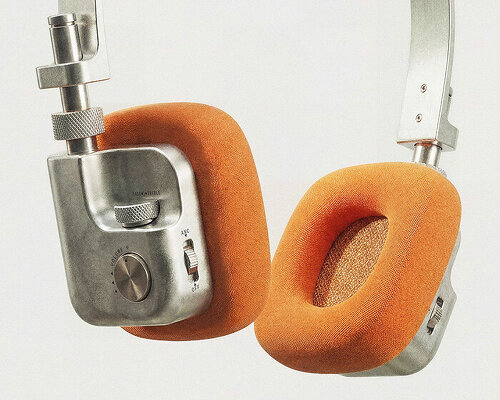
There is something quietly radical about a headphone concept that asks you to reach up and touch your music, and the Tune X3 by Préssec gets that exactly right. While most of the audio world has been busy hiding controls inside apps and polishing touch surfaces until they feel like nothing at all, this brushed aluminum concept puts a knurled dial for bass and another for treble directly on the earcup, and dares you to ignore them. We think that is the most interesting thing a headphone design has done in years, not because it is new, but because it remembers something we all forgot: adjusting sound used to feel good. It is a cousin, in spirit, to projects like the Orbit Clock lets you pick up the hour and minute markers like loose change, which also asks you to handle time like a physical object, or the Aurelis bag is a wearable sculpture that forgot its shell, which reconsiders what a bag even needs to be. These are designs that trust your hands.
Préssec calls the Tune X3 part of a fictional product family, and that word, fictional, is doing a lot of work here. The headphones are a concept, which means there are no confirmed specs, no shipping dates, no promises about weight or acoustic performance. That matters, because the most delightful thing about this design is also the thing most likely to get compromised in a real production run. Those ridged dials with their satisfying resistance, the visible fasteners along the metal body, the cylindrical fittings that connect earcup to headband, every one of those details adds cost and complexity. A company that actually builds these would face a real temptation to smooth them into a single plastic piece and call it close enough. The orange textile padding against brushed aluminum is a gorgeous material contrast, but fabric on headphones wears, stains, and eventually smells. It is the kind of choice that looks incredible in renders and gets quietly swapped for leatherette before the first factory order.
Still, the proposition is worth taking seriously. The Tune X3 imagines a headphone you tune by feel, without a phone, without a menu. Separate physical controls for volume, active noise cancellation, bass, and treble sit on the earcups, each with a distinct shape so your fingers know which is which. That is not nostalgia for nostalgia's sake, it is a genuinely better interface for anyone who has ever fumbled through a settings screen while trying to fix a muddy low-end mid-song. The design borrows from stereo receivers and mixing consoles, but it adapts that language to something you wear on your head. It is the kind of thinking that, if it ever becomes real, would make you wonder why we ever accepted app-based control as progress.
The open question, and the one we will be watching, is whether Préssec or anyone else actually builds this thing. The studio used Vizcom as part of the design process, and the Tune X3 shares its visual language with the CINE X3 camera concept, suggesting a coherent design system that could scale. But a design system is not a production line. The specific consequence to track is whether the tactile control scheme survives translation from concept to consumer product. If it does, this could be the headphone that makes everyone else admit that haptic feedback is not a substitute for a real knob. If it does not, it will remain what it is now: a very pretty reminder of what we gave up.