
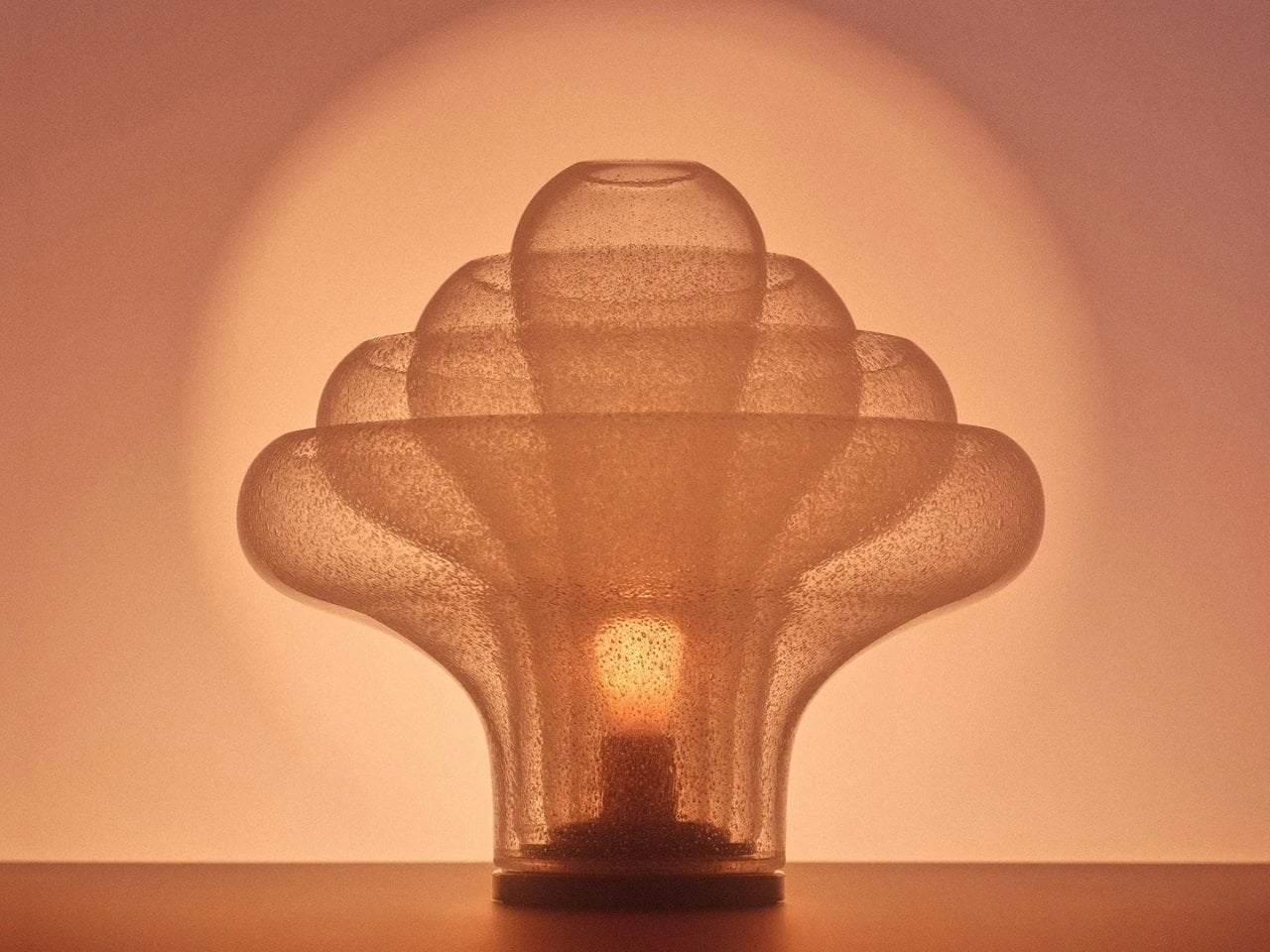
The Lotus lamp from 1969 is back, and the smartest thing Gubi did was refuse to "improve" it. That's the whole story, really, a reissue that trusts the original design enough to let it breathe instead of stuffing it with smart bulbs or Bluetooth speakers. Most reissues feel like nostalgia bait, a warm fuzzy hit for people who remember the first one. This one feels different because it solves a problem that hasn't changed in fifty-five years: how to make a room feel alive without making everything else in it shut up.
The original dilemma the article sketches is painfully familiar. You buy a statement lamp because you want personality, but the louder the lamp, the more your sofa, your rug, your bookshelf become supporting cast. The lamp becomes the main character, and everything else is just set dressing. The Lotus avoids that by being a piece that *gives* more than it demands. Its silhouette is unmistakable, those overlapping petals, the way light spills through the gaps, but it doesn't bully the room. It's a lamp that lets other things be lamps too. That's harder to engineer than it sounds. Gubi's reissue is a reminder that good design ages not because it was ahead of its time, but because it was *outside* of time entirely. For readers who have been burned by lighting that looks great in a showroom but impossible to live with, or who are tired of furniture that demands you redecorate around it, this is the rare reissue that earns its price tag.
What matters practically is that Gubi didn't chase the spec sheet. They didn't add a dimmer app, a color-temperature slider, or a USB port in the base. They kept the lamp as it was, a warm, directional glow from a source you don't stare at directly, because the petals do the diffusing. That's the razor clam detail everyone else scrolls past: the lamp's utility is in what it *doesn't* do. It doesn't shout. It doesn't compete. It just sits there, casting light through a geometry that was figured out decades ago, and it still works because the problem it solves, how to light a room without lighting a persona, isn't a technological problem. It's a design problem. And the solution was already on paper in 1969.
The open question is whether Gubi can produce enough of them without inflating the price into absurdity, or whether this becomes another grail item that shows up on resale sites for triple retail before anyone who actually wants to live with it gets a chance. That's the detail to watch: not the lamp itself, but the availability. A reissue that ships in meaningful numbers is a reissue that respects its audience. One that trickles out in limited drops is a collectible pretending to be a lamp. The Lotus deserves to be a lamp first.