
Bees figured out the hexagon without a single meeting, and now an Australian design studio has borrowed their homework to build one of the most sensible electric superbikes I've seen in years. Clandestine Design Group's Cellcius C-01 concept splits its battery into eight removable hexagonal cells that line the bike's flanks like honeycomb, and the result is a machine that can be a 353 lb commuter on Tuesday and a 485 lb track beast on Saturday depending on how many cells you load. That is the kind of practical shape-shifting that makes you wonder why nobody else thought of it sooner, especially when you consider how many electric vehicles still treat the battery like an embarrassing secret to be buried under fairings. It reminds me of the way The bracelet that ghosts your notifications without a single screen solved the notification problem by removing the screen entirely, both designs start by asking what the user actually needs instead of what the category expects. The C-01 won a 2026 Australian Good Design Award in the Concept Design category, which is the right place for an idea this sharp, but concepts only matter if they make it to pavement. Each Hex-Core cell holds 3 kWh and weighs roughly 22 lb, which means you can carry two up a flight of stairs if you live in an apartment with no garage outlet. That is the exact demographic the studio says it is targeting: urban dwellers who have nowhere to plug in overnight. A wall-mounted smart dock charges several cells at once, and the studio claims a "zero-minute" hot-swap system that keeps fresh packs waiting. Empty bays on the bike can even mount hex-shaped duffel bags, keeping luggage inside the silhouette instead of hanging panniers off the sides. This is power-tool battery logic applied to a superbike, and it makes the same kind of sense that makes Milwaukee's Packout system inevitable once you see it. Pulled out of the bike, a single cell becomes a portable power station with AC and USB outlets, which is the kind of bonus utility that turns an expensive purchase into a household appliance. The bike also includes a flush CCS port on top of the tank for standard fast chargers, so riders who would rather not haul cells indoors still have a path. Two cells also fit Australia's Learner Approved Motorcycle Scheme, meaning the same bike can legally carry a new rider through their permit phase and then grow with them. I cannot think of another superbike that shrinks for a learner permit. The spec sheet reads like a track-day shopping list: Brembo brakes, fully adjustable Öhlins suspension, a carbon shaft drive that the studio calls silent and maintenance-free, and a Venturi-effect cooling system that pulls motor heat out through the tail without heavy fans. Fully loaded, the C-01 claims 24 kWh at 485 lb, beating Zero's 2026 SR/F on both capacity and weight. Kawasaki's Ninja e-1 already proved that removable packs work for city riders at $7,599 with two 1.5 kWh cells, and the C-01 simply keeps adding packs until it reaches superbike territory. My one visual complaint is the angular flyscreen, which reads like it came from a different bike than the hexagonal flanks, but that is a detail for the prototype phase. The battery, usually the thing EV designers hide under a tank cover, becomes the main visual feature here, and that honesty is refreshing. The studio sees room for an aftermarket of Hex-Core accessories, from luggage to portable power stations, and a 5G app handles keyless entry, over-the-air updates, and firmware tuning based on payload. All of that is still a concept, so there is no price tag or showroom date yet, and the studio's own pitch admits it is asking for a leap of faith. The specific detail to watch is whether Clandestine can actually manufacture those hexagonal cells at a weight that feels good when you carry them up stairs and at a cost that does not make the bike more expensive than a used sedan.
new product launch
That electric superbike hides its battery in a honeycomb and it's brilliant
Bees settled on the hexagon ages ago, and nobody has topped it since.
4 min readYanko Design
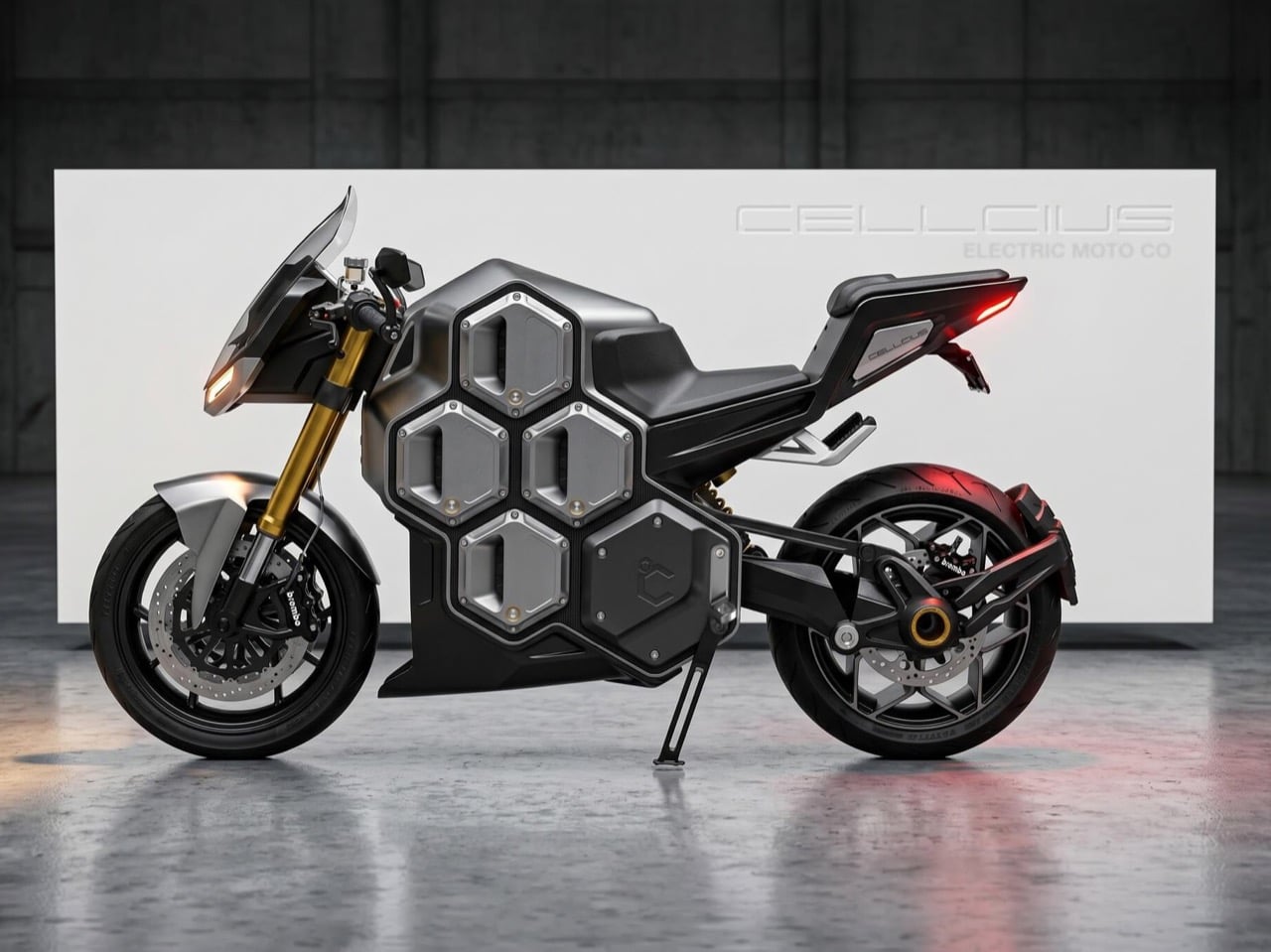
Bees settled on the hexagon ages ago, and nobody has topped it since. The shape packs the most storage into the least material, which is why it turns up in honeycomb aircraft panels and in the way round battery cells get stacked together. Brisbane’s Clandestine Design Group took the hint and built an entire electric superbike around it. The Cellcius C-01 is a hypersport concept whose battery is split into eight hexagonal cells that you can pull out and swap. Those cells line the bike’s flanks like honeycomb, and the result is one of the more striking EV silhouettes I’ve…