M.I.T. Computer Program Predicts in 1973 That Civilization Will End by 2040
Our take
In a burst of mathematical fervor, Isaac Newton predicted the end of the world around 2060, drawing not from empirical observation but from the cryptic verses of the Book of Revelation. Fast forward to 1973, and a computer program at M.I.T. declared that civilization, as we know it, would collapse by 2040. This kind of forecasting, whether from a towering intellect like Newton or a nascent computer algorithm, invites us to ponder the interplay between human intuition, technological advancements, and the existential dread that haunts our species. It’s a thread that ties into our ongoing conversations about language and communication, as seen in pieces like Learning my local sign language has greatly improved my ability to pick up foreign languages and Language in Botany and Math, wherein we explore how the structures we use to convey meaning can both illuminate and obscure the realities we face.
It’s fascinating — or perhaps unsettling — to consider that the fears of impending doom have persisted across centuries, manifesting through both spiritual revelations and cold, hard algorithms. The M.I.T. prediction was based on a model that analyzed patterns in resource consumption, population growth, and environmental degradation. Yet, it begs the question: how much do we trust these predictions? They rely on data and assumptions, much like Newton’s calculations relied on scripture. Both approaches signify a yearning for certainty in an inherently uncertain world. This convergence of faith and science reflects a human trait that craves understanding, even when it races toward the abyss.
What does it mean to forecast the end? In a world where climate change and societal upheaval loom large, the M.I.T. program’s predictions resonate with urgency. They force us to confront uncomfortable truths about sustainability and the limits of our growth. We must also consider how language shapes our perception of these threats. If we examine the emotional weight of terms like "collapse," we find that they wield power in shaping public discourse. It’s not just a matter of statistics; it’s about how we articulate these fears and, crucially, how we respond to them. After all, the words we use in this discourse can either galvanize action or incite despair.
So, as we meander through the implications of predictions — be they from Newton’s quill or a computer’s binary whispers — we must ask ourselves: what narratives are we crafting around these forecasts? Are we merely spectators in this drama, or can we become active participants in rewriting our future? The future feels like a fragile concept, yet it’s our collective responsibility to redefine what it looks like. We’re at a crossroads of history, and how we choose to engage with these predictions could very well shape the outcome.
As we look to the horizon, with the specter of 2040 approaching, it’s worth considering how our understanding of language, technology, and foresight intertwines. Will we allow ourselves to be defined by fear, or will we harness the insights and knowledge from both the past and present to forge a new path? The slippery nature of these discussions invites us to dig deeper, to question assumptions, and to stay alert to the layers of meaning that lie just beneath the surface. Stay spooty, my friends, because the conversation is just getting started.
In 1704, Isaac Newton predicted the end of the world sometime around (or after, “but not before”) the year 2060, using a strange series of mathematical calculations. Rather than study what he called the “book of nature,” he took as his source the supposed prophecies of the Book of Revelation. While such predictions have always been central to Christianity, it is startling for modern people to look back and see the famed astronomer and physicist indulging them. For Newton, however, as Matthew Stanley writes at Science, “laying the foundation of modern physics and astronomy was a bit of a sideshow. He believed that his truly important work was deciphering ancient scriptures and uncovering the nature of the Christian religion.”
Over three hundred years later, we still have plenty of religious doomsayers predicting the end of the world with Bible codes. But in recent times, their ranks have seemingly been joined by scientists whose only professed aim is interpreting data from climate research and sustainability estimates given population growth and dwindling resources. The scientific predictions do not draw on ancient texts or theology, nor involve final battles between good and evil. Though there may be plagues and other horrible reckonings, these are predictably causal outcomes of over-production and consumption rather than divine wrath. Yet by some strange fluke, the science has arrived at the same apocalyptic date as Newton, plus or minus a decade or two.
The “end of the world” in these scenarios means the end of modern life as we know it: the collapse of industrialized societies, large-scale agricultural production, supply chains, stable climates, nation states…. Since the late sixties, an elite society of wealthy industrialists and scientists known as the Club of Rome (a frequent player in many conspiracy theories) has foreseen these disasters in the early 21st century. One of the sources of their vision is a computer program developed at MIT by computing pioneer and systems theorist Jay Forrester, whose model of global sustainability, one of the first of its kind, predicted civilizational collapse in 2040. “What the computer envisioned in the 1970s has by and large been coming true,” claims Paul Ratner at Big Think.
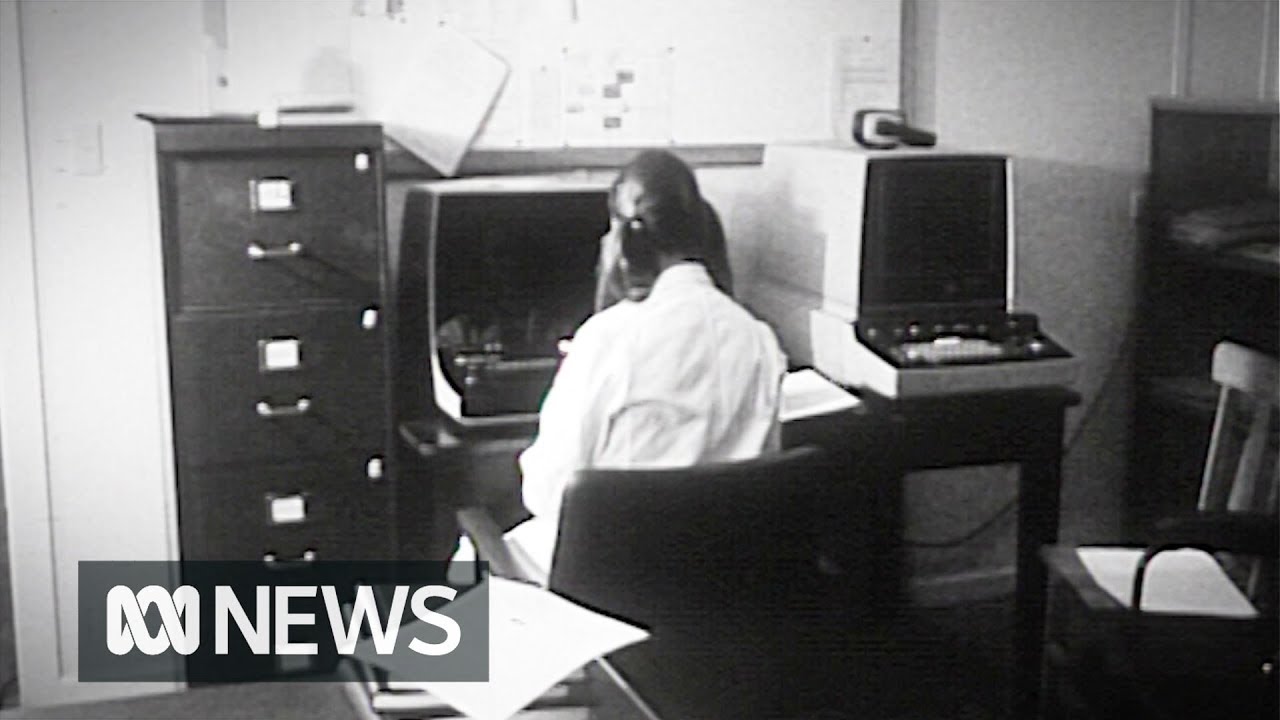
Those predictions include population growth and pollution levels, “worsening quality of life,” and “dwindling natural resources.” In the video at the top, see Australia’s ABC explain the computer’s calculations, “an electronic guided tour of our global behavior since 1900, and where that behavior will lead us,” says the presenter. The graph spans the years 1900 to 2060. “Quality of life” begins to sharply decline after 1940, and by 2020, the model predicts, the metric contracts to turn-of-the-century levels, meeting the sharp increase of the “Zed Curve” that charts pollution levels. (ABC revisited this reporting in 1999 with Club of Rome member Keith Suter.)
You can probably guess the rest—or you can read all about it in the 1972 Club of Rome-published report Limits to Growth, which drew wide popular attention to Jay Forrester’s books Urban Dynamics (1969) and World Dynamics (1971). Forrester, a figure of Newtonian stature in the worlds of computer science and management and systems theory—though not, like Newton, a Biblical prophecy enthusiast—more or less endorsed his conclusions to the end of his life in 2016. In one of his last interviews, at the age of 98, he told the MIT Technology Review, “I think the books stand all right.” But he also cautioned against acting without systematic thinking in the face of the globally interrelated issues the Club of Rome ominously calls “the problematic”:
Time after time … you’ll find people are reacting to a problem, they think they know what to do, and they don’t realize that what they’re doing is making a problem. This is a vicious [cycle], because as things get worse, there is more incentive to do things, and it gets worse and worse.
Where this vague warning is supposed to leave us is uncertain. If the current course is dire, “unsystematic” solutions may be worse? This theory also seems to leave powerfully vested human agents (like Exxon’s executives) wholly unaccountable for the coming collapse. Limits to Growth—scoffed at and disparagingly called “neo-Malthusian” by a host of libertarian critics—stands on far surer evidentiary footing than Newton’s weird predictions, and its climate forecasts, notes Christian Parenti, “were alarmingly prescient.” But for all this doom and gloom it’s worth bearing in mind that models of the future are not, in fact, the future. There are hard times ahead, but no theory, no matter how sophisticated, can account for every variable.
Note: An earlier version of this post appeared on our site in 2018.
Related Content:
In 1953, a Telephone-Company Executive Predicts the Rise of Modern Smartphones and Video Calls
In 1704, Isaac Newton Predicts the World Will End in 2060
Watch the Destruction of Pompeii by Mount Vesuvius, Re-Created with Computer Animation (79 AD)
Josh Jones is a writer and musician based in Durham, NC.
Read on the original site
Open the publisher's page for the full experience