
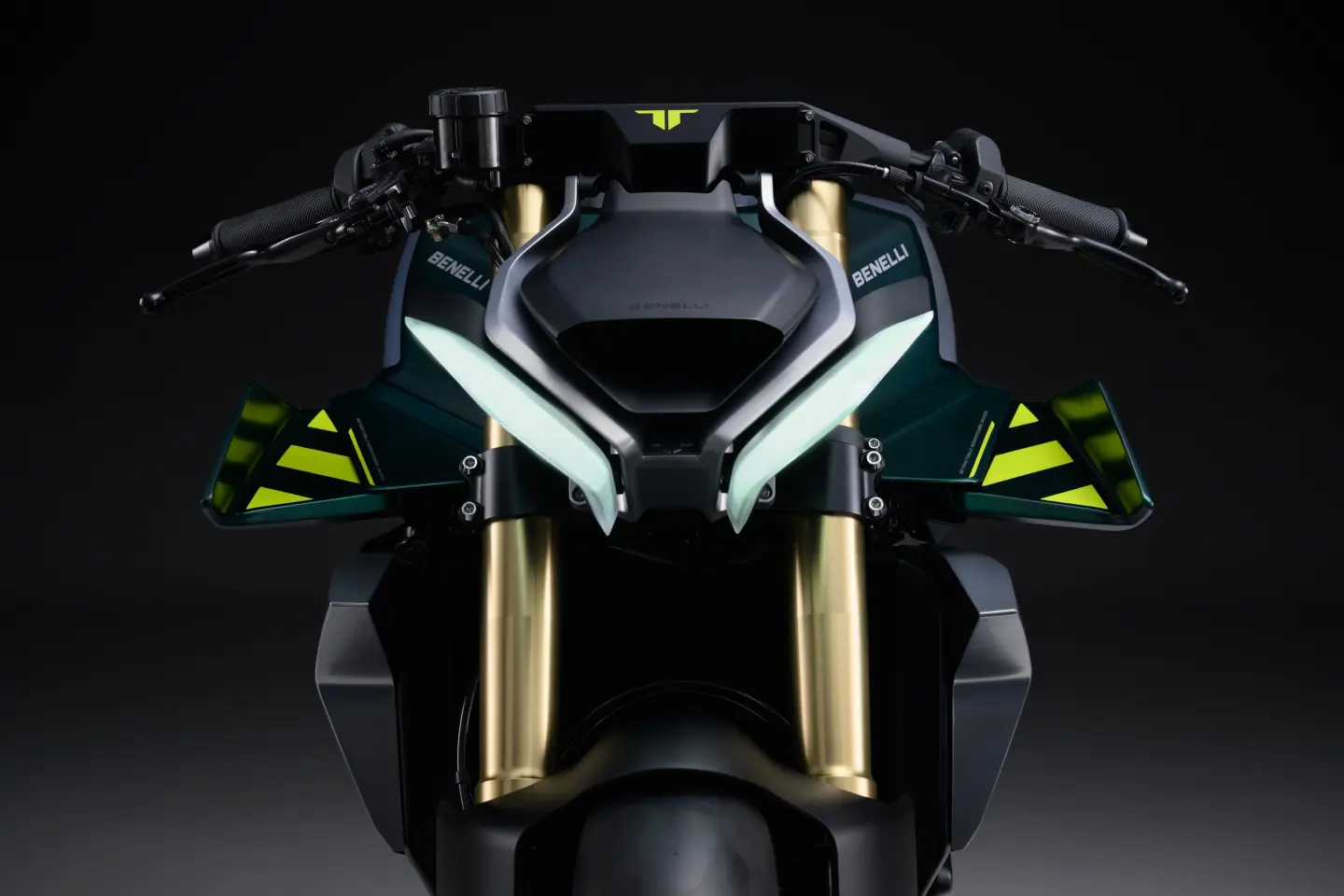
Benelli's EICMA 2026 stand was a sea of sensible, affordable twin-cylinder motorcycles, and almost everyone walked right past the winglets. We didn't. Because that's what we do. We're the ones who already had the tab open, who circle back while the crowd moves on to the next press release. Everyone else saw a Chinese-owned budget bike maker showing a concept that looked like someone glued aircraft fins to a naked bike. We saw a razor clam. We saw a footnote buried deeper than the spec sheet, and it's far more interesting than the marketing copy that tried to bury it. It reminds us of other things that refused to be ordinary, like how The mote humidifier makes your leftover tank water feed a tiny garden or how I Want to Believe This Soil Sensor Is a Friendly Little Alien. Each of those ideas took a leftover or a sensor and made it weirdly compelling. Benelli did the same with a pair of winglets.
Here's the thing we actually think: those winglets might be the most honest piece of engineering on that bike. A winglet on a motorcycle isn't there to look fast. It's there to manage the turbulent air spilling off the rider's shoulders at speed, reducing drag and keeping the front end planted. On a naked bike, a category defined by exposed engines and a lack of aerodynamic fairing, that's a genuinely clever solution to a problem most manufacturers solve by bolting on more plastic. Benelli didn't add a fairing. They added a small, sharp piece of geometry that does one job and does it without pretending the bike is something it isn't. That's the kind of move we love: a narrow, specific detail that surfaces fast and disappears if you're not paying attention. Stay spooty.
But enthusiasm only gets us so far. This is a concept bike shown at a trade show, and Benelli has a history of producing frugal, no-frills machines. Frugal doesn't always mean experimental. So the practical question isn't whether the winglets work, aerodynamics is physics, and physics works, but whether Benelli will actually ship a production bike with them. The company didn't announce a price, a release date, or even a firm commitment to production. They showed a concept. Concepts at EICMA have a way of staying concepts. We've seen it before with bigger, flashier brands. The difference is that Benelli's winglets aren't flashy. They're functional. They're the kind of detail that could make a real difference in ride stability for someone commuting on a budget, and that's exactly the person Benelli's audience is. If they ship it, they'll have a genuinely interesting product. If they don't, it's just a conversation starter.
The specific detail to watch is the mounting point. In the concept renders, the winglets attach to the side of the frame near the rider's knees. That's not a structural afterthought. That's a deliberate choice to place them where the airflow is most chaotic. If a production version moves them higher, lower, or abandons them entirely, we'll know the razor clam got left on the beach. Until then, we're watching, we're curious, and we're gently skeptical. Benelli has our attention. Now they have to earn it.