
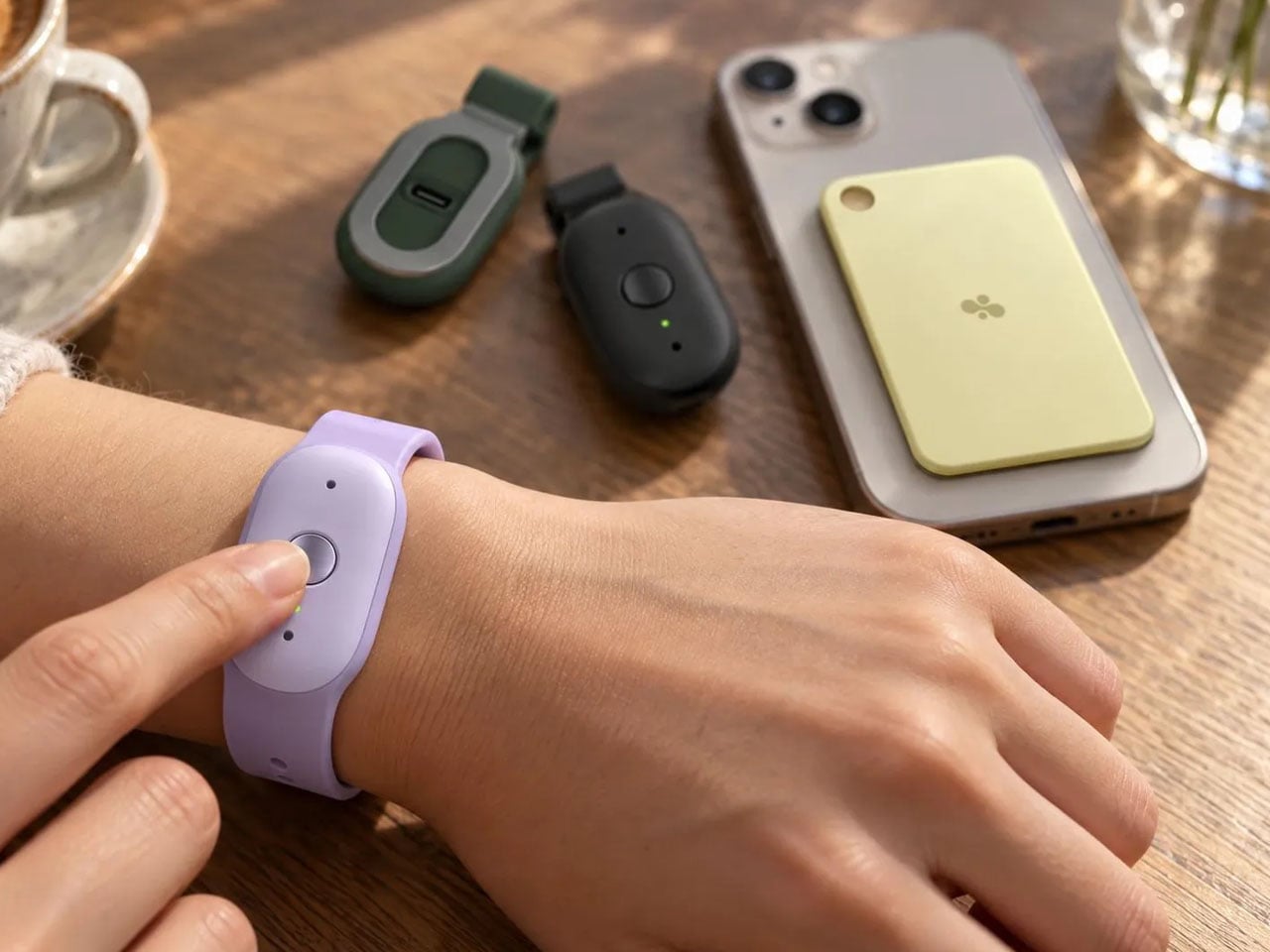
Amazon is selling you a memory prosthetic for seventy-five bucks, and the honest thing to do is admit that sounds both liberating and a little unsettling. The new Bee Frontier and Bee Eclipse are personal AI devices that listen to your meetings, calls, and conversations, then spit out summaries, reminders, and action items so you never have to scribble another note. Last year, Amazon bought Bee, a startup whose original $50 wearable did the same thing but without the corporate infrastructure, and now we're watching that idea get polished, duplicated, and priced into two distinct shapes, a wrist-worn companion and a phone-back card. It is exactly the kind of product Spoot loves to circle back on: something that promises to offload a tedious mental task, but also asks you to trust a microphone with every word you say in earshot.
The practical appeal is immediate and real. Bee Frontier clips onto your collar or straps to your wrist, captures both sides of a conversation with dual noise-filtering mics, and delivers organized summaries using templates for meetings, lectures, care plans, or brainstorming sessions. Bee Eclipse is a 4.6mm-thick magnetic card that sticks to your phone, adds four MEMS microphones plus a vibration mic to catch phone calls, and claims 21 days of battery life. Both devices process audio in real time and delete the raw recordings, keeping only encrypted transcripts that you control. The base price includes 14 days of memory history, and a $11.99 monthly subscription unlocks daily memory compilations, suggested tasks, and desktop access. For anyone who has ever left a client call thinking "I'll remember that detail" and then absolutely did not, this is the tool you didn't know you needed until you needed it twice in one afternoon.
But Spoot does not swallow hype, and the hype here has a familiar shape. Bee was a tiny startup with a $50 wearable that asked the same question, what if you didn't have to take notes?, and now Amazon has bought it, rebranded it, and raised the entry price to $75 for the wearable and $100 for the phone attachment. The subscription model is the real cost story: $144 per year on top of the hardware, and the free tier only keeps your history for two weeks. That is a very specific nudge toward recurring revenue, and it means the device's usefulness degrades the moment you stop paying. Amazon also says users should obtain permission before recording, which is responsible advice, but it also places the social awkwardness squarely on your shoulders. You are the person wearing a microphone who has to explain why. The privacy architecture sounds solid, real-time processing, encrypted transcripts, a physical button and LED to show activity, but trust in always-listening devices is not won by spec sheets alone.
The clearest takeaway is this: Bee Frontier and Bee Eclipse are not for people who want to remember everything. They are for people who want to stop *trying* to remember everything, and who are willing to trade a little social friction and a monthly fee for the relief of letting a machine hold the receipts. The question that lingers is whether that trade works better as a wearable or a phone attachment, and Amazon has smartly refused to pick a winner, it sells both. If you hate wearing things, Eclipse stays in your pocket. If you want something you can glance at without pulling out a screen, Frontier lives on your wrist. Either way, the real test is not whether the summaries are accurate. It is whether you trust the button.